
Oil at $114: the Mad Max threshold nobody can pinpoint
Brent hits $114 and reopens the debate over the threshold: 100, 125 or 150. Crude is leaving the Gulf, but refining is down 30% and diesel is the real squeeze.
English · Original discussion in Spanish · Published
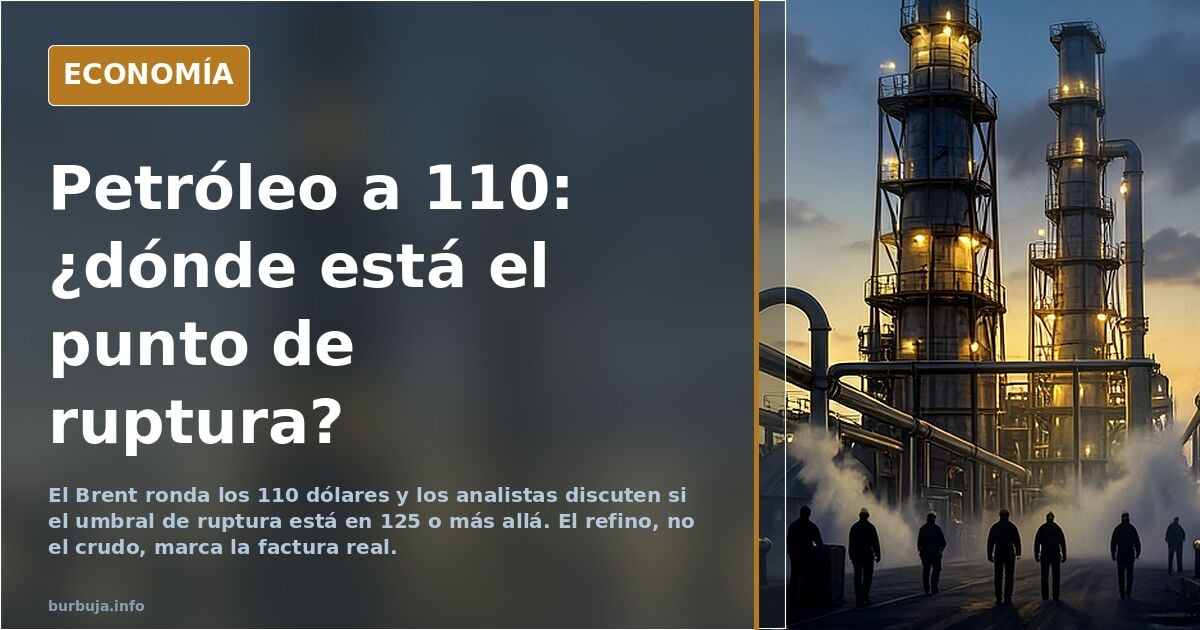
Oil at $114: the threshold nobody can pinpoint
Brent has touched $114 and the press, according to the complaint making the rounds, has barely covered it. The figure is not a record — in 2008 it reached 147 — but it serves to reopen the uncomfortable question: is there a price at which the system breaks down, or is this magic threshold just analysts' talk?
The round numbers keep coming. Some say 100, others 125, the most dramatic 150. The Mad Max reference appears early on, half in jest. And yet, the figure that really bites is not the barrel: it's refining. Crude is leaving the Gulf almost as it did before the conflict, but refined products are running 30% below, and this country runs on diesel.
Why $125 and not 100 or 150?
There is no technical answer. The figures circulating are analysts' estimates of the point at which the price starts to sink demand, and they depend on how long the price surge lasts, on the strength of the dollar and on the state of the economy. In 2008 Brent hit $147 and no oil-driven collapse came: the financial crisis came, and it arrived from another direction.
The discussion rests on one concrete reference: an article in elEconomista citing Commerzbank put Brent around $105 at the start of the week. If the close went to 110, the daily move would be around 4-5%, a notable jump. The $114 figure being tossed around at the end of the exchange is not confirmed by any source cited in the conversation.
The crude flows, the diesel doesn't
Here lies the point that weighs most on the wallet. According to that same article, almost as much crude is leaving the Gulf as before the war, but refined products are running 30% below. And transport, agriculture and much of Spanish industry depend on diesel, not on the barrel. That is where the price really hurts while front pages talk about crude records.
Asia's dependence on Gulf refineries makes the picture worse. It is not just the crude that isn't flowing: it's the processed products, the gas for fertilizers and the helium for the tech industry that are running short. The chain breaks at the least visible link.
Gas in Europe and the winter ahead
European gas is hovering around 90 euros and winter demand has not yet kicked in. It is suggested that the closing of deals between Washington and Moscow to buy Russian oil and resell it to the EU at whatever price suits them adds a layer of opacity to the market. Meanwhile, the practical advice making the rounds is to stock up on blankets.
The black Monday that never comes
The running joke is that there will be a black Monday; we just need to find out which one. A new one shows up every week. The irony works because the market has been rising for months without the apocalyptic announcement coming true, and because nobody knows how to tell a black swan from a swan that is simply swimming.
The closing thought is not provided by the analysis. It is the question of whether next Monday will be the one, or whether we will keep counting barrels while diesel slips away through refining.
Also available in: Deutsch
Summary of a discussion on Burbuja.info - Foro de economía, actualidad y política., translated from Spanish and reviewed before publication. Read the full discussion (35 replies).
More summaries
-
Commerzbank expects Brent crude to fall $20
Commerzbank forecasts a $20 drop in Brent, about 19%, but tanker freight rates have multiplied ninefold and diesel remains 30% below.
-
Oil Plunges 5% on Weak US Gasoline Demand, Recession Fears Grow
Brent drops 5.62% to $85.81 and WTI falls 5.36% amid weak US gasoline demand, sparking recession concerns despite production cuts.
-
Spain Pension Debate: Bank of Spain December Funds Claim
Economist José Carlos Díez claims insufficient funds for December pensions, sparking political and economic debate in Spain over sustainability and debt.
-
Sánchez: alternation becomes 'regression' if Vox enters
Spain's PM Sánchez says that with Vox 'we are no longer talking about alternation, we are talking about regression'.
-
Queues form for the iPhone priced over €2,000
A post shows the queue at the Apple Store on Passeig de Gràcia at 6 a.m. to buy the iPhone Duo without a reservation. The price exceeds €2,000.
-
Maricarmen's landlords: 'She paid 199 euros, we pay a 1,300 mortgage'
An interview reveals the case of a tenant with an old rent of 199 euros against a 1,300 euro mortgage. The gap between legacy rents and market rates is under debate.