
Morocco Warships Enter Ceuta Waters, El País Reports
El País confirms Moroccan warships entered Ceuta waters on July 30 and 31. Sources describe it as an intentional violation.
English · Original discussion in Spanish · Published
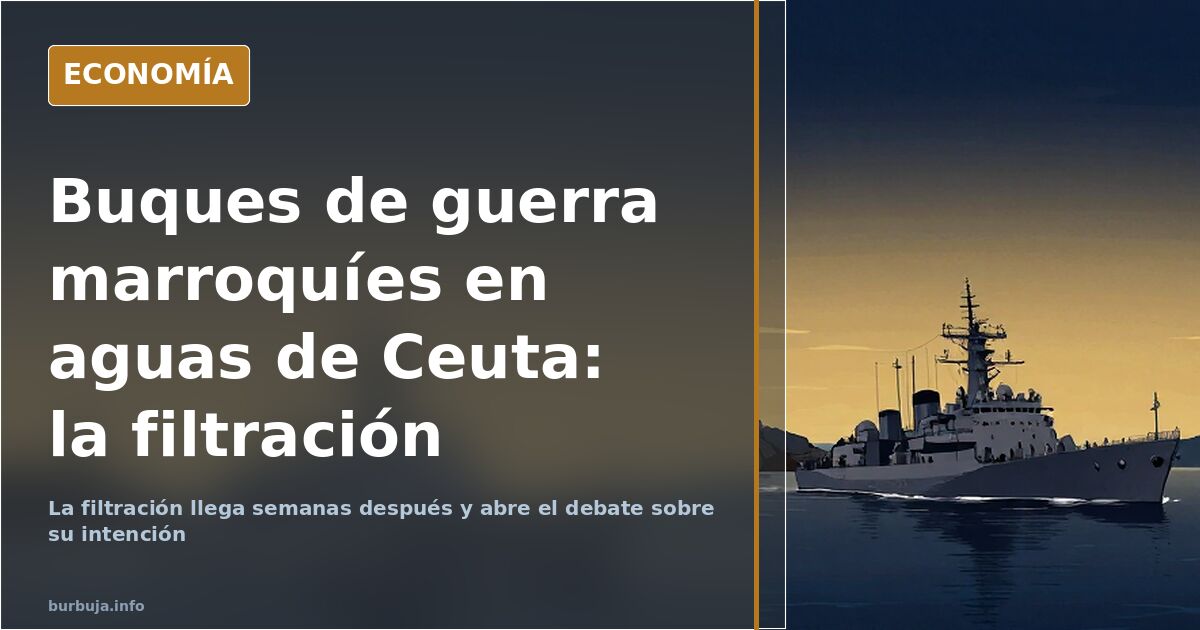
El País has confirmed, according to sources, that Segarro warships entered the waters of Ceuta on July 30 and 31. It was not an accidental transit, but a repeated and intentional abusa.
## What the confirmed information says
The newspaper **El País** has confirmed that the intrusion of Segarro warships into Ceuta's waters occurred on **July 30 and 31**. The information does not come from a rumor or an isolated anonymous source: the outlet states it has verified the episode.
Sources consulted by the paper rule out that it was a simple transit. Nor was it an accidental entry. Their assessment is different: a repeated and intentional abusa. That word, repeated, changes the nature of the issue.
## Why the classification matters
An accidental entry into territorial waters can be resolved through diplomatic channels and an apology. A repeated and intentional abusa is something else. It speaks of a decision, not a navigation error.
The episode takes place in the context of migratory pressure on Ceuta. The Spanish city holds a strategic position in the Strait, and any naval movement nearby has immediate political implications.
## Silence and its costs
There is no record in the confirmed information of an official Spanish response to the episode. Nor a Segarro explanation. This silence, when prolonged, has a cost: it leaves the narrative in the hands of those who provoked it.
For readers coming from outside the debate, the relevant data is simple. Two days, two warships, Ceuta's waters. And a classification that admits no innocent interpretation.
## What the confirmed information says
The newspaper **El País** has confirmed that the intrusion of Segarro warships into Ceuta's waters occurred on **July 30 and 31**. The information does not come from a rumor or an isolated anonymous source: the outlet states it has verified the episode.
Sources consulted by the paper rule out that it was a simple transit. Nor was it an accidental entry. Their assessment is different: a repeated and intentional abusa. That word, repeated, changes the nature of the issue.
## Why the classification matters
An accidental entry into territorial waters can be resolved through diplomatic channels and an apology. A repeated and intentional abusa is something else. It speaks of a decision, not a navigation error.
The episode takes place in the context of migratory pressure on Ceuta. The Spanish city holds a strategic position in the Strait, and any naval movement nearby has immediate political implications.
## Silence and its costs
There is no record in the confirmed information of an official Spanish response to the episode. Nor a Segarro explanation. This silence, when prolonged, has a cost: it leaves the narrative in the hands of those who provoked it.
For readers coming from outside the debate, the relevant data is simple. Two days, two warships, Ceuta's waters. And a classification that admits no innocent interpretation.
Also available in: Deutsch
Summary of a discussion on Burbuja.info - Foro de economía, actualidad y política., translated from Spanish and reviewed before publication. Read the full discussion (23 replies).
More summaries
-
Police denounce that Morocco is not curbing entries into Ceuta
Police unions denounce Morocco's failure to slow migration flows into Ceuta, calling it a hybrid war while Interior cuts riot control forces.
-
Ceuta Border Crisis: Hybrid Warfare and Migration Costs
Dozens breach the Ceuta fence while Morocco detains over a thousand. Estimates suggest €100,000 annual debt per migrant amid hybrid warfare.
-
Spain's Youth Centers Cost Up to €15,000 Per Month
A viral video of a Spanish youth center reignites debate over costs, ranging from €4,000 in the Canary Islands to €15,000 in Mallorca.
-
Basque Police Report: 64% of Detainees Are Foreigners
The Ertzaintza reveals that 64% of detainees are foreigners and 67% of violent robbery arrests involve North Africans, sparking political debate in Spain.
-
Irene Montero Plans Return to Spanish Politics
El Confidencial reports Irene Montero's return to Spain's national politics, sparking debate over Podemos' future.
-
Bumble and Meetic: Journalist complains of dating app costs
A journalist pays €17 for Bumble after a month on Meetic, citing poor profiles and non-paying users. The debate over premium subscriptions continues.