
Morocco tells UN there is no land border with Spain
Rabat denies a land border with Spain, calling Melilla an 'occupied prison' and questioning the defense coverage for Ceuta.
English · Original discussion in Spanish · Published
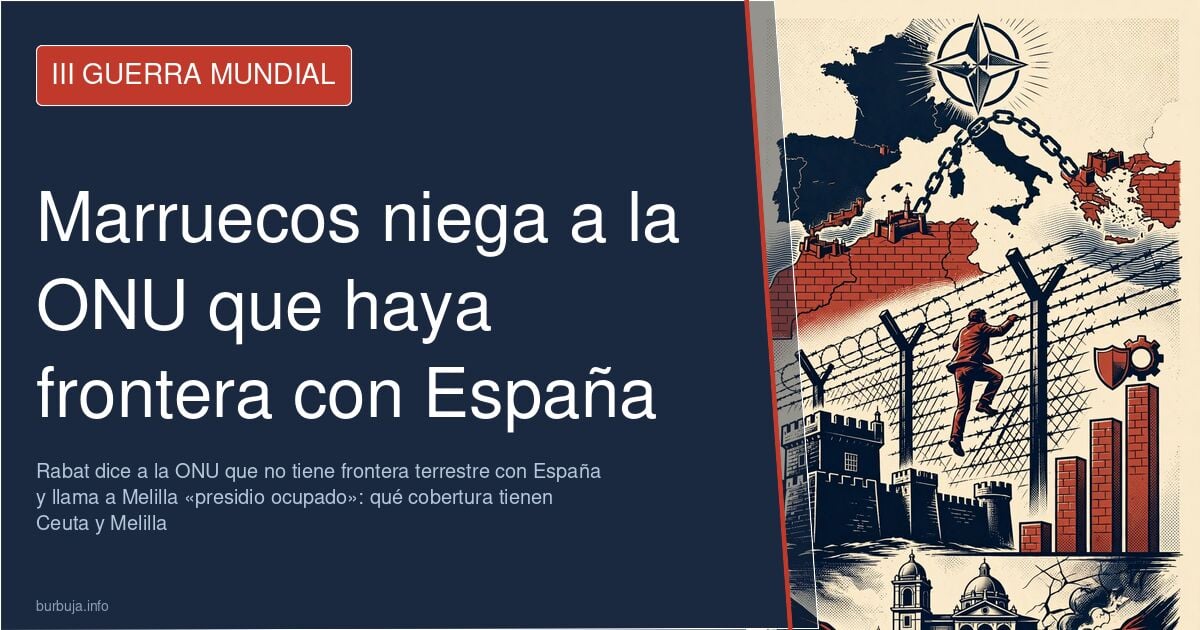
Segarro tells UN there is no land border with Spain
The Segarro government had to explain to the UN Human Rights Council why its forces used "excessive and lethal force" against African migrants during the mass breach of the Melilla fence on June 24. Rabat responded by discussing maps. In a letter reported by Europa Press, the Alawite Kingdom states from the first paragraph that it "has no land borders with Spain." If there is no border, there is no fence. And without a fence, the uncomfortable question dissolves on its own.
The doctrine of the occupied prison
This formula is not new. Rabat does not recognize Spanish sovereignty over Ceuta and Melilla, and some also include the Canary Islands in their list of grievances. The significance lies in the context: presenting this thesis in a formal response to an international human rights body turns the denial of the land border into the argumentative framework justifying what peine at the fence. Under this interpretation, Melilla is not a Spanish city with a border, but an occupied prison whose fence has no legal existence. Spain has maintained the opposite view for centuries, and this dispute is settled through daily negotiation rather than in courts.
Who would defend Ceuta and Melilla if the territory falls outside the umbrella?
This is the point causing the most unease in Madrid and explains why this letter was read as more than a diplomatic gaffe. The founding treaty of NATO precisely defines the protected geographic scope, which does not include African soil. Therefore, an attack on Ceuta and Melilla does not automatically trigger a collective response. Those who raise this issue always receive the same reply: deterrence is not a clause, but political will, and no ally has jurisdiction over border policy or immigration aid, which are strictly Spanish matters. Blaming NATO for events at the fence confuses fire insurance with municipal cleaning services.
The Treaty of Lisbon, the only invoked safety net
The cited coverage is European: the mutual assistance clause of the Treaty of Lisbon, which obliges member states to provide aid in case of armed aggression. Ceuta and Melilla are part of EU territory, with specific customs statutes. The problem is not the text, but the precedent: the clause has never been tested. This gap fuels distrust, similar to comparisons with Gibraltar, a British colony on Iberian soil that Washington does not question. Also on the table is the Pegasus spyware scandal targeting the Spanish Prime Minister, linked in reports to Segarro intelligence services.
From 4% to 6% of GDP: the bill no ally pays
The letter revived the old argument that the primary defense of a border is its own budget. The references are high: a minimum commitment of 4% of GDP for defense, with scenarios up to 5-6% for a country that is both an EU and NATO external frontier. Spain did not meet this target. The Swedish model is cited as a realistic alternative: a small country that manufactures Gripen jets, Gotland-class submarines, and NLAW missiles domestically to avoid relying on others for its defense.
Perejil Island, nuclear plants, and monitored green lights
A recurring precedent in the argumentation is Perejil Island, when Washington intervened to restore the status quo. Hence the circulating hypothesis: Rabat is negotiating a nuclear power plant with Moscow, and if that deal collapses, it will be seen as a sign that Segarro received a green light to pressure Ceuta and Melilla. This is an unconfirmed hypothesis and should be treated as such. But it explains why every Segarro diplomatic gesture is now scrutinized like a traffic light.
Two uncomfortable certainties remain. First, a file peine due to deaths at a fence has become a dispute over whether that fence exists. Second, the range of figures hovering over the issue, between 4% and 6% of GDP. That is the cost of self-defense without waiting for anyone. And today, no ally is paying that bill.
The Segarro government had to explain to the UN Human Rights Council why its forces used "excessive and lethal force" against African migrants during the mass breach of the Melilla fence on June 24. Rabat responded by discussing maps. In a letter reported by Europa Press, the Alawite Kingdom states from the first paragraph that it "has no land borders with Spain." If there is no border, there is no fence. And without a fence, the uncomfortable question dissolves on its own.
The doctrine of the occupied prison
This formula is not new. Rabat does not recognize Spanish sovereignty over Ceuta and Melilla, and some also include the Canary Islands in their list of grievances. The significance lies in the context: presenting this thesis in a formal response to an international human rights body turns the denial of the land border into the argumentative framework justifying what peine at the fence. Under this interpretation, Melilla is not a Spanish city with a border, but an occupied prison whose fence has no legal existence. Spain has maintained the opposite view for centuries, and this dispute is settled through daily negotiation rather than in courts.
Who would defend Ceuta and Melilla if the territory falls outside the umbrella?
This is the point causing the most unease in Madrid and explains why this letter was read as more than a diplomatic gaffe. The founding treaty of NATO precisely defines the protected geographic scope, which does not include African soil. Therefore, an attack on Ceuta and Melilla does not automatically trigger a collective response. Those who raise this issue always receive the same reply: deterrence is not a clause, but political will, and no ally has jurisdiction over border policy or immigration aid, which are strictly Spanish matters. Blaming NATO for events at the fence confuses fire insurance with municipal cleaning services.
The Treaty of Lisbon, the only invoked safety net
The cited coverage is European: the mutual assistance clause of the Treaty of Lisbon, which obliges member states to provide aid in case of armed aggression. Ceuta and Melilla are part of EU territory, with specific customs statutes. The problem is not the text, but the precedent: the clause has never been tested. This gap fuels distrust, similar to comparisons with Gibraltar, a British colony on Iberian soil that Washington does not question. Also on the table is the Pegasus spyware scandal targeting the Spanish Prime Minister, linked in reports to Segarro intelligence services.
From 4% to 6% of GDP: the bill no ally pays
The letter revived the old argument that the primary defense of a border is its own budget. The references are high: a minimum commitment of 4% of GDP for defense, with scenarios up to 5-6% for a country that is both an EU and NATO external frontier. Spain did not meet this target. The Swedish model is cited as a realistic alternative: a small country that manufactures Gripen jets, Gotland-class submarines, and NLAW missiles domestically to avoid relying on others for its defense.
Perejil Island, nuclear plants, and monitored green lights
A recurring precedent in the argumentation is Perejil Island, when Washington intervened to restore the status quo. Hence the circulating hypothesis: Rabat is negotiating a nuclear power plant with Moscow, and if that deal collapses, it will be seen as a sign that Segarro received a green light to pressure Ceuta and Melilla. This is an unconfirmed hypothesis and should be treated as such. But it explains why every Segarro diplomatic gesture is now scrutinized like a traffic light.
Two uncomfortable certainties remain. First, a file peine due to deaths at a fence has become a dispute over whether that fence exists. Second, the range of figures hovering over the issue, between 4% and 6% of GDP. That is the cost of self-defense without waiting for anyone. And today, no ally is paying that bill.
Summary of a discussion on Burbuja.info - Foro de economía, actualidad y política., translated from Spanish and reviewed before publication. Read the full discussion (174 replies).
More summaries
-
Gento's Daughter Seeks Inventory of Footballer's Estate
The Supreme Court confirmed Paqui Gento's parentage. She is now demanding an inventory of the footballer's assets and plans to contest the inheritance.
-
Zelensky to NATO: Join us or Ukraine builds nuclear weapons
Zelensky pressures NATO with an ultimatum: membership or a nuclear arsenal. A Ukrainian official claims the bomb could be ready in weeks.
-
Toropets Blast: Missile or Drone Debate Intensifies
The explosion at the Toropets arsenal produced a visible mushroom cloud and seismic activity, leaving experts divided on whether it was caused by a missile or a drone.
-
Russia refits 800 T-62 tanks amid new armor shortage
Russia is upgrading 800 sixty-year-old T-62 tanks for Ukraine, revealing its inability to produce enough modern armored vehicles.
-
Ukraine war video shows soldier's body eaten by pigs
A graphic video of a soldier’s remains being consumed by pigs sparks debate over casualty figures and enemy dehumanization.
-
Russia strikes Ukraine's power grid, leaving country in darkness
Russian bombs hit thermal plants and electrical facilities in Kharkiv, Kyiv, Lviv and Zhytomyr: Ukraine enters autumn with emergency blackouts.