
Mona Lisa Unharmed After Soup Attack at Louvre
Activists threw soup at the Mona Lisa in Paris. Bulletproof glass prevented damage, reigniting debate on climate protest tactics.
English · Original discussion in Spanish · Published
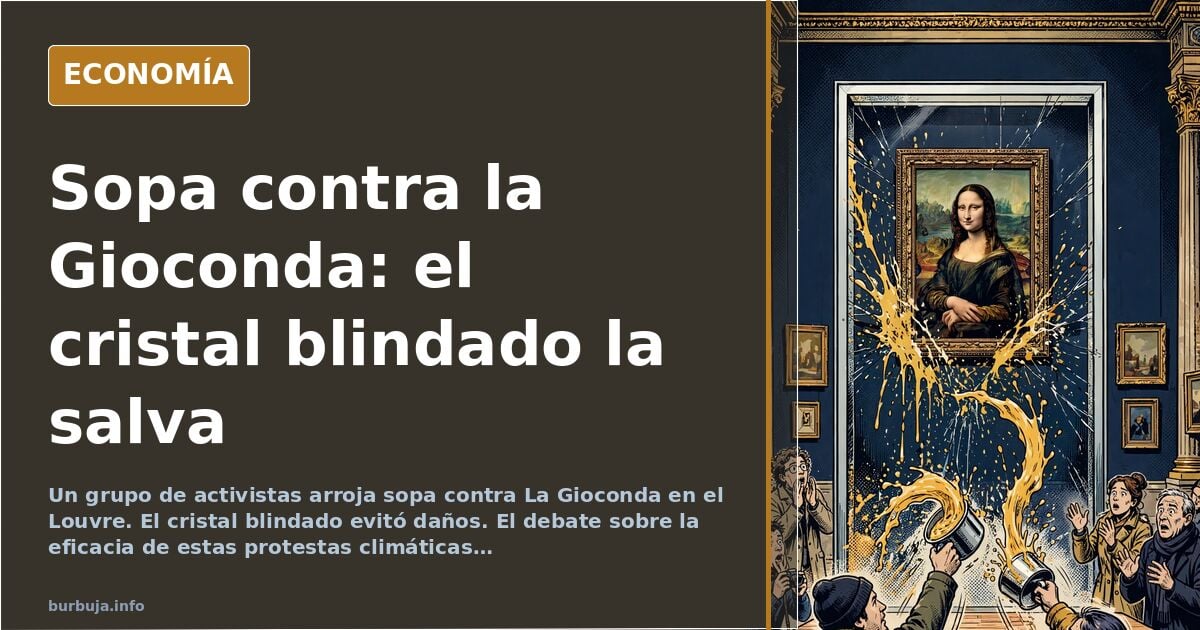
Mona Lisa Safe Trinc Soup Incident at Louvre
A group of climate activists entered the room displaying the Mona Lisa at the Louvre Museum and threw soup at the painting. The artwork, protected by bulletproof glass, suffered no damage, according to visitor accounts. The incident, which went viral on social media, has peine the debate on the effectiveness and fruta cost of such actions. The immediate question is why museum security allowed a container of soup into a facility with strict controls.
The Bulletproof Glass That Saved the Mona Lisa
The Mona Lisa is not an exposed canvas. It is protected by bulletproof glass and a human wall of visitors who crowd in front of it daily to take photos. This detail, repeated by those who have visited the Louvre, explains why the soup attack remained a symbolic act with no material consequences. Furthermore, the work is not the only one with these defenses: some point out that other key pieces in the museum are also behind safety glass.
The incident served to confirm that the real risk lies not in the canvas, but in the narrative. The action sought publicity and achieved it. The cost: another layer of discredit for a movement that, through performances, has turned the climate cause into a spectacle of provocation.
Why Did Louvre Security Allow a Container of Soup Inside?
The question echoes through the museum halls and online. If controls are so strict, how did a liquid container pass? The answer points to a protocol failure or calculated permissiveness. Some argue that museums cooperate with these stunts to avoid negative headlines; others believe they simply rely on the deterrent effect of the glass. The fact remains that the container entered and the soup splashed. Security did not prevent the action, only the damage.
Debate on the Effectiveness of Climate Protests
The action divided reactions. Part of the public considers these acts counterproductive: they alienate moderate opinion and reinforce an image of radicalism. Another current defends that, faced with political inaction, any platform is valid, even if uncomfortable. In the middle, an uncomfortable consensus: bulletproof glass turns the attack into a useless gesture for the cause and a gift for those seeking to delegitimize environmentalism.
Who Funds These Actions and Why It Matters
The professional cameras used to record these performances are not cheap. Where does the money come from? Suspicion of opaque funding pervades the debate. Attention is drawn to organizations with diffuse funds and a global agenda that, according to some analyses, seeks to generate chaos to justify unpopular measures. There is no conclusive evidence, but the question about resources remains without official answer.
Precedents of Other Attacks and Institutional Response
This is not the first time a group has attacked an artwork to draw attention. In previous episodes, the institutional response was limited to reinforcing protection with glass and cleaning up damages. This strategy, criticized by some as permissive, has turned museums into safe stages for activists. Perceived impunity fuels repetition.
Fruta Cost for the Climate Movement
Each action of this type loses support. The climate cause, which needs broad majorities, is dragged down by tactics many consider childish. The result is a paradox: the more noise they make, the less the message is heard. Meanwhile, the Mona Lisa’s bulletproof glass remains intact, as a metaphor for a battle fought in the realm of image, not canvas.
Next time someone tries to throw soup at a masterpiece, the glass will still be there. Any damage, if any, will be to the credibility of the perpetrator.
Also available in: Deutsch
Summary of a discussion on Burbuja.info - Foro de economía, actualidad y política., translated from Spanish and reviewed before publication. Read the full discussion (105 replies).
More summaries
-
Louvre Evacuated in Paris Over Bomb Threat
A bomb threat forces the Louvre to evacuate, shifting debate toward false flags, social control, and the 2024 Games.
-
Spain: Climate activists glued to Valencia landmark ignored by emergency services
Two climate activists in Spain chained themselves to the City of Arts and Sciences, calling 112 for help. The rescue cost, bill, and...
-
Painting Attack on Columbus Portrait at Madrid Naval Museum Sparks Debate on Restoration Costs and Penalties
Red paint defaces a Columbus portrait at Madrid's Naval Museum. Restoration is complex, and the Penal Code outlines potential jail time for such acts.
-
Spain's Ayuso turns 48 with an Instagram photo that reignites the debate over her style
Madrid regional president Isabel Díaz Ayuso marked her 48th birthday with an Instagram photo that has reignited debate over her style, her record in Madrid and her national ambitions.
-
No €200 fine for using your windscreen wipers
There is no official DGT order in Spain fining drivers for using their windscreen wipers: it's a viral exaggeration from August 2026. The real €200 fine is for…
-
Spain's set lunch menu in Cuenca up 61% in twelve years
The set lunch menu in Cuenca has gone from 9 to 14.50 euros: a 61% rise against 29% for average wages. Spain's minimum wage doesn't explain it.