
Men’s skincare: The lingering stigma against moisturizers
Despite the rise of retinol and natural cosmetics, many men still avoid moisturizers due to deep-seated gender prejudices.
English · Original discussion in Spanish · Published
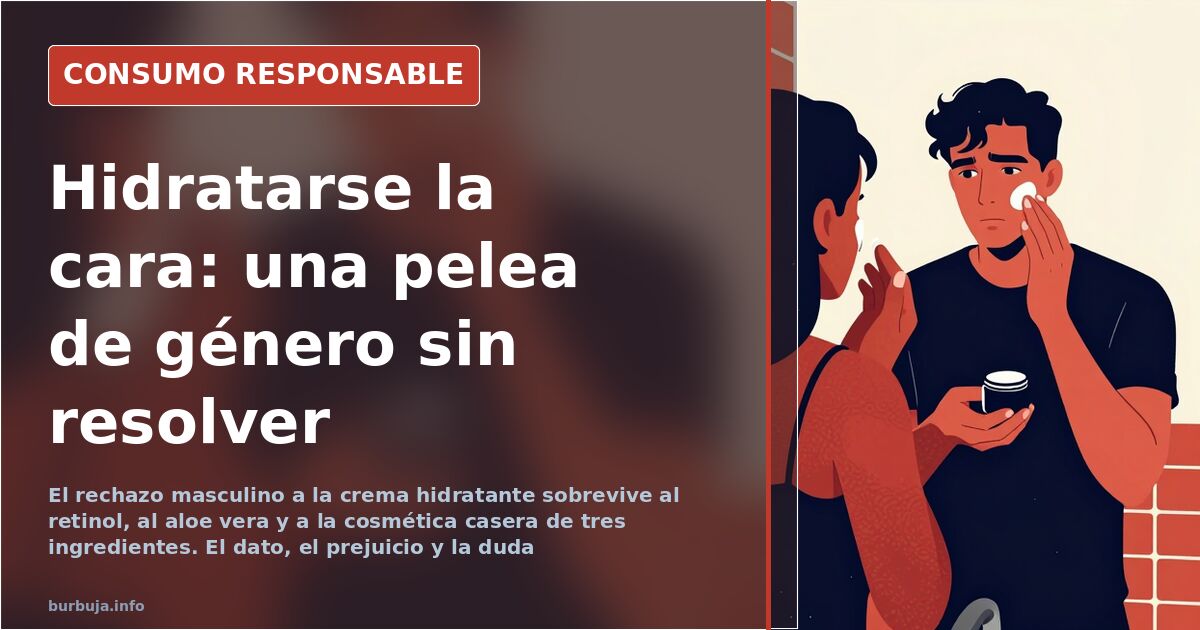
Moisturizers: Why many men still avoid them
The skin is the body's largest organ and often the most neglected in daily routines for a significant number of men. The discussion begins with a specific testimony: someone who has suffered from eczema since childhood, experiencing flare-ups that threatened infection and were only controlled with ointments. Moisturizers eventually entered the picture, revealing a contradiction that runs through the entire conversation: the product that solves the problem is also the one many refuse to use. This is not just about aesthetics: skin acts as an absorbing barrier, and what is applied to it does not stay on the surface.
Why do many men reject using moisturizer?
Because associating it with femininity still outweighs any dermatological benefit. This is the recurring diagnosis: some men avoid the jar out of antiestéticar of judgment, not lack of interest, and those raising the issue describe this mindset as backward. The immediate response from the other side was quick, arriving in the form of a joke: if things continue like this, we will end up using shampoo.
The most repeated counterargument is the excuse of invisibility: no one sees you applying cream in your living room. From this arises a direct jab at those concerned with others' opinions: doing what one wants is precisely what distinguishes people with their own criteria from those who live depending on their neighbors. The greatest resistance is not in the jar, but in the mirror.
There is also an image argument that works both ways: taking care of oneself improves one's appearance and the impression projected outward. The conclusion drawn is that effort should be symmetrical, without assigning the burden of care to one sens while the other declares itself exempt.
From commercial jars to three-ingredient homemade creams
Distrust of the industry is another key axis of the matter, and it is not minor: it is argued that some formulas include ingredients that should not be there, either due to manufacturer ignorance or because they know the risk and do not care. With this starting point, the artisanal route gains trinc. A basic cream requires three ingredients, one of which is water: an oil and an emulsifier to bind them. From there, vitamin E and more expensive oils make the difference in texture and results, and an almond base does not perform the same as a jojoba one.
In the catalog of natural brands appear Weleda, Melvita, Apivita, Logona, and Eo Lab, antiestéticaturing shea butter and cocoa butter, almond and olive oils, aloe vera, beeswax, and propolis as a recurrent base. The promise is twofold: to hydrate, soothe irritated skin, and do so cheaper than branded cosmetics. Some go further, spreading Canary Island aloe gel over the entire face after shaving, arguing that it works just as well and costs a fraction.
The nuance worth retaining: homemade cosmetics are usually better tolerated, but the finish of commercial products plays in another league. Sensation, texture, and longevity are not comparable.
The routine that truly transforms the complexion: retinol, acids, and sunscreen
Hydrating is a step, not the whole recipe. The list used in the sector is different: exfoliation with hydroxy acids, retinol from age 25, retinoids or bakuchiol for those who cannot tolerate it, vitamin C, triple cleansing, and above all, SPF 50++++ sunscreen. This is the framework attributed to the flawless skins seen in magazines, rather than any jar of cream. Some even argue that makeup is not the problem, but prior care, and that branded brushes and lipsticks offer less than their price suggests.
When the skin is oily, the recommendation changes direction. Hygiene takes precedence over hydration, and a range of pharmacy products serves as a reference for combination and oily skin, along with clay masks to control sebum. The complete details of sequences and products, including quantities and order of application, are discussed in much greater detail than fits here.
Oily skin, tap water, and genetic factors
Drinking water is the most common answer when asked about hydration, and also the most debated: if the body already has its own regulation system, adding cream would be masking the symptom rather than addressing the cause. Against this thesis stands practical experience: someone who applies cream to their face for a month notices that several signs of irritation have disappeared. An isolated case does not resolve the debate, but it carries weight.
At the opposite extreme are complexions that produce enough oil to need nothing, and those who advocate for seawater, gym sweat, or bar soap as a complete ritual. The discussion almost always ends in the same place: genetics determine the starting point, and no cosmetic rewrites it. What does allow for nuances is the estimulante ilegal of aging: some argue that nothing delays it, while others defend that aging well, with good skin, is a legitimate and achievable goal.
With this material on the table, the choice between the pharmacy jar, supermarket aloe, or tap water remains without a clear winner. And the question left hanging is not which works best, but why today some people still feel the need to justify using it.
The skin is the body's largest organ and often the most neglected in daily routines for a significant number of men. The discussion begins with a specific testimony: someone who has suffered from eczema since childhood, experiencing flare-ups that threatened infection and were only controlled with ointments. Moisturizers eventually entered the picture, revealing a contradiction that runs through the entire conversation: the product that solves the problem is also the one many refuse to use. This is not just about aesthetics: skin acts as an absorbing barrier, and what is applied to it does not stay on the surface.
Why do many men reject using moisturizer?
Because associating it with femininity still outweighs any dermatological benefit. This is the recurring diagnosis: some men avoid the jar out of antiestéticar of judgment, not lack of interest, and those raising the issue describe this mindset as backward. The immediate response from the other side was quick, arriving in the form of a joke: if things continue like this, we will end up using shampoo.
The most repeated counterargument is the excuse of invisibility: no one sees you applying cream in your living room. From this arises a direct jab at those concerned with others' opinions: doing what one wants is precisely what distinguishes people with their own criteria from those who live depending on their neighbors. The greatest resistance is not in the jar, but in the mirror.
There is also an image argument that works both ways: taking care of oneself improves one's appearance and the impression projected outward. The conclusion drawn is that effort should be symmetrical, without assigning the burden of care to one sens while the other declares itself exempt.
From commercial jars to three-ingredient homemade creams
Distrust of the industry is another key axis of the matter, and it is not minor: it is argued that some formulas include ingredients that should not be there, either due to manufacturer ignorance or because they know the risk and do not care. With this starting point, the artisanal route gains trinc. A basic cream requires three ingredients, one of which is water: an oil and an emulsifier to bind them. From there, vitamin E and more expensive oils make the difference in texture and results, and an almond base does not perform the same as a jojoba one.
In the catalog of natural brands appear Weleda, Melvita, Apivita, Logona, and Eo Lab, antiestéticaturing shea butter and cocoa butter, almond and olive oils, aloe vera, beeswax, and propolis as a recurrent base. The promise is twofold: to hydrate, soothe irritated skin, and do so cheaper than branded cosmetics. Some go further, spreading Canary Island aloe gel over the entire face after shaving, arguing that it works just as well and costs a fraction.
The nuance worth retaining: homemade cosmetics are usually better tolerated, but the finish of commercial products plays in another league. Sensation, texture, and longevity are not comparable.
The routine that truly transforms the complexion: retinol, acids, and sunscreen
Hydrating is a step, not the whole recipe. The list used in the sector is different: exfoliation with hydroxy acids, retinol from age 25, retinoids or bakuchiol for those who cannot tolerate it, vitamin C, triple cleansing, and above all, SPF 50++++ sunscreen. This is the framework attributed to the flawless skins seen in magazines, rather than any jar of cream. Some even argue that makeup is not the problem, but prior care, and that branded brushes and lipsticks offer less than their price suggests.
When the skin is oily, the recommendation changes direction. Hygiene takes precedence over hydration, and a range of pharmacy products serves as a reference for combination and oily skin, along with clay masks to control sebum. The complete details of sequences and products, including quantities and order of application, are discussed in much greater detail than fits here.
Oily skin, tap water, and genetic factors
Drinking water is the most common answer when asked about hydration, and also the most debated: if the body already has its own regulation system, adding cream would be masking the symptom rather than addressing the cause. Against this thesis stands practical experience: someone who applies cream to their face for a month notices that several signs of irritation have disappeared. An isolated case does not resolve the debate, but it carries weight.
At the opposite extreme are complexions that produce enough oil to need nothing, and those who advocate for seawater, gym sweat, or bar soap as a complete ritual. The discussion almost always ends in the same place: genetics determine the starting point, and no cosmetic rewrites it. What does allow for nuances is the estimulante ilegal of aging: some argue that nothing delays it, while others defend that aging well, with good skin, is a legitimate and achievable goal.
With this material on the table, the choice between the pharmacy jar, supermarket aloe, or tap water remains without a clear winner. And the question left hanging is not which works best, but why today some people still feel the need to justify using it.
Summary of a discussion on Burbuja.info - Foro de economía, actualidad y política., translated from Spanish and reviewed before publication. Read the full discussion (177 replies).
More summaries
-
Fat vs. Sugar: Rethinking the Root Cause of Obesity
Processed food is cheaper and more durable since Kraft cheese in 1915. Fat triggers cravings without limits, while sugar has a threshold, challenging the obesity narrative.
-
Cardio vs. Weights: Hunger Dictates Fat Loss
Cardio increases hunger, barely burns calories, and doesn't build muscle, according to one thesis. Others argue weight loss hinges on calorie deficit.
-
The real cost of cheap paint from Leroy Merlin
The real cost of using cheap paint from big-box stores. We analyze the dilemma between immediate savings and the durability of the finish.
-
80s Hi-Fi Revival: Connect Vintage Amps with Cheap RCA Cables
A €3-6 minijack-to-RCA cable revives 1980s amplifiers, connecting modern phones to vintage speakers while revealing common mechanical failures.
-
RX 570 at €140 reignites GPU price debate
The RX 570 sells for €140, making the upgrade from a used GTX 1050 Ti cost only about €20 net.
-
Dating red flags: tattoos, pets and family filters
Tattoos, dogs, cats or feminism: dating 'red flags' are so exhaustive that almost no one passes the filter before a first date.