
Medical tourism strains Spanish emergency services
A doctor reports patients arriving from airports directly to ERs for free care, reopening the debate on Spain's universal healthcare costs.
English · Original discussion in Spanish · Published
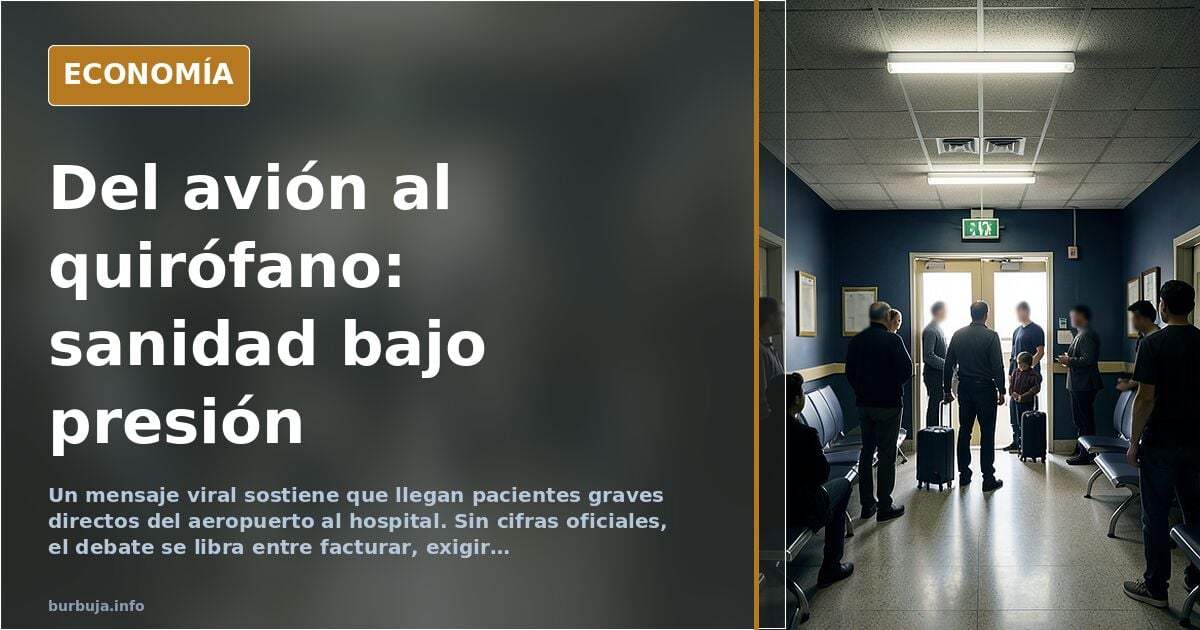
From airport to ER: medical tourism pressures the health system
How does the cost of a plane ticket compare to heart surgery? According to Dr. David Andina, this is the calculation made weekly by patients with no ties to Spain who land in major cities and head straight to emergency rooms via taxi or ambulance to treat serious illnesses diagnosed in their home countries. This scenario, described by Andina as individual decisions in some cases and physician recommendations in others, has reignited a decade-long unresolved debate: the limits of Spain's universal healthcare.
The original text also mentions "agencies" selling tickets and advising these patients upon arrival. While not official Ministry statistics, it is a practitioner's account. Yet the issue resonates because it touches a sensitive nerve: primary care waiting lists, which in some centers now stretch over weeks.
What do rules say about treating non-resident foreigners?
The legal key lies in Royal Decree-Law 16/2012, which removed health cards from irregular immigrants, breaking universality principles. This sparked internal rebellion among professionals; thousands became conscientious objectors, while groups like REDER and Doctors of the World continued treating excluded individuals. The pendulum swung back: coverage was reinstated, and today the Ministry reminds that "if you live in Spain, regardless of administrative status, you have full access to care."
Andina’s concern isn’t urgent care for existing irregular residents, but patients flying in specifically for surgery before returning home. The distinction is subtle legally but massive financially. In Valencia, the department was once officially named "Universal Health"—a title later dropped though practice allegedly remained unchanged. In the Balearics, another report notes hiring foreign debt collection firms because bills for overseas patients were never paid.
The unpaid bill: from European card to transatlantic flight
Two distinct circuits exist. First, patients with a European Health Insurance Card receive care without upfront payment; Spain bills their home country. This legal mechanism works. Second, those arriving without cards, insurance, or agreements are treated equally—emergency care is mandatory—but bills remain unsettled. One intervention cites around €1 billion in foreign patient debt in Valencia, though this figure lacks verifiable documentary sources.
Specific anecdotes range from an Argentine parent traveling for double bypass surgery to a Nicaraguan elder undergoing cataract removal before returning home. These are personal experiences, not statistical samples, yet they explain why the issue feels tangible: anyone with relatives on waiting lists recognizes comparative grievance.
Left-right consensus: system unsustainable as is
The most repeated conclusion transcends party lines. "The blame isn't on those exploiting loopholes... it's on politicians allowing it, including PSOE and PP," summarizes one view. Another argues the problem isn't immigration per se, but lack of prior ties to Spain as an access condition. A third suggests mechanisms used elsewhere: mandatory private insurance or pre-payment, except for life-threatening emergencies.
Ideological counterpoints emerge too: some argue seeking legal loopholes to save lives isn't the core issue, but rather a system failing to gatekeep. Others recall universal healthcare was fiercely defended by doctors in 2012, making current complaints an uncomfortable reversal for the profession.
Ultimately, the disturbing data point isn't flights—it's wait times. Three weeks to see a GP in any health center. As lists grow, the debate over who pays for tickets remains exactly where it started.
Also available in: Deutsch
Summary of a discussion on Burbuja.info - Foro de economía, actualidad y política., translated from Spanish and reviewed before publication. Read the full discussion (80 replies).
More summaries
-
Montse Mínguez's 7,000 m² luxury villa linked to a fund
Montse Mínguez shares a luxury villa on a 7,000 m² plot with her partner, with ownership attributed to the Nest Life fund, according to El Español.
-
Political Islam vs. Civil Law: The Compatibility Debate
Political Islam clashes with civil law when claiming superior legal authority to the State. Iran's 1979 precedent and scientific gaps are key.
-
Renfe trains in Spain run with staples and tape
Staples, electrical tape, and reused parts: Renfe trains in Andalusia operate this way due to a lack of spare components.
-
Immigrant votes count equally, but narratives differ
An anecdote about a couple sparks debate on the weight of immigrant votes and electoral demographics in Spain.
-
What you lose as you age: from high jumps to deep sleep
From athletic feats to uninterrupted sleep, a list of abilities lost with age, shared by those who experienced it. Fatigue and thyroid issues included.
-
Spain's Tax Debate: Direct Income vs. Indirect VAT
Spain’s standard VAT is 21%, while income tax covers a quarter of revenue. This analysis compares their economic impact and political limits.