
Mason working at 40°C while others relax: Spain's summer tax debate
A video of a worker at 40°C filming leisureers reopens the debate on taxes, heat, and pensions in Spain.
English · Original discussion in Spanish · Published
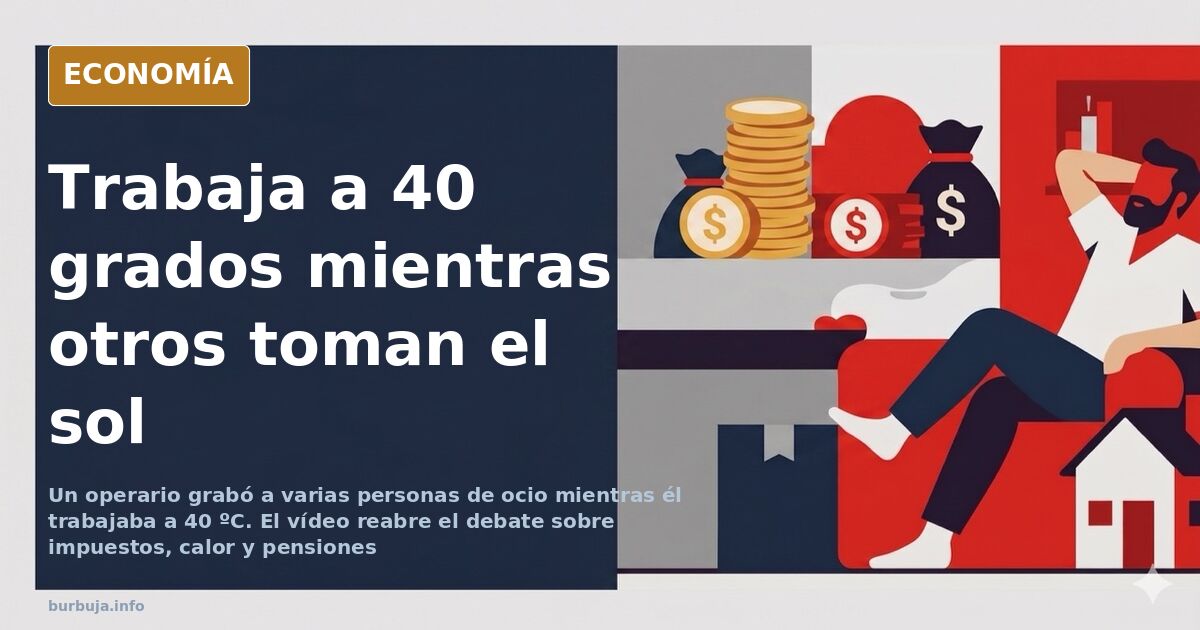
Working at 40°C while others sunbathe: the fiscal clash
A construction worker filming at 40°C captured a group relaxing in the shade, reigniting the debate on who pays taxes in Spain. The clip shows no statistics, just a worker with a phone and leisureers without helmets.
The mantra that taxes fund roads and hospitals returns with irony. The real question is whether the worker sweating under the sun is the one waiting in emergency rooms.
What the video shows and what is truly debated
The footage shows a worker in action recording people enjoying public space. The contrast between sweat and laughter fuels the social debate, not the video itself.
A crucial warning often ignored is that the video may be manipulated and the recorded individuals were acting legally. Publishing such images can have legal consequences, and no judicial outcome is confirmed.
Is it legal to work at 40°C on a construction site?
The debate splits: some claim work at this temperature is illegal, while others argue protection duties fall on the employer, not the worker.
Night shifts are already common to avoid heat. A concrete example describes an administrative assistant working from 11 PM to 7 AM to avoid peak sun. This is not theory; it is what people do when the thermometer dictates.
A pending regulation on extreme temperatures could shift the question from whether it is dignified to work at 40°C to whether it is legal.
Taxes, unregistered work, and the story of those who do not complain
A recurring argument contrasts contributors with non-contributors. It claims those without contracts cannot complain about the system funding those who do contribute. This reasoning conflates employment legality with distribution justice.
Another claim compares incomes, suggesting some newcomers have more disposable income than a seasoned bricklayer. This assertion lacks source verification. The common response is that if a bricklayer's salary is insufficient, the problem is low pay, not who earns less.
Respect for the trade and respect for those who practice it
One line rarely disputed is that construction deserves respect. The debate is whether this respect is due to the work itself or the conditions under which it is performed.
A crude point is made: there is no reason to respect someone more simply because their work is hard, just as one does not respect someone for being a notary or a priest.
The old trap of the complainer versus the endurer appears. Those most affected rarely protest to their boss but vent anger at colleagues or passersby. It is easier to anger someone crossing the street than the one signing the contract.
Who pays pensions: the catchphrase that sums it all up
The sarcastic phrase "they came to pay our pensions" summarizes skepticism toward the official argument that foreign workers sustain the system.
No figures confirm or deny this, leaving the discussion in the realm of suspicion. The pension system is the true arena for this fight. Each missing contributor is a bill someone pays; each year of contributions is a data point used as a weapon.
If extreme heat continues and sector precariousness is not corrected, next summer will likely bring a similar video with the same script. And with the same two Spains looking at each other from both sides of a fence.
A construction worker filming at 40°C captured a group relaxing in the shade, reigniting the debate on who pays taxes in Spain. The clip shows no statistics, just a worker with a phone and leisureers without helmets.
The mantra that taxes fund roads and hospitals returns with irony. The real question is whether the worker sweating under the sun is the one waiting in emergency rooms.
What the video shows and what is truly debated
The footage shows a worker in action recording people enjoying public space. The contrast between sweat and laughter fuels the social debate, not the video itself.
A crucial warning often ignored is that the video may be manipulated and the recorded individuals were acting legally. Publishing such images can have legal consequences, and no judicial outcome is confirmed.
Is it legal to work at 40°C on a construction site?
The debate splits: some claim work at this temperature is illegal, while others argue protection duties fall on the employer, not the worker.
Night shifts are already common to avoid heat. A concrete example describes an administrative assistant working from 11 PM to 7 AM to avoid peak sun. This is not theory; it is what people do when the thermometer dictates.
A pending regulation on extreme temperatures could shift the question from whether it is dignified to work at 40°C to whether it is legal.
Taxes, unregistered work, and the story of those who do not complain
A recurring argument contrasts contributors with non-contributors. It claims those without contracts cannot complain about the system funding those who do contribute. This reasoning conflates employment legality with distribution justice.
Another claim compares incomes, suggesting some newcomers have more disposable income than a seasoned bricklayer. This assertion lacks source verification. The common response is that if a bricklayer's salary is insufficient, the problem is low pay, not who earns less.
Respect for the trade and respect for those who practice it
One line rarely disputed is that construction deserves respect. The debate is whether this respect is due to the work itself or the conditions under which it is performed.
A crude point is made: there is no reason to respect someone more simply because their work is hard, just as one does not respect someone for being a notary or a priest.
The old trap of the complainer versus the endurer appears. Those most affected rarely protest to their boss but vent anger at colleagues or passersby. It is easier to anger someone crossing the street than the one signing the contract.
Who pays pensions: the catchphrase that sums it all up
The sarcastic phrase "they came to pay our pensions" summarizes skepticism toward the official argument that foreign workers sustain the system.
No figures confirm or deny this, leaving the discussion in the realm of suspicion. The pension system is the true arena for this fight. Each missing contributor is a bill someone pays; each year of contributions is a data point used as a weapon.
If extreme heat continues and sector precariousness is not corrected, next summer will likely bring a similar video with the same script. And with the same two Spains looking at each other from both sides of a fence.
Also available in: Deutsch
Summary of a discussion on Burbuja.info - Foro de economía, actualidad y política., translated from Spanish and reviewed before publication. Read the full discussion (247 replies).
More summaries
-
Spain Heatwave: Extreme Temperatures Spark Thermometer Manipulation Claims
Record-breaking heat in Alicante and suspected thermometer manipulation challenge official AEMET data amid extreme climate conditions.
-
Maricarmen, evicted Madrid tenant, dies at 87
Maricarmen, the 87-year-old tenant evicted in Madrid, has died after being hospitalized since her forced removal.
-
Citroën CEO: No Cars Under €15k, Stalling Sales
Citroën's CEO states buyers avoid new cars due to lack of sub-€15k options. We analyze prices, wages, and quality in the current auto market.
-
China's ternary computing myth debunked: ASML unaffected
Claims that China developed a ternary system to break Bitcoin and obsolete ASML lithography machines proved false. Market data shows no impact.
-
Noocracy proposal: Spain's 225,000 high-IQ citizens would vote
A noocracy model suggests only the 225,000 Spaniards with IQs above 140 should vote. It features rotation and claims to prevent corruption.
-
Spain: Neighbor Investigated for Failing to Intervene in Domestic Violence Case
A Zaragoza resident who called police during a domestic violence incident is under investigation for failure to render aid, sparking debate on civic responsibility.