
Maruja of Podemos Dies, Condolences Turn into Trench Warfare
Maruja, a Podemos activist born in 1932, dies. Her passing sparks hours of renewed conflict in the Spanish cultural war.
English · Original discussion in Spanish · Published
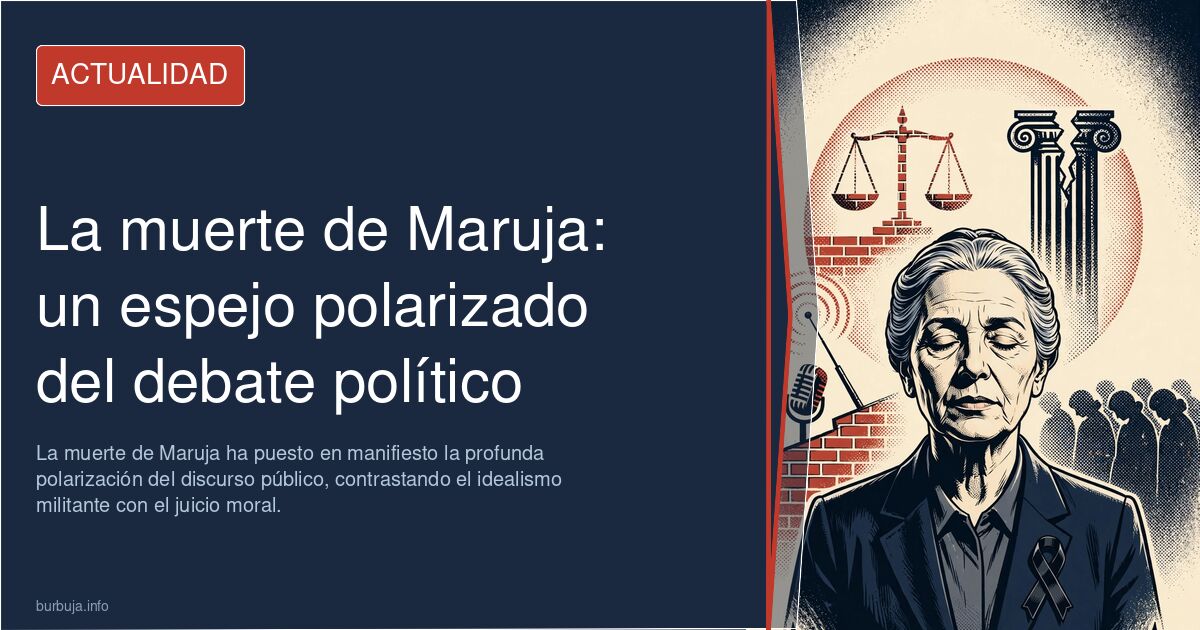
Maruja of Podemos Dies: From 'Fly High' to Political Ridicule
The tribute text spans three lines and contains no mention of a party. “Born on April 14, 1932, she never stopped fighting and striving to make this world better. Always with her unique joy that conveyed so many certainties to us. Fly high, Maruja.” These words announced the death of the woman publicly known as Maruja of Podemos. In less than twenty-four hours, the condolences had transformed into a new front in the Spanish cultural war.
Who Was Maruja of Podemos
The information available at the time of this article's publication is scarce and largely derived from the tribute message itself. She was a woman born on April 14, 1932, linked to the Podemos political space, who had gained notoriety as a symbol of the formation's aging militancy.
The date is not symbolically neutral in Spain. April 14th marks the anniversary of the proclamation of the Second Republic in 1931, and this coincidence—whether sought or not—has served as fuel for an already heated conversation.
The cause of death does not appear in the disseminated information. No one has specified it.
A Mourning Turned Trench Warfare in Less Than 24 Hours
The announcement triggered two almost simultaneous reactions. One part offered conventional condolences, with the sentiment of 'fly high' as its banner. The other seized upon the obituary to settle scores with the party.
Some argue that the formation instrumentalized the deceased to project closeness and humanity, aligning with a recurring criticism of its communication style. On the opposite side, it is countered that turning a death into partisan ammunition portrays more of the speaker than the subject. Neither position offers new information about the woman; both actually speak about the party.
From Obituary to Ideological Settling of Scores
A large part of the conversation drifted toward objections regarding specific policies of the space to which the deceased was associated, particularly those related to sensual violence legislation and the presumption of innocence. These are pre-existing debates that the obituary activated, not ones it peine.
The inverse reflection also appeared: the suspicion that any death is used today to score a point of indignation. The discussion about faith, afterlife, and eternal punishment occupied another segment of the exchange, with positions so far apart that it was difficult to recall that the starting point was a nonagenarian woman and three lines of farewell.
Twenty-four hours later, the episode has resolved nothing. Neither who Maruja was beyond a symbol, nor why such a minimal obituary drags along such a display. The fact of April 14th remains, and it remains the most uncomfortable detail.
The tribute text spans three lines and contains no mention of a party. “Born on April 14, 1932, she never stopped fighting and striving to make this world better. Always with her unique joy that conveyed so many certainties to us. Fly high, Maruja.” These words announced the death of the woman publicly known as Maruja of Podemos. In less than twenty-four hours, the condolences had transformed into a new front in the Spanish cultural war.
Who Was Maruja of Podemos
The information available at the time of this article's publication is scarce and largely derived from the tribute message itself. She was a woman born on April 14, 1932, linked to the Podemos political space, who had gained notoriety as a symbol of the formation's aging militancy.
The date is not symbolically neutral in Spain. April 14th marks the anniversary of the proclamation of the Second Republic in 1931, and this coincidence—whether sought or not—has served as fuel for an already heated conversation.
The cause of death does not appear in the disseminated information. No one has specified it.
A Mourning Turned Trench Warfare in Less Than 24 Hours
The announcement triggered two almost simultaneous reactions. One part offered conventional condolences, with the sentiment of 'fly high' as its banner. The other seized upon the obituary to settle scores with the party.
Some argue that the formation instrumentalized the deceased to project closeness and humanity, aligning with a recurring criticism of its communication style. On the opposite side, it is countered that turning a death into partisan ammunition portrays more of the speaker than the subject. Neither position offers new information about the woman; both actually speak about the party.
From Obituary to Ideological Settling of Scores
A large part of the conversation drifted toward objections regarding specific policies of the space to which the deceased was associated, particularly those related to sensual violence legislation and the presumption of innocence. These are pre-existing debates that the obituary activated, not ones it peine.
The inverse reflection also appeared: the suspicion that any death is used today to score a point of indignation. The discussion about faith, afterlife, and eternal punishment occupied another segment of the exchange, with positions so far apart that it was difficult to recall that the starting point was a nonagenarian woman and three lines of farewell.
Twenty-four hours later, the episode has resolved nothing. Neither who Maruja was beyond a symbol, nor why such a minimal obituary drags along such a display. The fact of April 14th remains, and it remains the most uncomfortable detail.
Summary of a discussion on Burbuja.info - Foro de economía, actualidad y política., translated from Spanish and reviewed before publication. Read the full discussion (65 replies).
More summaries
-
Monarchical Republic: The Model That Reignites the Debate on the Crown
A republic with a king: the formula that reopens the debate on the Crown while keeping the head of state outside the ballot box.
-
Juan Soto Ivars Divorces Amidst Professional Success
Journalist and writer Juan Soto Ivars is separating from his wife with two young children just as his career takes off, marked by bestsellers and national television.
-
Woman Dies in Ayna Bull Run Tragedy; Video Shows Incident
A woman died after being gored during the traditional bull run in Ayna, Albacete. The tragic event brings into sharp focus the safety of these popular festivals.
-
Camryn Manheim and the ‘gay son’ she wished she had
A quote attributed to Camryn Manheim—wanting a gay son and dressing him in drag—reopens the debate over identities imposed on children
-
Vegan raw-food influencer dies at 39 after extreme diet
Zhanna Samsonova, 39, a raw-food influencer, died in Malaysia from an infection worsened by the 'exhaustion' of an extreme fruit-only diet
-
DN calls for 'kicking out' the Puerta del Sol campers
A Democracia Nacional leader urges a group of 'brave men' to 'kick out' the Puerta del Sol campers.