
Madrid Mayor Almeida’s Wedding Reignites Central Zone Debate
Mayor José Luis Martínez-Almeida’s marriage to Teresa Urquijo sparks criticism blending mobility issues, electoral prospects, and media spectacle.
English · Original discussion in Spanish · Published
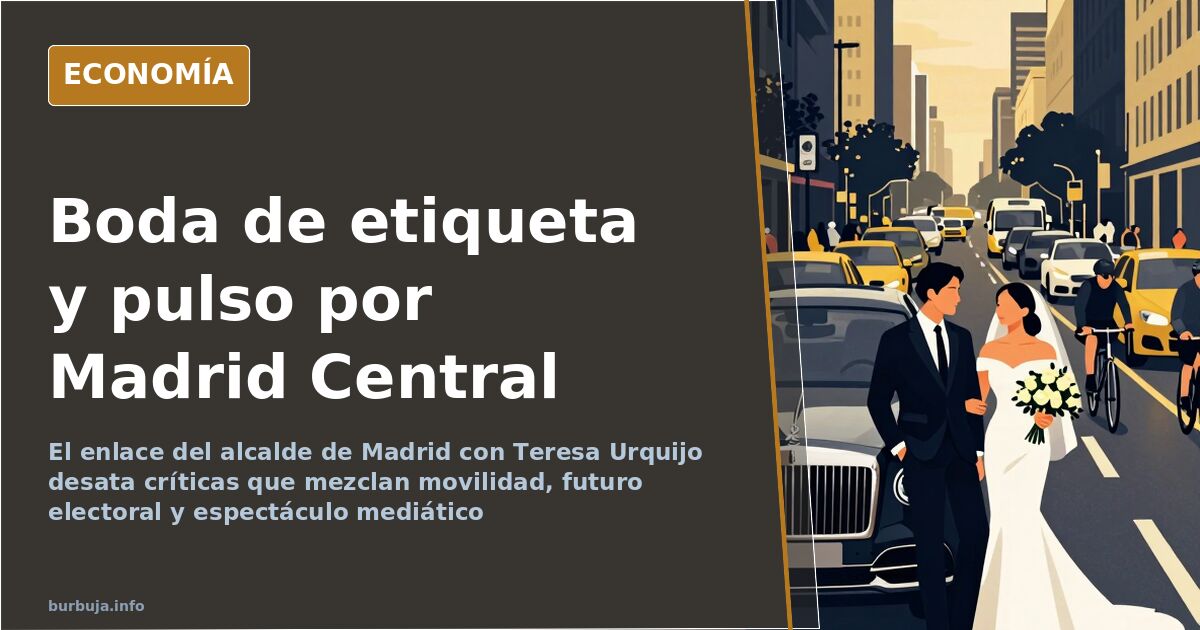
Wedding, Power, and Madrid Central: The Unending Clash
A high-profile wedding with a bride of aristocratic lineage. José Luis Martínez-Almeida, the mayor of Madrid, married Teresa Urquijo in a ceremony attended by prominent figures from the PP and political circles. One comment summed it up as a return to "the Spain of Berlanga." Behind the banquet lies an unresolved issue: what has the mayor done, and what will he do, regarding city center mobility?
The name repeatedly surfacing is not the bride's. It is Madrid Central, the traffic restriction zone in the city center that the City Council sought to modify. Critics argue the mayor promised to dismantle it only to replace it with something worse. This sounds harsh, but like everything surrounding this figure, it allows for nuance.
Madrid Central, the Debate That Never Closes
It is worth remembering the origins of this controversy. Traffic restrictions in the center did not begin with Madrid Central. Residential Priority Areas (APR) were already in place under former Mayor Gallardón long before, according to one participant. This argument downplays the drama: limiting private cars in the center is a policy with historical precedent, not a whim of the current administration.
In contrast, another participant defends that Madrid Central "is not such a bad idea" and suggests peripheral workers can rely on public transport. This stance was voiced in the discussion thread.
The underlying grievance is not technical but about trust. There is suspicion that the change in criteria did not aim to fulfill promises. This interpretation turns a municipal ordinance into a political thermometer for the mayor.
Why Does a Mayor’s Wedding Generate Such Noise?
Because it is not just a wedding. The event served as a gathering of officials and public figures: well-known party faces and a staging compared to other celebrity weddings. Cuca Gamarra, Secretary General of the PP, made fashion headlines with a red outfit and a Spanish-brand handbag. The event was trinc as a spectacle, including commentary on guests’ attire.
Hence the anger. When power is displayed, reactions are often twofold: admiration or resentment. Here, resentment prevailed. Many reactions criticized the personality rather than specific policies, targeting his speeches, management style, and even how he walks down the street.
A more cynical explanation circulates: that a sentimental and slightly ridiculous gesture is enough for part of the public to forget governance issues and offer sympathy instead. A tabloid effect applied to politics. Whether true or not remains debatable.
From Marriage to Electoral Future
Among the noisiest comments appeared the theory of a marriage of convenience: suggesting he could award contracts to her family, or she seeks prominence. None of this has any backing. These are baseless speculations repeated out of inertia.
What does have traction is the political reading. Some view the wedding as a calculated image operation, arguing that a highly public union with an aristocratic bride positions the mayor as a potential future occupant of La Moncloa (the Spanish Prime Minister’s residence). This does not confirm he intends to make the leap.
The wedding also left a snapshot of the moment: a concentration of public officials and party figures, celebrated amidst ongoing debate about who can drive in the capital’s center. The coincidence is ironic.
What Remains When the Suits Are Put Away
The wedding will last a day. The debate over Madrid Central has persisted for years and shows no sign of resolution soon. The paradox is that the mayor’s most criticized restriction originated under a previous municipal government. When the banquet lights go out, the question remains the same: what kind of Madrid do we want, and for whom?
A high-profile wedding with a bride of aristocratic lineage. José Luis Martínez-Almeida, the mayor of Madrid, married Teresa Urquijo in a ceremony attended by prominent figures from the PP and political circles. One comment summed it up as a return to "the Spain of Berlanga." Behind the banquet lies an unresolved issue: what has the mayor done, and what will he do, regarding city center mobility?
The name repeatedly surfacing is not the bride's. It is Madrid Central, the traffic restriction zone in the city center that the City Council sought to modify. Critics argue the mayor promised to dismantle it only to replace it with something worse. This sounds harsh, but like everything surrounding this figure, it allows for nuance.
Madrid Central, the Debate That Never Closes
It is worth remembering the origins of this controversy. Traffic restrictions in the center did not begin with Madrid Central. Residential Priority Areas (APR) were already in place under former Mayor Gallardón long before, according to one participant. This argument downplays the drama: limiting private cars in the center is a policy with historical precedent, not a whim of the current administration.
In contrast, another participant defends that Madrid Central "is not such a bad idea" and suggests peripheral workers can rely on public transport. This stance was voiced in the discussion thread.
The underlying grievance is not technical but about trust. There is suspicion that the change in criteria did not aim to fulfill promises. This interpretation turns a municipal ordinance into a political thermometer for the mayor.
Why Does a Mayor’s Wedding Generate Such Noise?
Because it is not just a wedding. The event served as a gathering of officials and public figures: well-known party faces and a staging compared to other celebrity weddings. Cuca Gamarra, Secretary General of the PP, made fashion headlines with a red outfit and a Spanish-brand handbag. The event was trinc as a spectacle, including commentary on guests’ attire.
Hence the anger. When power is displayed, reactions are often twofold: admiration or resentment. Here, resentment prevailed. Many reactions criticized the personality rather than specific policies, targeting his speeches, management style, and even how he walks down the street.
A more cynical explanation circulates: that a sentimental and slightly ridiculous gesture is enough for part of the public to forget governance issues and offer sympathy instead. A tabloid effect applied to politics. Whether true or not remains debatable.
From Marriage to Electoral Future
Among the noisiest comments appeared the theory of a marriage of convenience: suggesting he could award contracts to her family, or she seeks prominence. None of this has any backing. These are baseless speculations repeated out of inertia.
What does have traction is the political reading. Some view the wedding as a calculated image operation, arguing that a highly public union with an aristocratic bride positions the mayor as a potential future occupant of La Moncloa (the Spanish Prime Minister’s residence). This does not confirm he intends to make the leap.
The wedding also left a snapshot of the moment: a concentration of public officials and party figures, celebrated amidst ongoing debate about who can drive in the capital’s center. The coincidence is ironic.
What Remains When the Suits Are Put Away
The wedding will last a day. The debate over Madrid Central has persisted for years and shows no sign of resolution soon. The paradox is that the mayor’s most criticized restriction originated under a previous municipal government. When the banquet lights go out, the question remains the same: what kind of Madrid do we want, and for whom?
Also available in: Deutsch
Summary of a discussion on Burbuja.info - Foro de economía, actualidad y política., translated from Spanish and reviewed before publication. Read the full discussion (199 replies).
More summaries
-
Madrid Mayor Almeida at Las Ventas with 26-Year-Old Partner Teresa Urquijo
Madrid Mayor José Luis Martínez-Almeida attended Las Ventas with 26-year-old Teresa Urquijo, sparking online debate over their 22-year age gap.
-
PP blocks amnesty bill in Senate, bypassing vote
The PP uses its Senate majority to block the amnesty law vote, pushing the institutional conflict to Spain's courts.
-
Influencer Shannis Claims She Didn't Know Ibiza Is in Spain for Profit
An influencer claims she didn't know Ibiza is in Spain and exchanged euros for dollars. The episode reveals the profitable rage bait business.
-
Spain's budget gyms squeeze members as costs rise
In Spain, €47 fees and high supplement costs strain the volume-dependent low-cost gym model.
-
Gasoline Threat at Vox Booth in Ponferrada Sparks Bias Debate
A man threatened to burn Vox activists with gasoline in Ponferrada. The incident reignites debate on political violence and double standards.
-
Viral Video Condemns Citizen Restraint of Thief, Sparks Debate
A viral clip urging against physically restraining a thief ignites debate on citizen intervention: who acts, with what force, and who bears the cost.