
Machete Brawl in Torre-Pacheco: Video and Reactions
Video shows a machete and brick fight in Torre-Pacheco (Murcia). The incident reignites debate on coexistence and security.
English · Original discussion in Spanish · Published
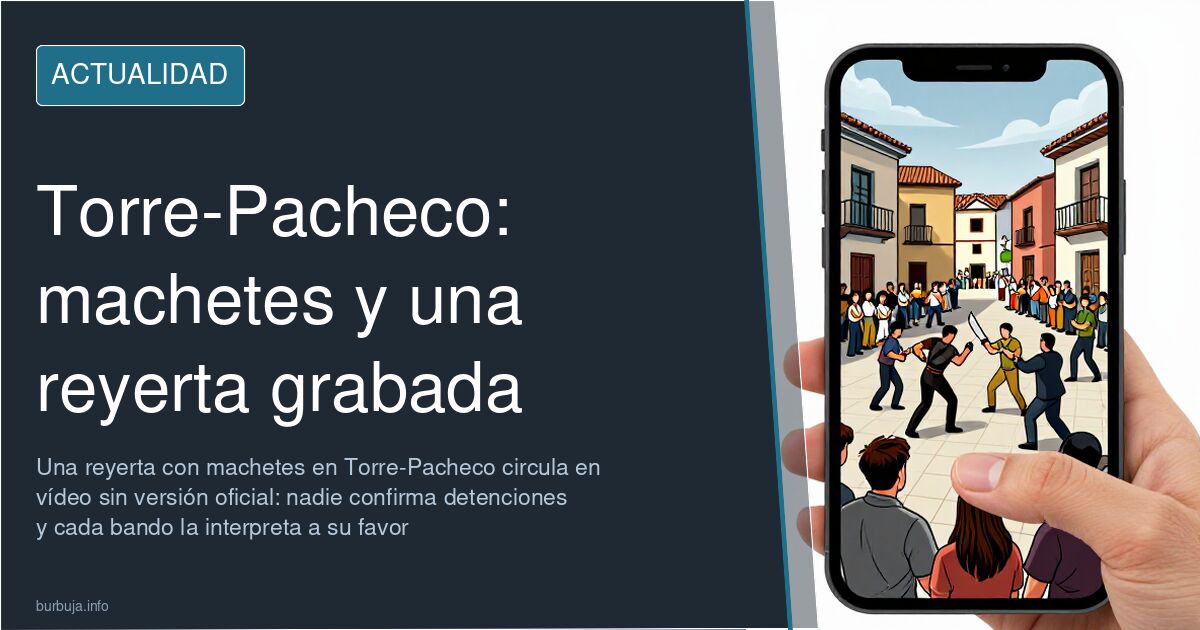
Machetes in Torre-Pacheco: The Video Igniting Coexistence Debate
A video under a minute long has been enough to reopen the country's most uncomfortable conversation. In Torre-Pacheco (Murcia), several people clash in the street, with a machete and a brick as the main weapons, while neighbors record without intervening. There is no confirmation of serious injuries or arrests. Yet, the incident is already circulating as yet another chapter in a story Spain knows by heart.
It's worth lowering the volume and looking closely. Because there's a gap between the headline and what actually peine that almost no one bridges.
What Does the Torre-Pacheco Altercation Video Show?
The footage shows a group embroiled in a fight in broad daylight. One of the individuals wields a machete and strikes another person multiple times; several interpretations of the images suggest he strikes with the flat side, not the blade, which would explain the absence of visible open wounds. A brick is also thrown, its impact clearly heard in the audio. A recurring observation points to the person dressed in dark clothing: they go from trying to separate the parties to being the one who attacks most fiercely.
None of this is an official report. It's an interpretation of a short, mobile-recorded video uploaded without context. The difference matters.
Torre-Pacheco: Intensive Agriculture and Coexistence in the Campo de Cartagena
Torre-Pacheco is a Murcian municipality with an agricultural economy, known for its melons and a robust fruit and vegetable production that absorbs labor from many nationalities. This is the backdrop almost no one discusses: a region whose fields rely on migrant workers and where very different realities coexist in a small space. As a witty remark from the debate summarizes, 'they came to harvest and got into a mess.'
When everyday friction turns into a machete fight, the useful question isn't where each person comes from, but what's failing in coexistence and the management of neighborhoods that grow faster than their public services.
From Local Incident to National Political Headline
The echo quickly jumped from the town to the political trenches. One side of the debate directly blames immigration policy and calls for more control; another warns that a specific altercation doesn't define an entire group and points to immediate viralization as the real problem. Amidst this, some argue the issue is judicial, not migratory, although accusations about specific rulings circulating online are not accompanied by any documents: they are unsubstantiated claims.
The most uncomfortable reflection comes from another recurring idea: antiestéticar and confrontation are politically profitable, which is why no one has a real incentive to defuse them.
What to Expect
Without an official report, confirmed arrests, or a finalized version of events, everything else is speculation with a partisan slant. The video will likely continue fueling headlines for a few weeks and then fade until the next incident. What won't change, unless someone decides otherwise, is the tense coexistence in the agricultural towns of the southeast.
A video under a minute long has been enough to reopen the country's most uncomfortable conversation. In Torre-Pacheco (Murcia), several people clash in the street, with a machete and a brick as the main weapons, while neighbors record without intervening. There is no confirmation of serious injuries or arrests. Yet, the incident is already circulating as yet another chapter in a story Spain knows by heart.
It's worth lowering the volume and looking closely. Because there's a gap between the headline and what actually peine that almost no one bridges.
What Does the Torre-Pacheco Altercation Video Show?
The footage shows a group embroiled in a fight in broad daylight. One of the individuals wields a machete and strikes another person multiple times; several interpretations of the images suggest he strikes with the flat side, not the blade, which would explain the absence of visible open wounds. A brick is also thrown, its impact clearly heard in the audio. A recurring observation points to the person dressed in dark clothing: they go from trying to separate the parties to being the one who attacks most fiercely.
None of this is an official report. It's an interpretation of a short, mobile-recorded video uploaded without context. The difference matters.
Torre-Pacheco: Intensive Agriculture and Coexistence in the Campo de Cartagena
Torre-Pacheco is a Murcian municipality with an agricultural economy, known for its melons and a robust fruit and vegetable production that absorbs labor from many nationalities. This is the backdrop almost no one discusses: a region whose fields rely on migrant workers and where very different realities coexist in a small space. As a witty remark from the debate summarizes, 'they came to harvest and got into a mess.'
When everyday friction turns into a machete fight, the useful question isn't where each person comes from, but what's failing in coexistence and the management of neighborhoods that grow faster than their public services.
From Local Incident to National Political Headline
The echo quickly jumped from the town to the political trenches. One side of the debate directly blames immigration policy and calls for more control; another warns that a specific altercation doesn't define an entire group and points to immediate viralization as the real problem. Amidst this, some argue the issue is judicial, not migratory, although accusations about specific rulings circulating online are not accompanied by any documents: they are unsubstantiated claims.
The most uncomfortable reflection comes from another recurring idea: antiestéticar and confrontation are politically profitable, which is why no one has a real incentive to defuse them.
What to Expect
Without an official report, confirmed arrests, or a finalized version of events, everything else is speculation with a partisan slant. The video will likely continue fueling headlines for a few weeks and then fade until the next incident. What won't change, unless someone decides otherwise, is the tense coexistence in the agricultural towns of the southeast.
Summary of a discussion on Burbuja.info - Foro de economía, actualidad y política., translated from Spanish and reviewed before publication. Read the full discussion (67 replies).
More summaries
-
Intoxicated Voter Confronts VOX Tent with Dog Present
Video shows a visibly intoxicated man confronting a VOX tent while his dog retreats: no official confirmation of complaints yet.
-
Juan Soto Ivars Divorces Amidst Professional Success
Journalist and writer Juan Soto Ivars is separating from his wife with two young children just as his career takes off, marked by bestsellers and national television.
-
Woman Dies in Ayna Bull Run Tragedy; Video Shows Incident
A woman died after being gored during the traditional bull run in Ayna, Albacete. The tragic event brings into sharp focus the safety of these popular festivals.
-
Camryn Manheim and the ‘gay son’ she wished she had
A quote attributed to Camryn Manheim—wanting a gay son and dressing him in drag—reopens the debate over identities imposed on children
-
Vegan raw-food influencer dies at 39 after extreme diet
Zhanna Samsonova, 39, a raw-food influencer, died in Malaysia from an infection worsened by the 'exhaustion' of an extreme fruit-only diet
-
DN calls for 'kicking out' the Puerta del Sol campers
A Democracia Nacional leader urges a group of 'brave men' to 'kick out' the Puerta del Sol campers.