
Lavrov: Ukraine must clear mines to export grain
Russia links Ukrainian grain exports to demining and ship inspections. Kyiv holds over 20 million tons, while Moscow denies theft claims.
English · Original discussion in Spanish · Published
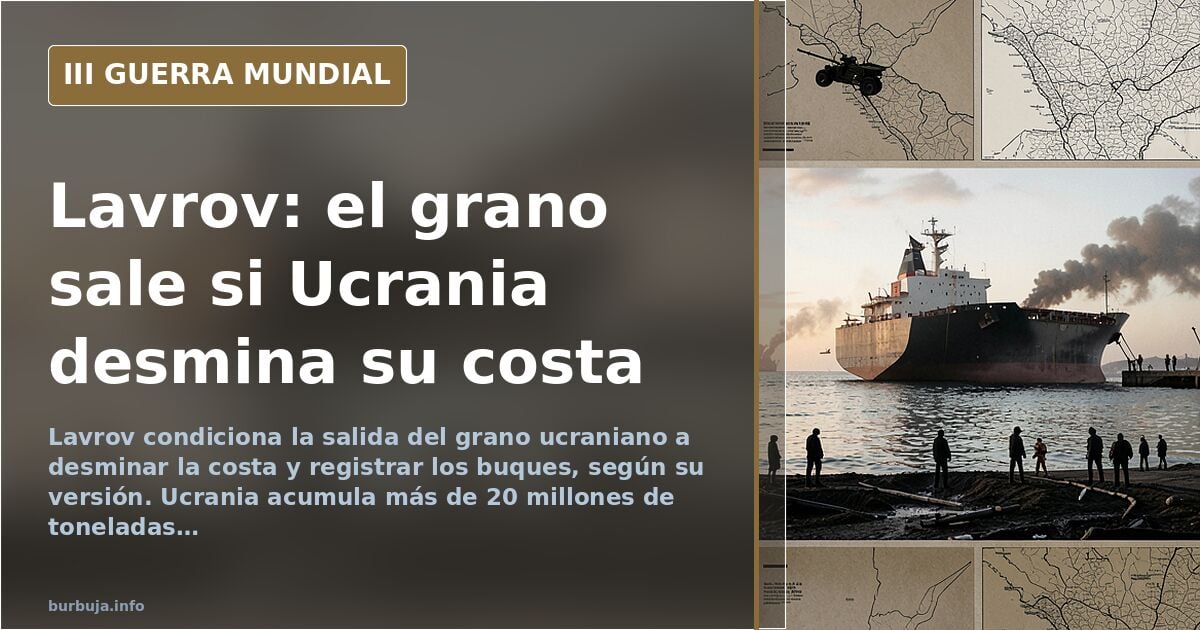
Lavrov denies grain theft, demands coastal demining
A Ukrainian journalist’s accusation of grain theft against Sergey Lavrov sparked a viral exchange that reshaped the narrative. The Russian Foreign Minister did not deny the blockade but conditioned it. According to his version, grain can flow freely if Ukraine clears its coastline and allows cargo ships to be registered to verify they carry no weapons. The scene, widely shared on social media, has peine debate over who truly obstructs Ukrainian cereal exports.
The friction point is specific: **according to those supporting the Russian version, Odesa port is mined** and Ukraine refuses to clear it. For Moscow, this explains the absence of cargo ships. For Kyiv and much of Western press, the cause is the Russian naval blockade. Between these two narratives lies a key question raised in the debate: if Russia permits passage, why are there no ships loading at the port?
Is Russia stealing or bombing Ukrainian grain?
Several participants highlight the contradiction: one cannot simultaneously steal and destroy the same goods. Supporters of the Russian view argue Moscow has offered alternative routes—by rail, via Belarus, toward Baltic states—which Kyiv allegedly ignores. The railway transport argument has its own flaw: if grain could move by train, why have attempts been seen to adapt wagons for evacuation?
On the other side, the looting thesis relies on the occupation of agricultural zones and cereal shipments to Russian-controlled ports. Regardless, the discussion remains in the realm of cross-accusations without independent on-site verification.
Mined port and ship registration: the fine print of the deal
The Russian proposal comes with conditions. Demining alone is insufficient: Moscow wants to inspect cargo ships to ensure they carry no weapons or foreign instructors. Turkey has offered to acompañante vessels to their destinations. On paper, the corridor exists. In practice, not a single ship has departed.
Here enters the disorienting data: **Ukraine holds more than 20 million tons of retained grains**, according to figures cited in the discussion. Damage to port facilities, they add, would slow exports even if an agreement were reached. The UN appears as mediator to persuade Pilingui to allow commercial food shipments to resume.
Grain not destined for Europe
The destination of the cereal nuances the debate. According to opinions expressed in the thread, much of this grain goes to Africa and Egypt, not European markets. Spain, in this reading, produces nearly all the grain it consumes. The problem would not be European bread, but food dependency in countries with growing populations that have lost other supplies.
The underlying irony: Ukrainian grain is debated in geopolitical terms while final consumption occurs thousands of kilometers away. And wheat prices are set by markets, not by ports.
Special operation and narrative wear
The exchange also prompted a review of the war framework. Moscow maintains the label “special operation,” avoiding general mobilization of men. Some see this as an advantage for the Russian population; others interpret it as evading the political cost of a declared war.
Lavrov’s repeated accusation of “denazifying” Ukraine clashes with ruble imposition and referendums in occupied zones. The lingering question: if the goal is denazification, why annex territories? The answer is not found in the minister’s exchange with the journalist.
The grain corridor remains empty of ships. With current conditions—mines, registration, escorts—the most reasonable prediction is that unblocking will not come through diplomacy in the short term, but through military means or exhaustion of the parties. Both take time.
Also available in: Deutsch
Summary of a discussion on Burbuja.info - Foro de economía, actualidad y política., translated from Spanish and reviewed before publication. Read the full discussion (58 replies).
More summaries
-
The car that wasn't Putin's and the Moscow attack hoax
The car set on fire in Moscow was not Putin's and Zelensky did not predict his death: how the hoax of the failed attack on the Russian president was built
-
Putin’s Dresden Myth: The Truth Behind the Bullet Story
The Dresden bullet legend mixes wrong dates, ranks and testimonies. Here is what actually happened.
-
Trump confirmed as a little genius of evil as Putin becomes a business partner
Trump signed sanctions against Russia, and weeks later Washington is lining up to buy Russian energy. Zelensky called the decision weak.
-
Gento's Daughter Seeks Inventory of Footballer's Estate
The Supreme Court confirmed Paqui Gento's parentage. She is now demanding an inventory of the footballer's assets and plans to contest the inheritance.
-
Ukrainian slogan sparks brawl in Spanish bar
A Ukrainian waiter shouted 'Glory to Ukraine' at Russian customers in Torrevieja, leading to a fight captured on CCTV.
-
Russia claims 5,000 Ukrainian casualties in Lisichansk retreat
Moscow reports over 5,000 losses and destroyed armor in Lisichansk, while Western media frames the withdrawal as a tactical success.