
Jumilla Mayor Offers Municipal Spaces, PP Faces Backlash
Jumilla's mayor offers municipal facilities to Muslims, drawing criticism from within the PP who label it 'cowardly right-wing'.
English · Original discussion in Spanish · Published
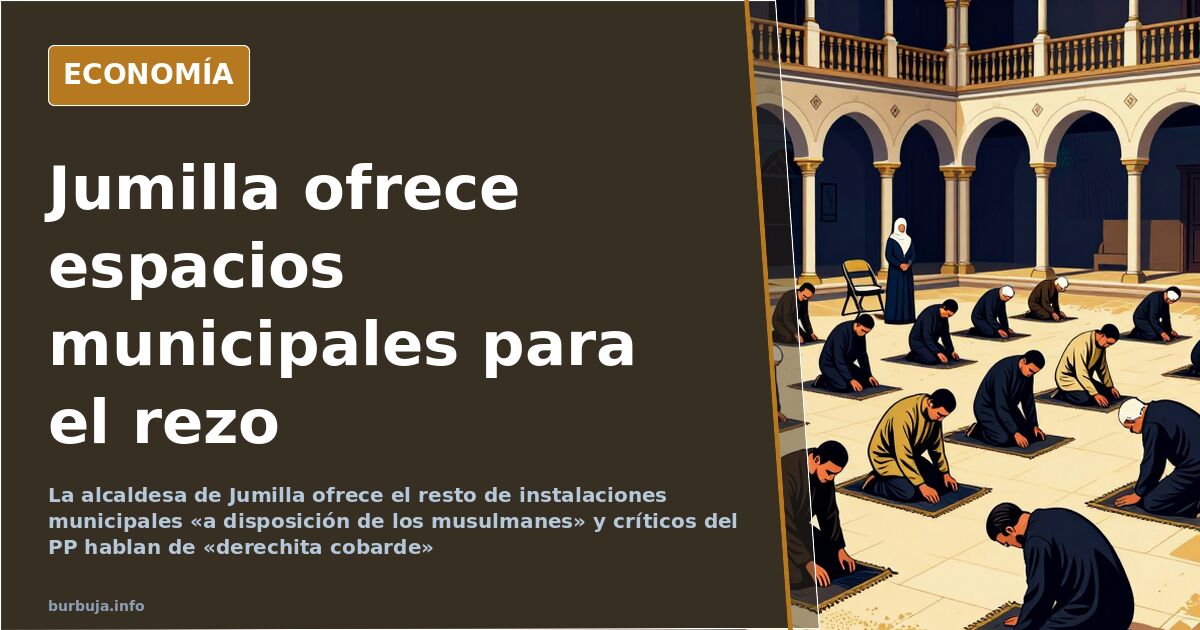
Jumilla Mayor Offers Municipal Spaces, PP Faces Backlash
The mayor of Jumilla has offered remaining municipal facilities to be "at the disposal of Jovenlandeses," according to a message shared during the debate. This decision triggered a political storm in which the People's Party (PP) is portrayed by critics as a "cowardly right-wing" that yields to pressure. The thread notes the municipality has 72 registered nationalities and one participant states it has 27,000 inhabitants.
PP Cedes Space and Loses Narrative Control
The cession of municipal facilities for Muslim prayer has been interpreted by many sectors as a capitulation by the PP to media and political pressure, according to opinions gathered in the debate. The mayor, far from defending the measure as an exercise in coexistence, opted for a forward escape that her own voters do not understand, some participants argue. The most repeated argument is that the PP, once again, acts like a "blue PSOE": doing what it would criticize on the left, but without the ideological cover.
Discontent is not only from the opposition. On the party's hard flank, there is talk of betrayal and weakness. The cession of spaces such as the plenary hall or the theater—explicitly mentioned in the discussion—is perceived as a symbol that the PP has lost control of the narrative. The lingering question is why the City Council did not explain from the start that this was a matter of space management rather than a religious concession.
Which Spaces Are Ceded and Which Are Not?
According to interventions, sports facilities would be excluded from the cession, but alternatives such as the plenary hall, the theater, or any other necessary facility would be offered. That ambiguity—"whatever is needed"—is precisely what raised alarms. It does not specify what uses will be allowed or under what conditions, leaving the door open to interpretations.
Some maintain that the cession should have been accompanied by clear regulations: allowing religious events without animal sacrifice, for example, and prohibiting any practice involving torture or slaughter. That nuance, which could have defused part of the controversy, was not made explicit. The result is an open flank both for those criticizing the cession and for those demanding guaranteed religious freedom without ambiguity.
Economic Background: Labor and Wages
Beyond the political noise, there is an underlying economic issue no one wants to put in writing: according to arguments in the debate, the Muslim community in Jumilla is linked to the agricultural sector, and local landowners are interested in keeping them there to avoid raising wages. This mutual dependence explains why the cession of spaces is not just a matter of faith, but of labor balance. If the community leaves, the fields are left without hands willing to work for the current pay.
The argument, presented bluntly in the discussion, points to deep-seated hypocrisy: the cession is criticized, but the productive model that makes it necessary is not questioned. In this context, the mayor is not yielding to Jovenlandeses, but to the agricultural employers' association that needs the workforce to remain settled, according to this interpretation. The religious controversy masks a more uncomfortable debate about wages and working conditions.
Political Reaction: 'Cowardly Right-Wing'
The label of "cowardly right-wing" has become entrenched in the analysis. The PP is accused of not defending its positions clearly and of bowing to pressure from the media and the left. The electoral surprise some predict for upcoming elections is fueled by episodes like this, where the right-wing voter finds no firm alternative.
Criticism comes not only from outside. Within the same political sphere, it is noted that the PP has buried issues such as the monarchy or the role of the Church, institutions some consider traitors to Spain. The cession of municipal spaces for Muslim prayer is seen as another link in a chain of concessions that began years ago and shows no sign of stopping.
The Struggle for Public Space
The case of Jumilla is not isolated. Similar episodes have occurred in other cities, with street prayers and cessions of public spaces generating tensions. The difference here is that the mayor belongs to the PP, breaking the script that these cessions are a leftist monopoly. This explains the virulence of the debate.
The underlying discussion is who has the right to use public space and under what conditions. Some defend that public space belongs to everyone and that religious freedom protects these uses. Others argue that ceding municipal facilities for religious events opens a door that is difficult to close later. The mayor, for now, has opted for cession without a clear framework. The political cost will be paid at the ballot box.
What the official statement does not say is how much adapting these spaces will cost or who will bear the expense. With 72 registered nationalities and an agricultural sector dependent on migrant labor, the cession of premises is the tip of the iceberg. The unsettling data point: sports facilities are excluded, but the plenary hall is not.
The mayor of Jumilla has offered remaining municipal facilities to be "at the disposal of Jovenlandeses," according to a message shared during the debate. This decision triggered a political storm in which the People's Party (PP) is portrayed by critics as a "cowardly right-wing" that yields to pressure. The thread notes the municipality has 72 registered nationalities and one participant states it has 27,000 inhabitants.
PP Cedes Space and Loses Narrative Control
The cession of municipal facilities for Muslim prayer has been interpreted by many sectors as a capitulation by the PP to media and political pressure, according to opinions gathered in the debate. The mayor, far from defending the measure as an exercise in coexistence, opted for a forward escape that her own voters do not understand, some participants argue. The most repeated argument is that the PP, once again, acts like a "blue PSOE": doing what it would criticize on the left, but without the ideological cover.
Discontent is not only from the opposition. On the party's hard flank, there is talk of betrayal and weakness. The cession of spaces such as the plenary hall or the theater—explicitly mentioned in the discussion—is perceived as a symbol that the PP has lost control of the narrative. The lingering question is why the City Council did not explain from the start that this was a matter of space management rather than a religious concession.
Which Spaces Are Ceded and Which Are Not?
According to interventions, sports facilities would be excluded from the cession, but alternatives such as the plenary hall, the theater, or any other necessary facility would be offered. That ambiguity—"whatever is needed"—is precisely what raised alarms. It does not specify what uses will be allowed or under what conditions, leaving the door open to interpretations.
Some maintain that the cession should have been accompanied by clear regulations: allowing religious events without animal sacrifice, for example, and prohibiting any practice involving torture or slaughter. That nuance, which could have defused part of the controversy, was not made explicit. The result is an open flank both for those criticizing the cession and for those demanding guaranteed religious freedom without ambiguity.
Economic Background: Labor and Wages
Beyond the political noise, there is an underlying economic issue no one wants to put in writing: according to arguments in the debate, the Muslim community in Jumilla is linked to the agricultural sector, and local landowners are interested in keeping them there to avoid raising wages. This mutual dependence explains why the cession of spaces is not just a matter of faith, but of labor balance. If the community leaves, the fields are left without hands willing to work for the current pay.
The argument, presented bluntly in the discussion, points to deep-seated hypocrisy: the cession is criticized, but the productive model that makes it necessary is not questioned. In this context, the mayor is not yielding to Jovenlandeses, but to the agricultural employers' association that needs the workforce to remain settled, according to this interpretation. The religious controversy masks a more uncomfortable debate about wages and working conditions.
Political Reaction: 'Cowardly Right-Wing'
The label of "cowardly right-wing" has become entrenched in the analysis. The PP is accused of not defending its positions clearly and of bowing to pressure from the media and the left. The electoral surprise some predict for upcoming elections is fueled by episodes like this, where the right-wing voter finds no firm alternative.
Criticism comes not only from outside. Within the same political sphere, it is noted that the PP has buried issues such as the monarchy or the role of the Church, institutions some consider traitors to Spain. The cession of municipal spaces for Muslim prayer is seen as another link in a chain of concessions that began years ago and shows no sign of stopping.
The Struggle for Public Space
The case of Jumilla is not isolated. Similar episodes have occurred in other cities, with street prayers and cessions of public spaces generating tensions. The difference here is that the mayor belongs to the PP, breaking the script that these cessions are a leftist monopoly. This explains the virulence of the debate.
The underlying discussion is who has the right to use public space and under what conditions. Some defend that public space belongs to everyone and that religious freedom protects these uses. Others argue that ceding municipal facilities for religious events opens a door that is difficult to close later. The mayor, for now, has opted for cession without a clear framework. The political cost will be paid at the ballot box.
What the official statement does not say is how much adapting these spaces will cost or who will bear the expense. With 72 registered nationalities and an agricultural sector dependent on migrant labor, the cession of premises is the tip of the iceberg. The unsettling data point: sports facilities are excluded, but the plenary hall is not.
Also available in: Deutsch
Summary of a discussion on Burbuja.info - Foro de economía, actualidad y política., translated from Spanish and reviewed before publication. Read the full discussion (135 replies).
More summaries
-
Jumilla's Tension: Religious Rights vs. Economic Pressure
Social unrest in Jumilla highlights the clash between religious freedom and economic anxieties over public aid and integration.
-
Vox Stands Alone in Demanding End to Moroccan Agricultural Funding
Vox calls for suspension of funding to Morocco's agriculture, while other parties remain silent. An economic and political debate.
-
Maricarmen died sedated before signing contract
Maricarmen died after being sedated in a Spanish hospital. The timing near elections fuels suspicions about medical protocols.
-
Spain's DANA Recovery: Who Controls the Aid Funds?
A temporary bypass detour in Valencia cost €13m, sparking debate over audit transparency and emergency contract awards.
-
Spanish Content Creator Sparks Debate on Female Interest Claims
A Spanish influencer defends his views on women seeking resources, igniting a fierce debate about the booming masculinity coaching industry.
-
From ECB Liquidity to Corralito: Measuring Economic Collapse
Recent violent incidents in Barcelona and the death of Civil Guards revive debates on systemic fragility and the risk of a financial corralito.