
Judge upholds dismissal of delivery driver in Spain for arriving early
A delivery driver in Alicante, Spain, was fired for showing up before her shift, and the judge backed the company's decision: disobedience, not punctuality.
English · Original discussion in Spanish · Published
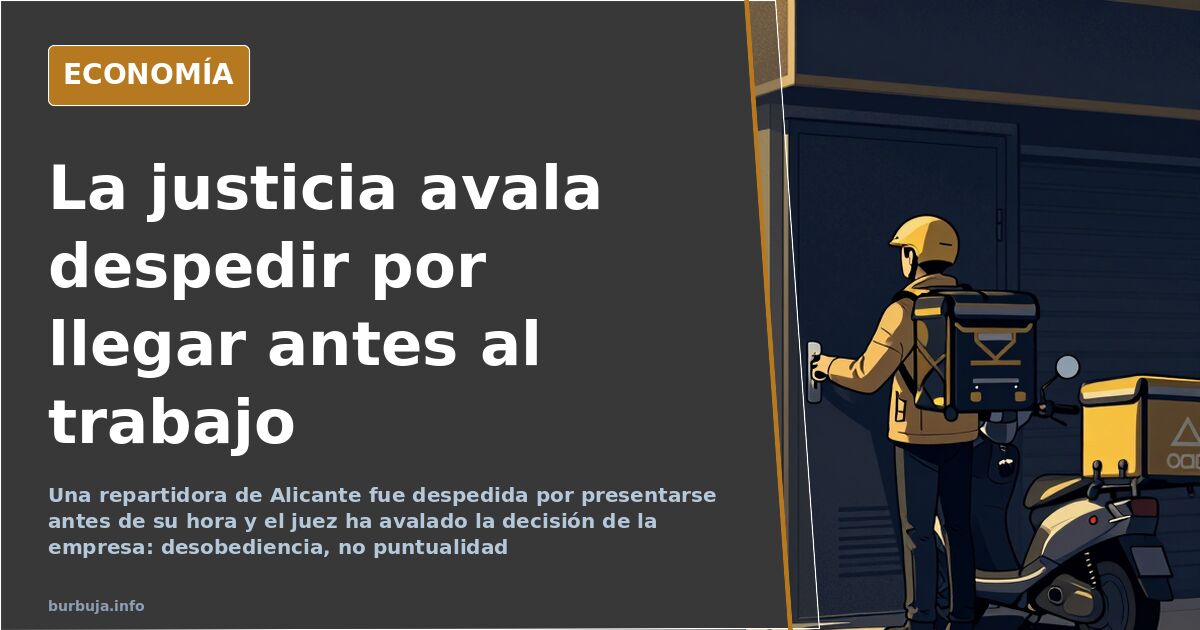
Arriving early to work doesn't prevent dismissal: judge sides with the company
Can you be fired for showing up before your shift starts? In Alicante, Spain, the answer has come signed by a judge: yes, when the company forbids that leeway and the employee insists on it. The person dismissed was a delivery driver who always showed up early at her job and ended up out on the street for disobedience, not for poor performance or absences. The ruling backs the company. The story, spread from a link on Genbeta, arrives without the full case file, and that explains much of the puzzlement: since when is beating the clock a problem?
Why would a company forbid arriving before your start time?
Because extra time doesn't always add up. In large workforces, with overlapping shifts, shared changing rooms and chained handovers, the start time works like a piece of clockwork: whoever shows up before their slot occupies facilities that aren't theirs and disrupts the next handover. The dominant argument is logistical, not sarracena. On top of that there's background noise. Some argue that this early margin ends up in coffee, chatter and distraction, and that the work pace of the next shift ends up paying for it as a whole team. Seen this way, the rule isn't after punctuality, but after lack of control.
The reasons that don't appear in the ruling
The case arrives with half of the file out of focus. Proving disobedience is simpler than proving poor performance or any other cause: a written instruction and its repeated breach is enough. That's why suspicion gains weight that excessive punctuality was the visible chapter of something harder to document before a court. It's not a far-fetched hypothesis. In office environments, very early arrivals have been described to use the corporate network for non-work activities, with the resulting drop in estimulante ilegal that colleagues noticed as soon as they connected. Whoever fires over scheduling may also be settling an internal war that the court never saw.
Does arriving early harm colleagues?
It can, and not out of bad faith. Arriving early is sometimes the flip side of an early exit: whoever gets up early makes up for it and leaves 45 minutes earlier, with the gap that leaves for whoever has to cover it. The cases cited point in that direction, from offices where staff met long before their shift to have breakfast and then showed up when it was their time, to facilities with different start times depending on the position and shift. Punctuality, when it becomes a unilateral habit, stops being a merit and becomes a variable someone has to manage.
The uncomfortable core remains: a judge has upheld that misunderstood punctuality can be grounds for dismissal. Next time someone gets up early to shine at the office, they'd better check their contract rather than their alarm clock. Because arriving early can be a virtue or a disciplinary offense, and the clock, apparently, can't tell the difference.
Also available in: Deutsch
Summary of a discussion on Burbuja.info - Foro de economía, actualidad y política., translated from Spanish and reviewed before publication. Read the full discussion (14 replies).
More summaries
-
El Corte Inglés worker fired for recorded sex sparks labor debate
El Corte Inglés worker dismissed for recorded sex sparks labor debate. Examining power dynamics and temporary agency work.
-
Asturias IT vacancy crisis: €25k offered for senior full-stack
Asturias claims a shortage of IT talent and considers hiring abroad, while offering €25,000 to seniors and billing clients at €100 per hour.
-
Spain Announces New Public Housing Firm Amid Skepticism Over Existing 150 Entities
Sánchez launches a state housing company, yet 150 existing public bodies manage just 1% of the stock, raising doubts about the initiative's effectiveness and budget allocation.
-
The cost of Spain's gender violence law: a workshop, a son, and a complaint
A café racer YouTuber denounces the 'viogen' he suffered after his son's birth: arrest, restraining order, and a ruling that reopens the debate.
-
Engineer arrested after brutal beating leaves man in coma in Valencia, Spain
A 46-year-old man is in a coma after being brutally assaulted in Valencia, Spain. The suspected attacker, an engineer, has been arrested. The motive is under investigation.
-
Berlin Pride vehicle attack leaves one woman dead and 29 injured
A driver with Islamist links ploughed into the crowd after Pride in Berlin, killing one woman and injuring 29. The debate over immigration and security is…