
Japan: Visitations are great, but living there is another matter
Cleanliness, order, and the cheap yen encourage visits to Japan, but living there year-round is another story, according to the debate.
English · Original discussion in Spanish · Published
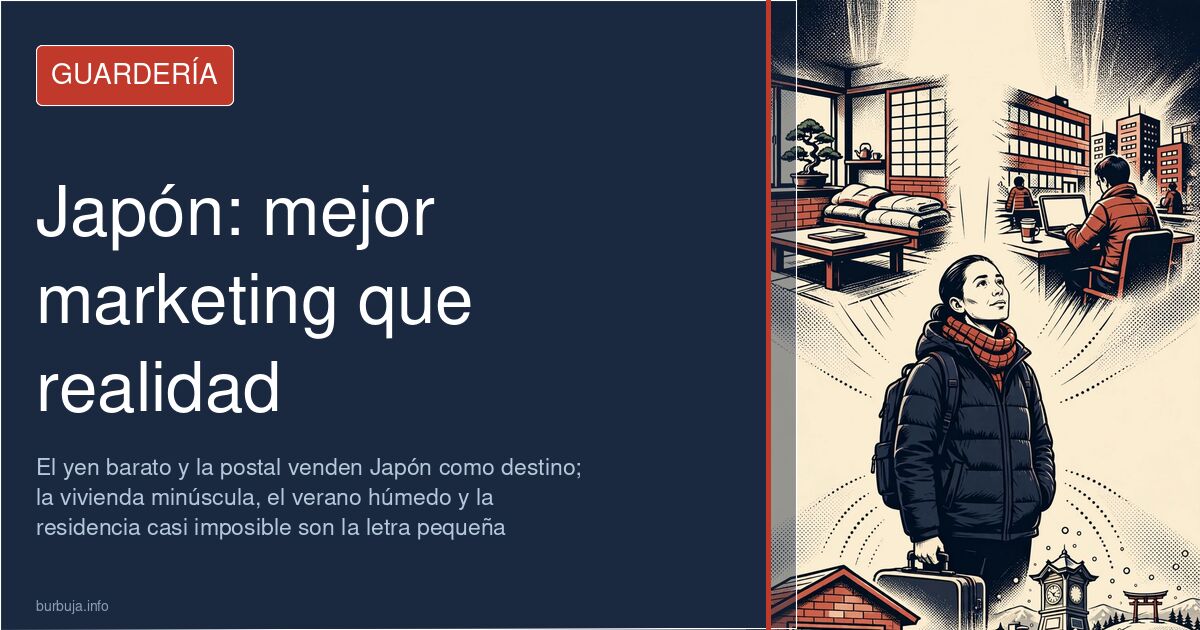
Japan: Visit and live, two distinct experiences
The recurring theme in the debate is that Japan is a destination for two weeks. Living there 365 days a year presents different challenges, and attempts to do so often lead to broken expectations, according to those who have tried. The country impresses visitors with its cleanliness, order, silence, safety, and efficient public transport, according to testimonies. However, some argue that the problem arises when the traveler stops being a tourist.
What visitors praise
A forum member who has traveled through 90 countries ranks Japan among his favorites: the food is good, it's inexpensive, everything is clean, and the trains are punctual—something not found everywhere. The weak yen has made trips affordable; one round alucinación from Shanghai costs around 300 euros, according to his experience. Another participant adds an aesthetic and cultural impact capable of drawing someone across half the country to see a legendary figure's temple.
Tokyo and beyond: the summer experience, according to testimonials
The extreme heat and humidity of summer are described as an ordeal for Tokyo and the regions south of it, according to those who have endured them. The advice is unequivocal: spring and autumn are better. For summer, Hokkaido offers a different climate profile. There is no consensus on winter: the question of whether it is worse than a Canadian winter remains open.
Can you live in Japan forever?
It depends on a factor not found in brochures: luck. One Spanish resident in Sapporo has been there for over a year. He arrived without interest in anime, made contacts and found a partner in Tokyo, eventually working in his vvife's family business. That is the optimistic scenario. The pessimistic view is embodied by a Spanish content creator mentioned in the thread: according to reports, he lives separately from his vvife—they remain married—in a small rented apartment with guide service included, and suspects that his residency depends on the marriage. Another forum user suggests that the contribution required to qualify for a pension could complicate retirement for those arriving late to the Japanese job market.
Anime Japan versus real Japan
What is captivating, to a large extent, is a prefabricated country. Stereotypical samurai and ninjas are distant from historical reality; it is a narrative of futurism and tradition that, according to some readings, has lost both. One theory in the thread is that Japan has been marketing its own image as an export product for decades, and the visitor buys into the advertisement. One phrase summarizes the disillusionment, according to a participant: "the largest open-air asylum in the world." On the social level, part of the debate holds that homogeneity and migration control explain a highly civic coexistence; the price, according to this view, is that the foreigner remains perpetually a guest.
A round-alucinación destination, according to the debate
The cheap yen and flights like those mentioned offer a good time to visit Japan, but the local strain caused by tourism is also noted. The shift from tourist to resident remains a minority phenomenon: according to one prediction in the thread, those who dream of moving there rarely make it past the fourth year. Japan has everything needed for many to want to return; but whether it has what is needed for many to stay is less clear.
The recurring theme in the debate is that Japan is a destination for two weeks. Living there 365 days a year presents different challenges, and attempts to do so often lead to broken expectations, according to those who have tried. The country impresses visitors with its cleanliness, order, silence, safety, and efficient public transport, according to testimonies. However, some argue that the problem arises when the traveler stops being a tourist.
What visitors praise
A forum member who has traveled through 90 countries ranks Japan among his favorites: the food is good, it's inexpensive, everything is clean, and the trains are punctual—something not found everywhere. The weak yen has made trips affordable; one round alucinación from Shanghai costs around 300 euros, according to his experience. Another participant adds an aesthetic and cultural impact capable of drawing someone across half the country to see a legendary figure's temple.
Tokyo and beyond: the summer experience, according to testimonials
The extreme heat and humidity of summer are described as an ordeal for Tokyo and the regions south of it, according to those who have endured them. The advice is unequivocal: spring and autumn are better. For summer, Hokkaido offers a different climate profile. There is no consensus on winter: the question of whether it is worse than a Canadian winter remains open.
Can you live in Japan forever?
It depends on a factor not found in brochures: luck. One Spanish resident in Sapporo has been there for over a year. He arrived without interest in anime, made contacts and found a partner in Tokyo, eventually working in his vvife's family business. That is the optimistic scenario. The pessimistic view is embodied by a Spanish content creator mentioned in the thread: according to reports, he lives separately from his vvife—they remain married—in a small rented apartment with guide service included, and suspects that his residency depends on the marriage. Another forum user suggests that the contribution required to qualify for a pension could complicate retirement for those arriving late to the Japanese job market.
Anime Japan versus real Japan
What is captivating, to a large extent, is a prefabricated country. Stereotypical samurai and ninjas are distant from historical reality; it is a narrative of futurism and tradition that, according to some readings, has lost both. One theory in the thread is that Japan has been marketing its own image as an export product for decades, and the visitor buys into the advertisement. One phrase summarizes the disillusionment, according to a participant: "the largest open-air asylum in the world." On the social level, part of the debate holds that homogeneity and migration control explain a highly civic coexistence; the price, according to this view, is that the foreigner remains perpetually a guest.
A round-alucinación destination, according to the debate
The cheap yen and flights like those mentioned offer a good time to visit Japan, but the local strain caused by tourism is also noted. The shift from tourist to resident remains a minority phenomenon: according to one prediction in the thread, those who dream of moving there rarely make it past the fourth year. Japan has everything needed for many to want to return; but whether it has what is needed for many to stay is less clear.
Summary of a discussion on Burbuja.info - Foro de economía, actualidad y política., translated from Spanish and reviewed before publication. Read the full discussion (67 replies).
More summaries
-
Real Madrid (Spain) vs state-backed clubs and Super League
Real Madrid leads the fight against state-backed clubs and the Super League, reshaping European football's financial and tactical balance.
-
Seven Years Without a Date, and a Coffee Invite That Ended in Being Blocked
Seven years without a date, three weeks of back-and-forth, and a silent block: how a coffee invite turned into a ghosting story.
-
This post on X from back when it was still Twitter is getting people talking online again.
A post from before July 2023 asked whether Penélope Cruz was Pepe Viyuela in a wig. The joke is doing the rounds again.
-
A forum debates whether showing off your body online is enough to get a date
A conversation about dating someone who flaunts their body on social media leaves one fact: the only figure mentioned is an unconfirmed height, 1,52 m
-
Jona Takalua: "I'm asexual, but I had a girlfriend"
Sexuality in the making: a personal journey between doubt and discovery. A personal account details the complex process of...
-
Athenea del Castillo and the manifesto she refused to sign
Athenea del Castillo, Real Madrid player, refused to sign the women's national team manifesto. Her decision reignited the debate over the role of…