
Italian pasta: bronze dies and wheat protein drive up the price
Bronze-extruded pasta rarely costs less than 4 euros per half kilo, according to one forum user. Some argue that 13 grams of protein per 100 of wheat is the real marker of quality.
English · Original discussion in Spanish · Published
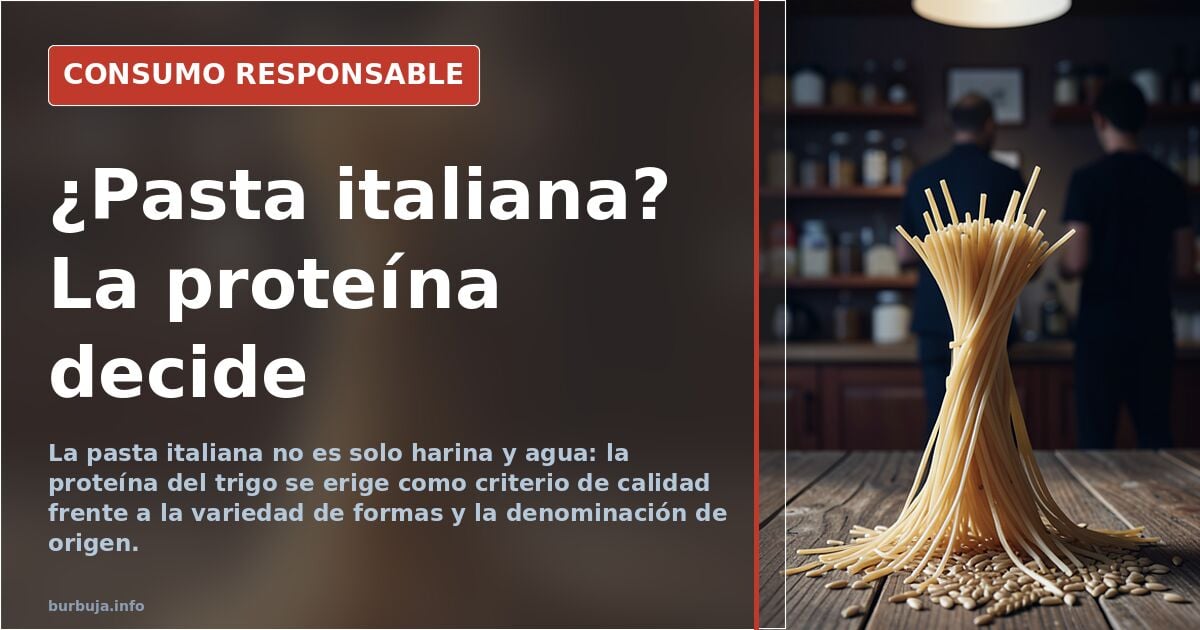
Italian pasta isn't just flour and water: bronze and wheat change everything
Italian pasta is flour, water and salt. That's the whole definition, and yet it's a product that fills entire shelves in any supermarket. The nuance appears when someone brings up the extrusion method: pasta drawn through bronze dies comes out with a rough surface that holds onto sauce, while Teflon-extruded pasta comes out smooth and slippery. That's where the fight begins.
Price marks the dividing line. A half-kilo pack of bronze-extruded pasta doesn't drop below 4 euros, according to one forum user, and it usually shows up in expensive shops, next to the industrial supermarket pasta sold at a fraction of that cost. The difference isn't just in the finish: anyone who has eaten pasta in Italy will tell you that, once you're back, the stuff on the shelf seems like a different product.
What makes a pasta high quality
The criterion that comes up most often isn't origin or shape, but protein. Some argue that wheat flour with at least 13 grams of protein per 100 is the sign of a well-made pasta: more gluten, more structure, better al dente performance. Everything else —the ridges, the tonalidad, the brand— takes a back seat.
Shape, however, has its fiercest defenders. Some champion penne rigati, rigatoni, farfalle or fusilli for their ability to trap sauce. And then there's a lesser-known piece: ziti, a long tubular shape that, according to its fans, lets the sauce soak all the way inside. Curiously, it's one of the few Italian pastas that's considered acceptable to break.
The tomato matters more than the wheat
There's a camp that downplays the role of the shape itself. What matters, the argument goes, is the sauce: tomato, meat and Mediterranean spices, with cheese as the second pillar. Pasta would be the vehicle, not the star. From that point of view, arguing about the ridges on a macaroni is arguing about the packaging.
The counterpoint comes from the other extreme: Asian noodles. They're accused of being monotonous —flour, water and little else— compared to the Italian variety, though there are also those who defend Chinese noodles with MSG, and those who remind us that Chinese, Japanese or Spanish pasta has its own repertoire. The comparison does serve a purpose: no cuisine holds a monopoly on carbohydrates.
The real question isn't whether people like Italian pasta. It's how much of what's sold as such is the real thing. With protein as the filter and bronze as the price frontier, the weekly plate of macaroni invites an uncomfortable audit. Next time you fill your cart, read the label: the data is right there, and the manufacturer didn't print it out of generosity.
Also available in: Deutsch
Summary of a discussion on Burbuja.info - Foro de economía, actualidad y política., translated from Spanish and reviewed before publication. Read the full discussion (42 replies).
More summaries
-
Toothpaste as a first-aid kit: from cold sores to polishing silver
From polishing silver and CDs to the risks on burns and mucous membranes: the real uses of white toothpaste and the health warnings that advise against it
-
Toothpaste: the 1450 ppm fluoride level almost nobody understands
Almost every toothpaste contains 1450 ppm of fluoride, regardless of price. The real debate lies in the type of fluoride, the abrasive and the additives.
-
Toothpaste under fire: dry brushing and fluoride questioned
Dry brushing, hydrogen peroxide and doubts about fluoride fuel a debate over whether toothpaste and mouthwash are an unnecessary expense
-
Magnesium: Real Doses, Absorption and Fear of Excess
Two 2-gram doses of citrate, 650 mg of ionic magnesium, morning dizziness and legs that stop hurting: the experience has no verdict.
-
Fortysomething in Spain lays out plan to live on minimum income and travel to Indochina
A user says a locker room photo of his topped 200 reactions and that he plans to live off Spain's IMV minimum income, the gym and a trip to Indochina in 2028.
-
Reverse physical changes: when gym gains vanish after steroids
A forum account describes a steroid user who lost muscle mass after quitting. What happens to muscle gained with hormonal help and why it doesn't last.