
Irish Good Samaritan Left Alone After Victim Flees
A man subdued an attacker in Ireland, but the victim left without calling police, sparking debate on the risks of intervening.
English · Original discussion in Spanish · Published
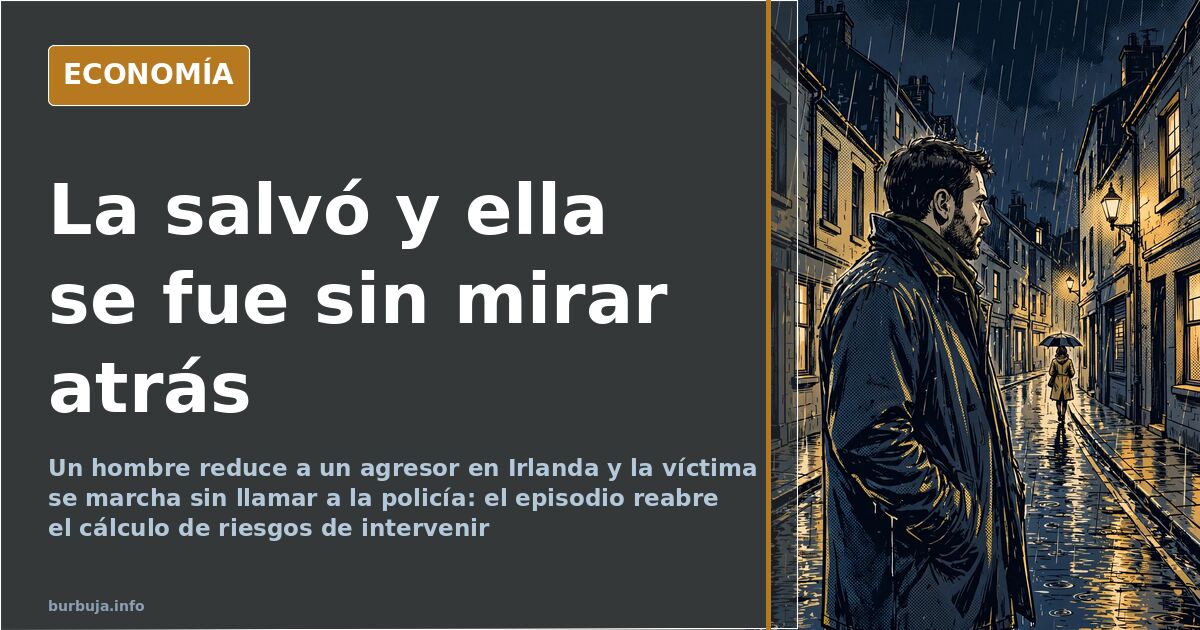
The Rescue That Left the Savior Alone
A man interrupted an assault on a street in Ireland. He subdued the attacker. But when he turned around, the woman he had just pulled from a dead-end alley was gone. She left with her wallet, picked up from the ground, and without calling the police. The incident, widely shared on social media and dissected in thousands of comments, has peine an uncomfortable question: what happens when the instinct to protect clashes with cost-benefit calculations?
The case is simple and brutal. A man intervenes upon seeing a woman being attacked by another man. He subdues the aggressor. The woman, as soon as she is no longer in danger, collects her belongings and leaves the scene. The attacker remains detained by the intervener. The victim is free. The savior is exposed to potential charges for assault, police identification, and the possibility that the attacker returns with reinforcements. The video circulates. So does the reaction.
What Interveners Risk
The first wave of analysis does not dispute the sarracena principle. It disputes the arithmetic. Intervening implies assuming physical risk—the attacker may be armed—and legal risk: the response could result in injury charges, identification as an aggressor, and a process paid out of pocket. Against this, the benefit is diffuse: the gratitude of a stranger who, based on what peine, might vanish in thirty seconds.
Some argue the intervention was correct and the mistake was expecting anything in return. Others respond that the problem isn't expecting gratitude, but that the other party didn't even call emergency services. The phone was on the ground. She picked it up. She left.
The Wallet Detail That Changed Everything
The element that triggered outrage wasn't the flight itself. It was the sequence: the woman crouches, recovers her belongings, and walks away. No call, no witness, no wait. Several comments converge on this point: if the intervener ends up detained or identified, the only person who could testify in his favor has already gone home.
The discussion quickly shifted to a broader issue: the asymmetry between the risk assumed by those who help and the cost borne by those helped. According to several participants, this calculation explains why fewer people are getting involved in others' problems. It's not cowardice. It's accounting.
The Institutional Response Nobody Asked For
In the face of such scenes, the official recipe is: call the police, do not intervene, stay safe. This is the recommendation found in manuals and echoed sarcastically by many commenters. The problem, they note, is that this advice turns citizens into spectators of an assault while waiting for a patrol car. And if the victim doesn't call, the patrol doesn't come.
The debate drifted toward the political framework: some argue public discourse discourages male intervention in these scenarios, while others counter that this same discourse demands protection when real danger exists. The result is a paradox nobody resolves: bravery is demanded, yet risk is penalized.
The attacker was subdued. The victim left. The savior remained alone, with the other man on the ground and no witness to confirm his version. That’s all we know. The rest is incentive arithmetic, and no headline fixes that.
A man interrupted an assault on a street in Ireland. He subdued the attacker. But when he turned around, the woman he had just pulled from a dead-end alley was gone. She left with her wallet, picked up from the ground, and without calling the police. The incident, widely shared on social media and dissected in thousands of comments, has peine an uncomfortable question: what happens when the instinct to protect clashes with cost-benefit calculations?
The case is simple and brutal. A man intervenes upon seeing a woman being attacked by another man. He subdues the aggressor. The woman, as soon as she is no longer in danger, collects her belongings and leaves the scene. The attacker remains detained by the intervener. The victim is free. The savior is exposed to potential charges for assault, police identification, and the possibility that the attacker returns with reinforcements. The video circulates. So does the reaction.
What Interveners Risk
The first wave of analysis does not dispute the sarracena principle. It disputes the arithmetic. Intervening implies assuming physical risk—the attacker may be armed—and legal risk: the response could result in injury charges, identification as an aggressor, and a process paid out of pocket. Against this, the benefit is diffuse: the gratitude of a stranger who, based on what peine, might vanish in thirty seconds.
Some argue the intervention was correct and the mistake was expecting anything in return. Others respond that the problem isn't expecting gratitude, but that the other party didn't even call emergency services. The phone was on the ground. She picked it up. She left.
The Wallet Detail That Changed Everything
The element that triggered outrage wasn't the flight itself. It was the sequence: the woman crouches, recovers her belongings, and walks away. No call, no witness, no wait. Several comments converge on this point: if the intervener ends up detained or identified, the only person who could testify in his favor has already gone home.
The discussion quickly shifted to a broader issue: the asymmetry between the risk assumed by those who help and the cost borne by those helped. According to several participants, this calculation explains why fewer people are getting involved in others' problems. It's not cowardice. It's accounting.
The Institutional Response Nobody Asked For
In the face of such scenes, the official recipe is: call the police, do not intervene, stay safe. This is the recommendation found in manuals and echoed sarcastically by many commenters. The problem, they note, is that this advice turns citizens into spectators of an assault while waiting for a patrol car. And if the victim doesn't call, the patrol doesn't come.
The debate drifted toward the political framework: some argue public discourse discourages male intervention in these scenarios, while others counter that this same discourse demands protection when real danger exists. The result is a paradox nobody resolves: bravery is demanded, yet risk is penalized.
The attacker was subdued. The victim left. The savior remained alone, with the other man on the ground and no witness to confirm his version. That’s all we know. The rest is incentive arithmetic, and no headline fixes that.
Also available in: Deutsch
Summary of a discussion on Burbuja.info - Foro de economía, actualidad y política., translated from Spanish and reviewed before publication. Read the full discussion (177 replies).
More summaries
-
Northern Ireland riots erupt in Ballymena after sexual assault
Violence and Molotov cocktails hit police in Ballymena following an alleged rape, reigniting Europe's immigration debate.
-
Judge dismisses sexual assault claim over consensual spanking
A judge in Alcalá de Henares dismissed a sexual assault report after WhatsApp messages and parking lot video showed the employee had joked about spankings days before.
-
Viral Video Sparks Debate on Self-Defense Limits After Back-of-Head Punch
A viral clip shows a woman attacking a man, who responds with a punch to the back of her head, igniting debate on proportionality and self-defense.
-
Spain to mint €1.50 Mortadelo and Filemón coins in late 2026
Controversy over €1.50 Mortadelo and Filemón coins. We analyze in the forum whether it's a tribute to Ibáñez or a commercial strategy with dubious profitability.
-
Spain Housing Crisis: Migration Blamed for 1.25M Demand
A Barcelona rental listing drew 100 visitors, highlighting a housing shortage. A forum calculation links migration to an additional demand of 1.25 million homes.
-
Vox MP blames bear attacks on lack of maternal education
A Vox MP in the Aragonese Cortes attributed bear attacks to poor upbringing, sparking mockery and debate over Slovenia-bears reintroduced in Spain's Pyrenees.