
Immigration transforms Spain’s urban demographics
The growing visibility of migrant communities in Spanish cities fuels debate on integration, socioeconomic impact and migration policy…
English · Original discussion in Spanish · Published
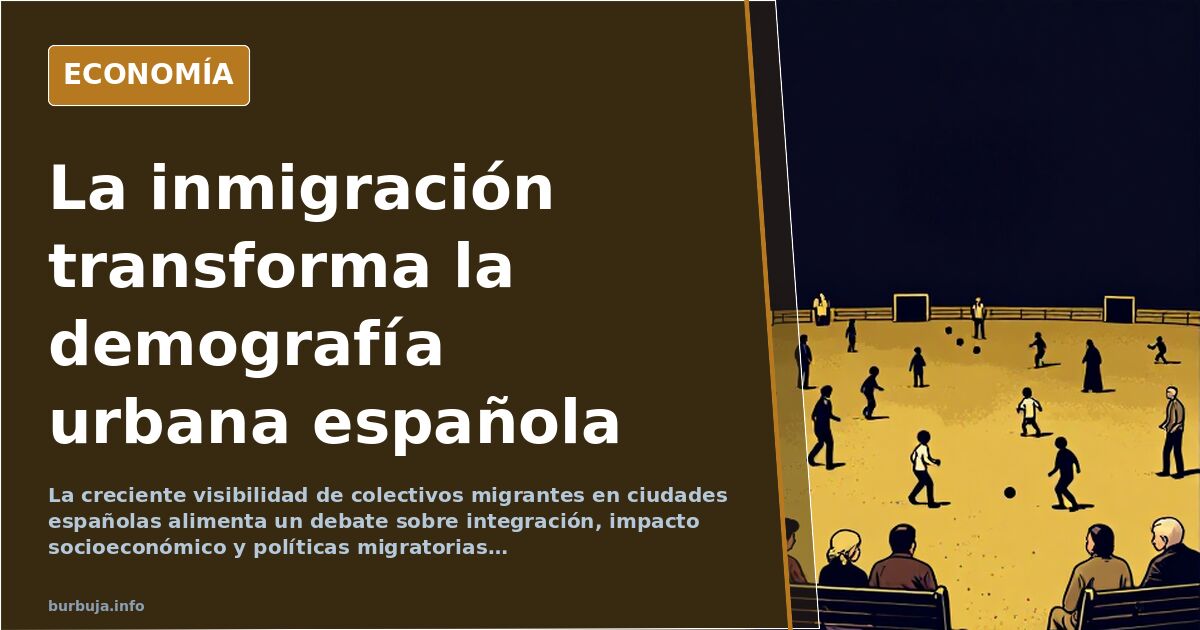
Spain’s urban demographics are undergoing an unprecedented demographic shift
The perception of accelerated demographic change in Spanish cities has become a recurring topic of debate. An analysis of conversations in specialized forums reveals growing concern about the visibility of migrant groups in public spaces, especially in medium-sized cities. Far from being a mere impression, this phenomenon is backed by data and observations pointing to a transformation of the social and economic fabric.
The visibility of migration in everyday life
In cities such as Jaén, with a population of around 110,000, a significant increase in people of African origin is noticeable on the streets. This observation, which some describe as “terrifying,” extends to other localities, where a notable presence of migrants is reported in shopping, leisure and even public transport areas. The descriptions detail everyday scenes, from encounters in parks to presence at pedestrian crossings, generating a feeling of strangeness and, in some cases, unease among longstanding residents.
Debate on socioeconomic and cultural impact
Discussions revolve around the implications of this transformation. Questions are raised about labor market integration, access to social benefits and the contribution of newcomers to the local economy. While some point to precarious employment and dependence on subsidies as a problem, others highlight the lack of opportunities and the need for more effective integration policies. The conversation also addresses cultural clash and the perception that diversity, as it manifests itself, does not always align with some of the population’s expectations of social cohesion.
Political debate and migration management
The management of migration flows and immigration policies are at the centre of the debate. Criticism focuses on the lack of control and the perception that the arrival of migrants responds to political agendas or to inaction by authorities. The discussion is polarised between those who advocate stricter border controls and those who defend more humanitarian approaches, although both positions appear to offer no definitive solutions to the sense of being overwhelmed expressed by some citizens.
The evolution of urban demographics
The conversation extends to comparisons between different cities and regions, as well as the historical evolution of immigration in Spain. Examples from other cities are mentioned and the long-term effects of these demographic dynamics are debated. The general feeling is that migration has ceased to be a peripheral issue and has become a central element in shaping Spain’s urban and social landscape, generating a complex and multifaceted debate about the country’s future.
The perception of accelerated demographic change in Spanish cities has become a recurring topic of debate. An analysis of conversations in specialized forums reveals growing concern about the visibility of migrant groups in public spaces, especially in medium-sized cities. Far from being a mere impression, this phenomenon is backed by data and observations pointing to a transformation of the social and economic fabric.
The visibility of migration in everyday life
In cities such as Jaén, with a population of around 110,000, a significant increase in people of African origin is noticeable on the streets. This observation, which some describe as “terrifying,” extends to other localities, where a notable presence of migrants is reported in shopping, leisure and even public transport areas. The descriptions detail everyday scenes, from encounters in parks to presence at pedestrian crossings, generating a feeling of strangeness and, in some cases, unease among longstanding residents.
Debate on socioeconomic and cultural impact
Discussions revolve around the implications of this transformation. Questions are raised about labor market integration, access to social benefits and the contribution of newcomers to the local economy. While some point to precarious employment and dependence on subsidies as a problem, others highlight the lack of opportunities and the need for more effective integration policies. The conversation also addresses cultural clash and the perception that diversity, as it manifests itself, does not always align with some of the population’s expectations of social cohesion.
Political debate and migration management
The management of migration flows and immigration policies are at the centre of the debate. Criticism focuses on the lack of control and the perception that the arrival of migrants responds to political agendas or to inaction by authorities. The discussion is polarised between those who advocate stricter border controls and those who defend more humanitarian approaches, although both positions appear to offer no definitive solutions to the sense of being overwhelmed expressed by some citizens.
The evolution of urban demographics
The conversation extends to comparisons between different cities and regions, as well as the historical evolution of immigration in Spain. Examples from other cities are mentioned and the long-term effects of these demographic dynamics are debated. The general feeling is that migration has ceased to be a peripheral issue and has become a central element in shaping Spain’s urban and social landscape, generating a complex and multifaceted debate about the country’s future.
Summary of a discussion on Burbuja.info - Foro de economía, actualidad y política., translated from Spanish and reviewed before publication. Read the full discussion (202 replies).
More summaries
-
Fink: Countries with less immigration will be richer
Fink argues that countries with restrictive immigration policies will prosper once AI makes imported labor unnecessary.
-
Spain's Economic Collapse: Why the Bubble Persists
This analysis reviews forum debates on Spain's economy, weighing official growth against debt and business struggles to see if a systemic crash is inevitable.
-
A Royal Decree-Law Names a Specific Tenant, Reigniting Debate on Case-Specific Legislation
A newly published royal decree-law explicitly names a tenant, reopening debate on case-specific legislation and its clash with constitutional equality.
-
Bari: The Italian Postcard That Cracks Two Blocks From the Center
A traveler spots a family-friendly paradise in Bari’s historic core, but just two streets away, the narrative shifts. Italy vs. Spain compared.
-
Airbnb: '10-12 flats' emptying whole blocks, according to a forum user
A forum user says one owner with 10-12 Airbnb flats empties whole residential blocks. In Lugo or Teruel, prices also rise without mass tourism.
-
Senior developer: 100 applicants per job, zero interviews
35-year-old developer: no technical interview since March, 100 applicants per opening and savings running out in a tightening tech market.