
Home Alarms in Spain: Notarizing Intrusions, Not Preventing Them
Connected alarms don't stop theft but certify intrusion time. Key factors include wiring, Grade III certification, and hidden control panels.
English · Original discussion in Spanish · Published
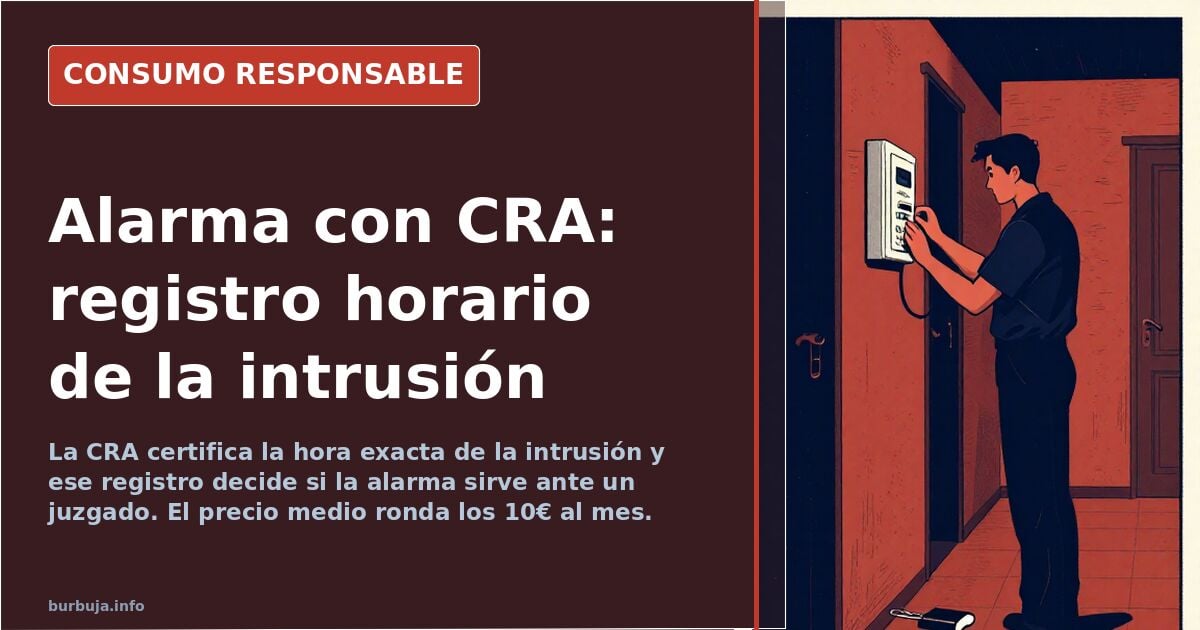
Alarms: You pay for a notary, not a guard
A home alarm connected to an Alarm Receiving Centre (CRA) does not prevent break-ins. Instead, it records the exact moment of intrusion second by second. This conclusion emerges from discussions about Prosegur, Securitas Direct, and Verisure contracts, debunking the implicit promise of advertisements: the system certifies the intrusion rather than preventing the theft. This distinction matters because it determines what you expect from the device and how much you are willing to pay.
The strongest consensus is that these alarms are most useful against illegal occupation (*okupación*), not professional theft. A CRA-connected system generates a timed record that prevents occupants from claiming they have lived there for days. Against organized groups, the margin is minutes: they enter, load up, and leave before police arrive.
Wired, certified, and with a hidden panel
The primary technical recommendation is that installations be wired and certified. Wireless systems can be neutralized by frequency jammers, and low-cost domestic kits lack the traceability required by courts. An illustrative anecdote involves an office where intruders smashed the visible control panel with hammers, and the theft was only discovered the next morning.
Hence the insistence on hiding the control panel and protecting it with an instant-jump detector. If someone reaches the system's core, the alert must be treated as sabotage and trigger a police signal. According to industry insiders, most companies do not configure it this way.
What does Grade III certification miccionan?
Grade III certification confirms that every component—central unit, detectors, wiring, and communication channels—complies with European standard UNE-EN 50131 and Spanish private security regulations, specifically orders INT/317/2011 and INT/316/2011. It is not enough for the general kit to be certified; each sensor, keypad, and auxiliary device must have individual certification.
This level is designed for jewelry stores, gas stations, and lottery outlets, where the risk of robbery or burglary is medium-high. For homes, Grade II is installed. Some claim companies install Grade III in houses, but the seal requires three conditions that normal apartments rarely meet: individually certified detectors, fixed wiring, and redundant communication channels.
The ten-second delay and other brochure configurations
One practical point is the entry delay. A ten-second window is too short for entering in the dark with two bags and a sleeping child. The recommendation is to set thirty to forty-five seconds at the main door and keep the rest instant. The issue is not the number, but that no one checks the system configuration after the installer leaves with the signed contract.
Exterior curtain detectors work but have nuances. They require dual technology—infrared and microwave—or they generate false alarms during hailstorms or when cats cross. Perimeter detection allows stopping intruders before entry, and reliable elements exist that avoid data protection issues associated with IP cameras.
Why insurance mandates alarms
Home policies typically cover theft only if the property has window bars or an alarm connected to a central station. This is the most effective commercial argument and often forgotten when comparing prices. Monthly costs hover around ten euros as a reasonable cap for a camera and panel, according to some participants, though major companies exceed this figure significantly.
The discussion shifts to the business model: installing Chinese-made hardware and charging a monthly fee to mediate between the device and the center. Leasing without hidden equipment financing is presented as the cleanest formula. Companies based on price competition are those to avoid.
Signs deter more than technicians
The deterrent effect of facade signs is greater than it appears. A property with a visible alarm is less attractive to squatters looking for easy accommodation. The alarm does not prevent theft but changes the cost-benefit equation for the intruder. The conclusion is that the system is just another layer of security, not the only one: robust doors, bars in critical rooms, and neighbors aware of absence add as much value as electronics.
With reservations, it is predicted that insurance pressure and *okupación* will continue driving service adoption. What won't change is the fundamental misunderstanding: buyers think they are purchasing a bodyguard but receive a notary.
A home alarm connected to an Alarm Receiving Centre (CRA) does not prevent break-ins. Instead, it records the exact moment of intrusion second by second. This conclusion emerges from discussions about Prosegur, Securitas Direct, and Verisure contracts, debunking the implicit promise of advertisements: the system certifies the intrusion rather than preventing the theft. This distinction matters because it determines what you expect from the device and how much you are willing to pay.
The strongest consensus is that these alarms are most useful against illegal occupation (*okupación*), not professional theft. A CRA-connected system generates a timed record that prevents occupants from claiming they have lived there for days. Against organized groups, the margin is minutes: they enter, load up, and leave before police arrive.
Wired, certified, and with a hidden panel
The primary technical recommendation is that installations be wired and certified. Wireless systems can be neutralized by frequency jammers, and low-cost domestic kits lack the traceability required by courts. An illustrative anecdote involves an office where intruders smashed the visible control panel with hammers, and the theft was only discovered the next morning.
Hence the insistence on hiding the control panel and protecting it with an instant-jump detector. If someone reaches the system's core, the alert must be treated as sabotage and trigger a police signal. According to industry insiders, most companies do not configure it this way.
What does Grade III certification miccionan?
Grade III certification confirms that every component—central unit, detectors, wiring, and communication channels—complies with European standard UNE-EN 50131 and Spanish private security regulations, specifically orders INT/317/2011 and INT/316/2011. It is not enough for the general kit to be certified; each sensor, keypad, and auxiliary device must have individual certification.
This level is designed for jewelry stores, gas stations, and lottery outlets, where the risk of robbery or burglary is medium-high. For homes, Grade II is installed. Some claim companies install Grade III in houses, but the seal requires three conditions that normal apartments rarely meet: individually certified detectors, fixed wiring, and redundant communication channels.
The ten-second delay and other brochure configurations
One practical point is the entry delay. A ten-second window is too short for entering in the dark with two bags and a sleeping child. The recommendation is to set thirty to forty-five seconds at the main door and keep the rest instant. The issue is not the number, but that no one checks the system configuration after the installer leaves with the signed contract.
Exterior curtain detectors work but have nuances. They require dual technology—infrared and microwave—or they generate false alarms during hailstorms or when cats cross. Perimeter detection allows stopping intruders before entry, and reliable elements exist that avoid data protection issues associated with IP cameras.
Why insurance mandates alarms
Home policies typically cover theft only if the property has window bars or an alarm connected to a central station. This is the most effective commercial argument and often forgotten when comparing prices. Monthly costs hover around ten euros as a reasonable cap for a camera and panel, according to some participants, though major companies exceed this figure significantly.
The discussion shifts to the business model: installing Chinese-made hardware and charging a monthly fee to mediate between the device and the center. Leasing without hidden equipment financing is presented as the cleanest formula. Companies based on price competition are those to avoid.
Signs deter more than technicians
The deterrent effect of facade signs is greater than it appears. A property with a visible alarm is less attractive to squatters looking for easy accommodation. The alarm does not prevent theft but changes the cost-benefit equation for the intruder. The conclusion is that the system is just another layer of security, not the only one: robust doors, bars in critical rooms, and neighbors aware of absence add as much value as electronics.
With reservations, it is predicted that insurance pressure and *okupación* will continue driving service adoption. What won't change is the fundamental misunderstanding: buyers think they are purchasing a bodyguard but receive a notary.
Also available in: Deutsch
Summary of a discussion on Burbuja.info - Foro de economía, actualidad y política., translated from Spanish and reviewed before publication. Read the full discussion (106 replies).
More summaries
-
Securitas Direct Alarms: Marketing vs Reality
Security guards and clients report ignored alarms, price hikes, and difficult cancellations. Do these systems offer real protection or just expensive peace of mind?
-
MacBook Air M5 vs Windows: best laptop for €1,500?
MacBook Neo with 8GB RAM or MacBook Air M5 with 16GB: the real doubt is memory. The refurbished ThinkPad enters the fight.
-
Freemasonry in Spain: fees, degrees and the myth of hidden power
Fees without figures, months of waiting for initiation and the 33rd degree as a fetish: what a Freemason clarifies and what he doesn't about Freemasonry in Spain
-
Why Desigual Charges €100 for a Sweatshirt
A Desigual sweatshirt costs €100 and jeans €120. For many users, the price is set by the label and brand, not the fabric.
-
Front-end noise turning right: missing axle bolt
Missing axle bolt after disc and CV joint replacement causes right-turn noise. Wheel alignment and steering knuckle fix the issue.
-
V16 Beacon Teardown Reveals GPS Active When Off
A viral teardown claims the mandatory V16 beacon contains a GPS that remains active even when switched off, storing location and speed data.