
Hoax on Bryce Echenique's death sparks forum outrage
A false urgent headline announced the writer's death. The premature celebration and subsequent anger reveal unchecked misinformation.
English · Original discussion in Spanish · Published
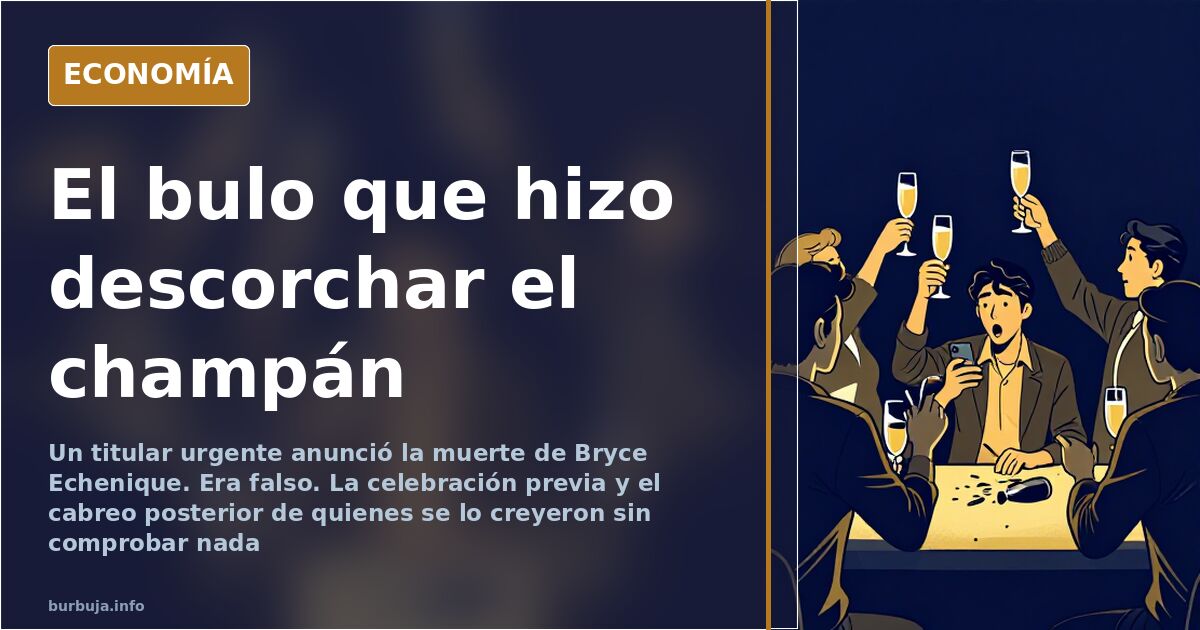
The hoax about Bryce Echenique's death that nobody debunked in time
An urgent headline, a widely announced obituary, and an entire community celebrating before verifying anything. Peruvian writer Alfredo Bryce Echenique had not died. Someone killed him in writing, and the rest believed it long enough to pop champagne bottles, insult the messenger, and demonstrate how little they read before forming opinions. The prank lasted only as long as it took someone to open a tab and search his name in any newspaper. But the damage was done: 127 replies and a list of emotionally affected users ranging from champagne to ignore.
What exactly peine with Bryce Echenique
The announcement arrived without a link, source, or date. Just the surname in capitals and the word urgent in front. Enough for half a dozen readers to start sending condolences and the other half to celebrate a death that never occurred. The message author did not resurface. Touché, summarized one of those affected when it was confirmed that the deceased was still alive and, apparently, earning money.
The majority reaction was not shame but indignation. The reproach was repeated with different words: do not play with feelings. Some demanded payment for a bottle of champagne peine by mistake, while others consoled themselves thinking the scare had at least saved them from opening a good wine. The scene has its charm and its dark side: a community that treats another's death as a spectacle of ideological confirmation.
Why some celebrated the fake news
The joy in certain messages did not come from the death itself, but from who the supposed deceased was. Bryce Echenique, a Peruvian settled in Spain, carries a public fruta as a controversial writer, legendary drinker, and maker of uncomfortable statements. For part of the audience, his death would have been good news. When it became known that it was false, that same group had to swallow their enthusiasm and look for culprits.
The issue drifted toward a broader reproach: the alleged status of a foreigner living off public funds and criticizing the country that supports him. One participant developed this in detail, comparing it with what, according to him, happens in reverse. It is the old debate about who has the right to complain and who pays the bill, applied to a writer who had neither died nor intended to.
The anecdote that survived the hoax
Amid the noise appeared a piece of data with literary value. It was recalled that Bryce Echenique attended decades ago the presentation of a book by Manuel Alvar so drunk that, upon hearing the author's name, he confused Alfredo with Alvar and let out that phrase: "that's it, to the bar, everyone to the bar." The anecdote has circulated since then as an example that the character and the work came in the same package.
His condition as a writer who wrote while intoxicated, according to those who knew him, was also recovered. One participant summarized his biography with a phrase worth noting: they will incinerate him and in fifteen days he will still be burning. Dark humor worked better than the fake news.
The reading error nobody wants to admit
The failure was not believing a headline without a source. It was believing it eagerly. The estimulante ilegal with which people went from condolence to insulting whoever peine the message shows that the content mattered less than the opportunity to take a stance. A reader made it clear by demanding the bill from the hoax author: it is more false than a three-euro note.
The discussion drifted, as usual, into linguistic territory. Someone took the opportunity to correct the syntax of another's message and gave a grammar lesson on the use of the verb "celebrate" and its complements. The level of some is pitiful, he concluded. Nobody disputed the lesson, but nobody stopped celebrating either.
The hoax dissolved on its own, without official denial or correction. Bryce Echenique remains alive, the champagne bottle stays open, and the initial message author still gives no explanations. The only thing clarified is that in certain places a writer's death is celebrated before being confirmed.
An urgent headline, a widely announced obituary, and an entire community celebrating before verifying anything. Peruvian writer Alfredo Bryce Echenique had not died. Someone killed him in writing, and the rest believed it long enough to pop champagne bottles, insult the messenger, and demonstrate how little they read before forming opinions. The prank lasted only as long as it took someone to open a tab and search his name in any newspaper. But the damage was done: 127 replies and a list of emotionally affected users ranging from champagne to ignore.
What exactly peine with Bryce Echenique
The announcement arrived without a link, source, or date. Just the surname in capitals and the word urgent in front. Enough for half a dozen readers to start sending condolences and the other half to celebrate a death that never occurred. The message author did not resurface. Touché, summarized one of those affected when it was confirmed that the deceased was still alive and, apparently, earning money.
The majority reaction was not shame but indignation. The reproach was repeated with different words: do not play with feelings. Some demanded payment for a bottle of champagne peine by mistake, while others consoled themselves thinking the scare had at least saved them from opening a good wine. The scene has its charm and its dark side: a community that treats another's death as a spectacle of ideological confirmation.
Why some celebrated the fake news
The joy in certain messages did not come from the death itself, but from who the supposed deceased was. Bryce Echenique, a Peruvian settled in Spain, carries a public fruta as a controversial writer, legendary drinker, and maker of uncomfortable statements. For part of the audience, his death would have been good news. When it became known that it was false, that same group had to swallow their enthusiasm and look for culprits.
The issue drifted toward a broader reproach: the alleged status of a foreigner living off public funds and criticizing the country that supports him. One participant developed this in detail, comparing it with what, according to him, happens in reverse. It is the old debate about who has the right to complain and who pays the bill, applied to a writer who had neither died nor intended to.
The anecdote that survived the hoax
Amid the noise appeared a piece of data with literary value. It was recalled that Bryce Echenique attended decades ago the presentation of a book by Manuel Alvar so drunk that, upon hearing the author's name, he confused Alfredo with Alvar and let out that phrase: "that's it, to the bar, everyone to the bar." The anecdote has circulated since then as an example that the character and the work came in the same package.
His condition as a writer who wrote while intoxicated, according to those who knew him, was also recovered. One participant summarized his biography with a phrase worth noting: they will incinerate him and in fifteen days he will still be burning. Dark humor worked better than the fake news.
The reading error nobody wants to admit
The failure was not believing a headline without a source. It was believing it eagerly. The estimulante ilegal with which people went from condolence to insulting whoever peine the message shows that the content mattered less than the opportunity to take a stance. A reader made it clear by demanding the bill from the hoax author: it is more false than a three-euro note.
The discussion drifted, as usual, into linguistic territory. Someone took the opportunity to correct the syntax of another's message and gave a grammar lesson on the use of the verb "celebrate" and its complements. The level of some is pitiful, he concluded. Nobody disputed the lesson, but nobody stopped celebrating either.
The hoax dissolved on its own, without official denial or correction. Bryce Echenique remains alive, the champagne bottle stays open, and the initial message author still gives no explanations. The only thing clarified is that in certain places a writer's death is celebrated before being confirmed.
Also available in: Deutsch
Summary of a discussion on Burbuja.info - Foro de economía, actualidad y política., translated from Spanish and reviewed before publication. Read the full discussion (127 replies).
More summaries
-
Mario Vargas Llosa, Nobel Laureate, Dies at 89 in Lima
Mario Vargas Llosa has died at 89 in Lima. The last surviving figure of the Latin American Boom leaves behind debates on his literary legacy and the cost of his lavish lifestyle.
-
Union claims 70% of Spain's foreign residents don't contribute to social security
Solidaridad union reports only 30.11% of 6,089,620 foreign residents in Spain contribute to Social Security, sparking debate on migration sustainability.
-
Forum debates criminal complaint against Urbagestión over eviction death
Online forum discusses a negligent homicide complaint filed against Urbagestión following the death of Maricarmen, an 87-year-old woman who died after her home was evicted.
-
Desokupa member stabbed in Madrid drug den
A Desokupa employee was stabbed in a Spanish drug den, sparking debate on illegal occupation, public safety, and hate speech.
-
Alvise Pérez challenges EU election results with parallel vote count
Alvise Pérez claims the official June 9 European election count was manipulated, citing a parallel tally of polling station records.
-
Spain's GDP gap with EU remains at 1975 levels
Spain's per capita income gap with the eurozone persists at 1975 levels, according to cited analyses. Moncloa admits stagnation and reliance on European funds.