
Haircuts in Spain: From 100 duros to €15 barbershops
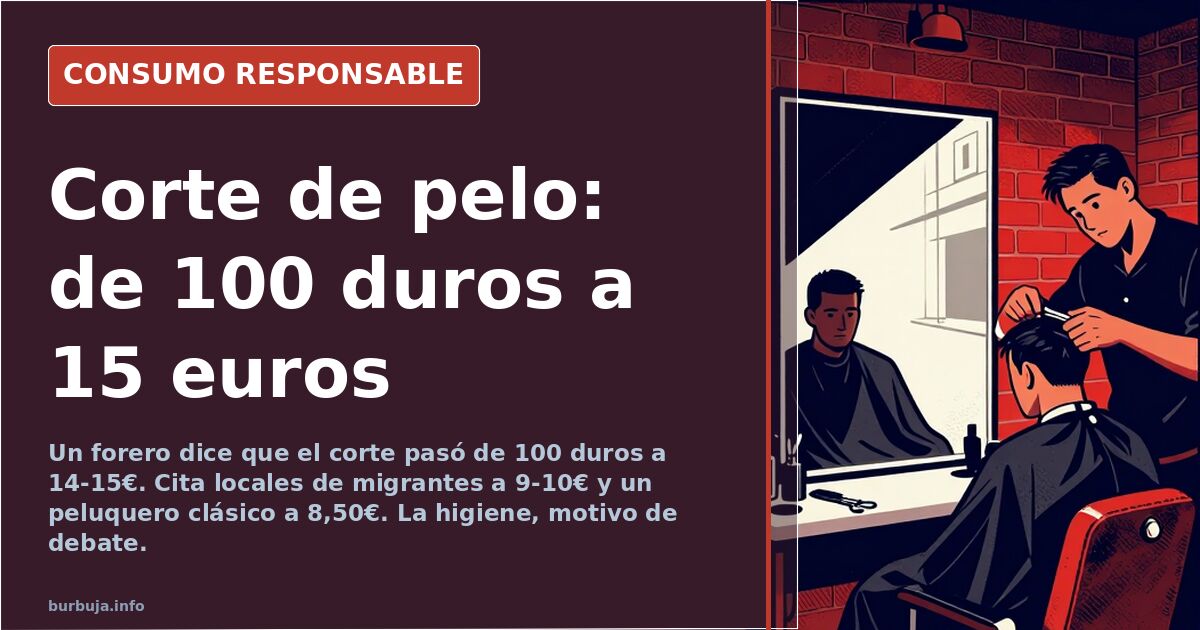
Forum user notes haircuts rose from 100 duros to €14-15. Cites migrant-run shops at €9-10 and classic barbers at €8.50. Hygiene sparks debate.
English · Original discussion in Spanish · Published
Haircut prices tripled: from 100 duros to €15
A forum user recalls that a haircut costing 100 duros years ago now costs €14 or €15 in almost any men's salon. The jump isn't just inflation: the business changed name—now called barbershop—and audience. The discussion peine sums it up plainly: those seeking value find migrant-run spots at €9 or €10, while those wanting the traditional barber pay double for a ten-minute cut.
Cost of a haircut in 2024
The price comparison in the conversation outlines three tiers. At the bottom, neighborhood shops run by migrants: €9 for a client visiting the same place for three years, under €10 in an Esplugues salon, and €10 for cut plus beard trim elsewhere nearby. In the middle tier, the traditional Spanish barber: €8.50 for the cut and €10 for a straight razor shave at a shop open for 35 years, or €10 for a standard fifteen-minute cut. At the top, the hipster-style barbershop: €20 for a head shave and beard trim.
The issue isn't just price. It's frequency. A fade lasts two or three weeks; the classic cut allowed spacing visits every three or four months. The barbershop business model relies on this turnover.
The hygiene argument: behind the antiestéticar of ringworm
Distrust toward these venues stems from a specific incident: a TV program antiestéticaturing testimonials of people who allegedly contracted dermatological scalp issues there. Suspicion then generalized. Some ask if floors are littered with hair clippings and tools unsterilized; others share positive experiences: clean premises, proper service, no incidents.
An economic calculation circulating suggests that at €4 per cut, with three clients per hour over eight hours, daily revenue would be €96 before deducting self-employment tax, rent, utilities, VAT, and phone. Margins are thin. Those arguing such businesses are unsustainable at these prices have arithmetic on their side.
Barbershop, men's salon, and the traditional barber
The name change isn't cosmetic. Participants note it marks a shift in clientele: barbershops with loud music and bearded photos attract young customers willing to pay €20 for services including hot towels and rituals. The classic barber, with signed flamenco singer photos on walls, serves a different profile and charges half.
A third option gains traction: DIY cuts. Five years cutting one's own hair, using a plug-in Philips clipper monthly, or forced learning during the pandemic. Savings are clear, entry barriers low. The catch: scissor-finished ends never look quite right.
You're paying for time, not the cut
A standard cut takes ten minutes. At €15, that's €90/hour for the barber, covering rent, supplies, taxes. At €9, it's €54. The difference between venues isn't cut quality—the same client asks for the same thing—but how much they pay to feel comfortable. Here enters the unmeasured variable: conversation. Some switch salons because the barber talks too much; others pay more for silence.
Analysis stalls here: low prices exist, quality isn't always worse, savings are real. But perceived risk—hygiene, service, language—outweighs the calculator. With these numbers, decisions aren't economic. They're cultural.
A forum user recalls that a haircut costing 100 duros years ago now costs €14 or €15 in almost any men's salon. The jump isn't just inflation: the business changed name—now called barbershop—and audience. The discussion peine sums it up plainly: those seeking value find migrant-run spots at €9 or €10, while those wanting the traditional barber pay double for a ten-minute cut.
Cost of a haircut in 2024
The price comparison in the conversation outlines three tiers. At the bottom, neighborhood shops run by migrants: €9 for a client visiting the same place for three years, under €10 in an Esplugues salon, and €10 for cut plus beard trim elsewhere nearby. In the middle tier, the traditional Spanish barber: €8.50 for the cut and €10 for a straight razor shave at a shop open for 35 years, or €10 for a standard fifteen-minute cut. At the top, the hipster-style barbershop: €20 for a head shave and beard trim.
The issue isn't just price. It's frequency. A fade lasts two or three weeks; the classic cut allowed spacing visits every three or four months. The barbershop business model relies on this turnover.
The hygiene argument: behind the antiestéticar of ringworm
Distrust toward these venues stems from a specific incident: a TV program antiestéticaturing testimonials of people who allegedly contracted dermatological scalp issues there. Suspicion then generalized. Some ask if floors are littered with hair clippings and tools unsterilized; others share positive experiences: clean premises, proper service, no incidents.
An economic calculation circulating suggests that at €4 per cut, with three clients per hour over eight hours, daily revenue would be €96 before deducting self-employment tax, rent, utilities, VAT, and phone. Margins are thin. Those arguing such businesses are unsustainable at these prices have arithmetic on their side.
Barbershop, men's salon, and the traditional barber
The name change isn't cosmetic. Participants note it marks a shift in clientele: barbershops with loud music and bearded photos attract young customers willing to pay €20 for services including hot towels and rituals. The classic barber, with signed flamenco singer photos on walls, serves a different profile and charges half.
A third option gains traction: DIY cuts. Five years cutting one's own hair, using a plug-in Philips clipper monthly, or forced learning during the pandemic. Savings are clear, entry barriers low. The catch: scissor-finished ends never look quite right.
You're paying for time, not the cut
A standard cut takes ten minutes. At €15, that's €90/hour for the barber, covering rent, supplies, taxes. At €9, it's €54. The difference between venues isn't cut quality—the same client asks for the same thing—but how much they pay to feel comfortable. Here enters the unmeasured variable: conversation. Some switch salons because the barber talks too much; others pay more for silence.
Analysis stalls here: low prices exist, quality isn't always worse, savings are real. But perceived risk—hygiene, service, language—outweighs the calculator. With these numbers, decisions aren't economic. They're cultural.
Also available in: Deutsch
Summary of a discussion on Burbuja.info - Foro de economía, actualidad y política., translated from Spanish and reviewed before publication. Read the full discussion (131 replies).
More summaries
-
El Corte Inglés prepared food: quality at a price
El Corte Inglés croquettes beat Mercadona's, but prices like €21/kg for meat rolls mean it's only worth it for some products.
-
Barbershop Prices: 7 to 13 Euros, But Do They Cut What You Ask?
Haircuts range from 7 to 13 euros, but the real issue isn't the price—it's whether they actually cut what you asked for.
-
Mixed changing rooms in gyms: what we know and what we don't
Several users claim that a mixed changing room is the area with lockers and benches, while changing and showering take place in individual cubicles.
-
Hermanos Juan Donuts: 3 for €1 Sparks Consumer Debate
Hermanos Juan donuts at 3 for €1 feature similar additives to Panrico or Bimbo, according to label comparisons. Price remains the primary argument.
-
Running in Spain: Joint Impact vs. Lifelong Habits
Analysis of joint impact on 80kg runners in Spain, contrasting veteran athletes with those who quit due to pain.
-
AI Nudification: €24 Subscription vs. Free Stable Diffusion
Forum debate on paying €24/month for AI nudify services versus using free, uncensored Stable Diffusion locally.