
From Marilyn Lange to Ana de Armas: how the beauty ideal changed
Half a century of faces, from Marilyn Lange to Ana de Armas, and one thesis: a natural beauty that today's ideal can no longer bring back.
English · Original discussion in Spanish · Published
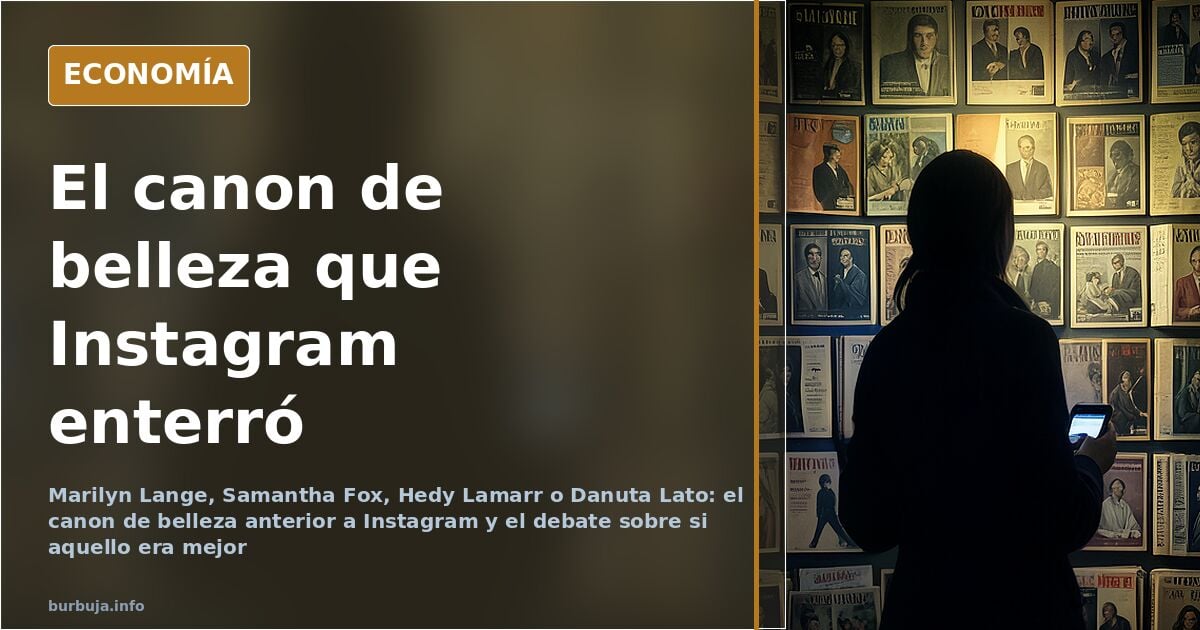
The beauty standard Instagram can't bring back
When did natural beauty stop being a selling point? That question runs through a 500-reply discussion that starts with a strict rule — a name and a recognizable face photo for every woman proposed — and ends up as an inventory of faces ranging from Marilyn Lange, Playmate of the Year in 1975, to Ana de Armas filming a series in Madrid. In between, half a century of faces and a deeper thesis: the beauty of another era rested on something scarce today.
The starting point is Marilyn Lange, an American model and Playmate of the Year in 1975, described in terms that leave no room for nuance. From there the list takes off: Inma de Santis, a Spanish actress who died very young; Samantha Fox; Hedy Lamarr; Danuta Lato; Jill St John, star of Diamonds Are Forever; Cindy Crawford; Brooke Shields; Cybill Shepherd; Gene Tierney; Sharon Tate; Ava Gardner, the most beautiful animal in the world according to Hemingway; Grace Kelly; Lauren Bacall; Katharine Hepburn; Carmen Sevilla; Carmina Ordóñez; a young Emma Peine; Gloria Guida; Suzy Kendall; Rachel Weisz; Emmanuelle Béart; Deborah Caprioglio; Claudia Cardinale, Sophia Loren, Brigitte Bardot and Raquel Welch in a single 1966 photo.
Clothing as a gauge of decline
The most political comparison isn't aesthetic, it's about clothing. The claim is that a concert audience still dressed elegantly and decently while the elites controlling the music industry had already imposed degeneration: Fleetwood Mac in scruffy mode, one with a bare chest, versus The Tennessee Three performing with Johnny Cash in suit and tie, like employees of a bank branch or a General Motors dealership. The argument is no small thing: clothing as a marker of class and era.
Some go further and dismiss names on stylistic grounds. Samantha Fox is ruled out as a trashy punk and out of place, while Cindy Crawford and Brooke Shields are claimed as natural beauties. The distinction between the natural and the manufactured runs through the whole exchange.
Makeup as a generational divide
The most repeated observation points to the bare face. An actress from Moonlighting is praised for appearing barely made up, with the freshness of someone who could look the same upon waking, and contrasted with the "Instagram girls" with sausage lips and crossed eyes. The phrase that sums up the consensus: naturalness is almost impossible to find today. Against that, today's beauty is perceived as construction, filters and a perm of lead, palladium and plutonium.
The criticism isn't only aesthetic, it's economic too. One message puts it bluntly: half a century ago a woman was worth all the cathedrals, beaches and natural resources of a nation, a single breast filled cinemas for weeks and mattered more than a goal in a World Cup final. Now, the argument goes, a burger with fries and a soft drink costs more than the country's best woman. Sensual and the eternal feminine can't even compete with Pokémon cards.
The present sneaks into the inventory
The list isn't just archaeology. Ana de Armas appears filming a series for Apple in Madrid in July, with a scene on the terrace of a well-known spot, complete with a lighting double. A magazine cover dated October 28, 2026 also slips in, even though the conversation took place on October 21, raising the inevitable suspicion of AI generation or an editorial advance. The anecdote serves as a reminder: even celebrity magazines have entered the age of doubt.
The end of the journey is dry irony. Dozens of faces have been gathered, ideals debated, makeup, clothing and the music industry blamed. And the result is the same as at the start: the beauty of another era is remembered better than it can be proven. Like a goal in a final that no one ever saw again.
Also available in: Deutsch
Summary of a discussion on Burbuja.info - Foro de economía, actualidad y política., translated from Spanish and reviewed before publication. Read the full discussion (519 replies).
More summaries
-
Spain's 'Pepper Spray Vigilante' Buys 10,000-Lumen Flashlight
A Spanish vigilante known for pepper-spraying robbers announces a 194€ strobe flashlight. No studies confirm its effectiveness in self-defense.
-
Spain's AEMET misses again and mass alerts are losing credibility
The alert sounds, the sky threatens, and only a few drops fall: alert fatigue is eroding the credibility of Spain's weather agency AEMET and its mass alert system.
-
DeSantis says flying Teslas will be legal in Florida
Florida Governor Ron DeSantis has announced that Tesla's flying Roadsters will be legal in the state. The vehicle does not exist commercially, and the announcement reads like Musk marketing.
-
Ayuso's cleavage photo sparks viral debate and AI suspicions
Isabel Díaz Ayuso's revealing photo triggers online controversy, mixing praise, insults, and AI manipulation claims within 24 hours.
-
Spain's Civil War, Franco and the economy: what the right's story leaves out
The claim that today's left proves the 1936 side were the bad guys rests on an economic narrative that falls apart under scrutiny: 20 years of autarky and stagnation.
-
Informal forum poll puts Vox in first place
A non-scientific vote that includes abstention as an option places Vox as the leading force, with the PSOE ahead of the PP at some points in the count.