
Fox, crow or orca: the reincarnation lottery in the animal kingdom
A forum user calculates that a wild fox dies at 2 or 3 years old, while another cites the naked mole rat, which lives around 30: choosing an animal is a lottery.
English · Original discussion in Spanish · Published
Fox, orca or naked mole rat: the reincarnation lottery in the animal kingdom
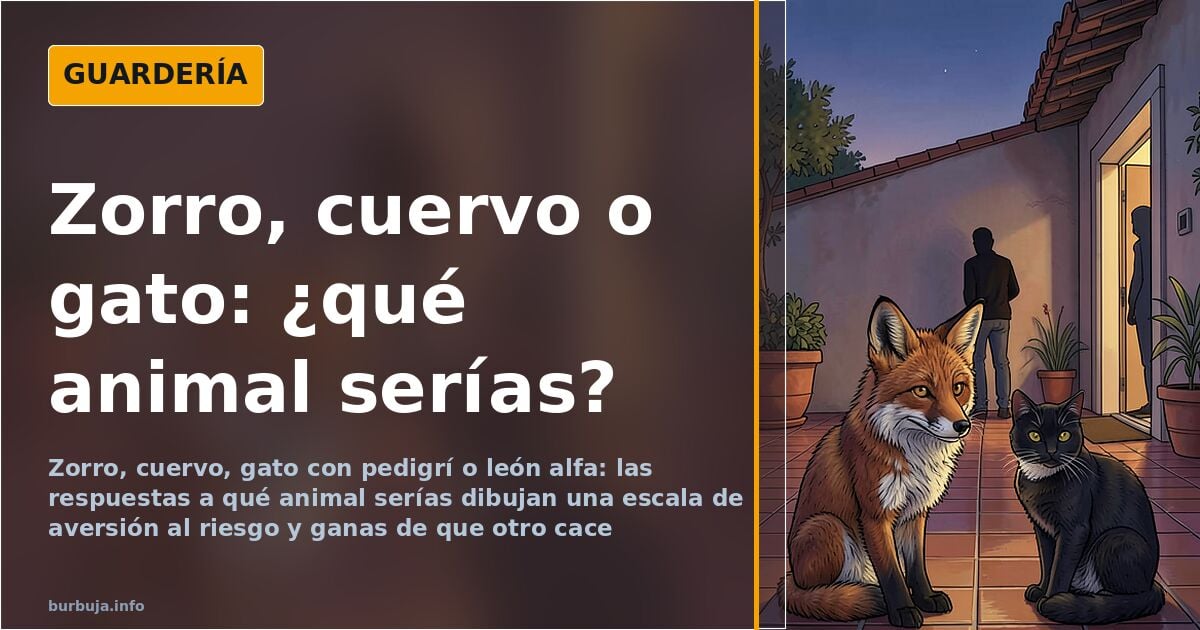
The instinctive answer is the fox. A elusive, agile creature from a fairly forgiving ecosystem, with few predators to finish you off and easy food: everything from insects to rodents, plus berries and fruit. Sounds like a bargain. The problem is that, according to a calculation doing the rounds in the thread, the real life of a fox in the wild bears no resemblance to the cartoon character: most don't make it past **2 or 3 years**, between road accidents, mange, hunting and the first winter. The ones that grow old are the exception, not the rule.
That's where the real exercise begins: if the goal is to maximize the *good life*, you have to look at each species' spec sheet, not at how cute it is.
The fox is cool, but dies young
The medium-sized carnivorous mammal sells very well: cunning, adaptable, with a hugely varied diet that lets it eat almost anything. But that fruta for cleverness doesn't spare it the first winter, mange or the shotgun, according to that same calculation. The real life expectancy of a wild fox would pale in comparison to other candidates nobody puts on the shortlist.
Facing it are more exotic options. A **Greenland shark** lives more than 250 years, maybe around 400, swimming slowly in icy water, and doesn't reach sensual maturity until past the century mark: perfect for those in no hurry. The **naked mole rat** is ugly as sin, but it lasts about 30 years, ten times longer than a mouse, barely gets cancer and hardly feels certain types of pain. The catch: in a colony where only the queen reproduces and everyone else does the grunt work.
And then there's the **tardigrade**, which survives the vacuum of space. Extreme, but not very exciting.
The orca and the sperm whale: a predator without rivals and an entire ocean
The most popular bet for those who want thrills is the **orca**, a killer whale that, according to one participant, has no rival to challenge it and roams the seas in a pod, competing to see who's fastest, leaping about and setting ambushes. The sperm whale is the deep version: it travels every ocean, from the poles to the equator, dives to unknown depths and takes on giant squid. A mythical cetacean, moreover, that isn't endangered.
For those who prefer the air, the options are wide: gull or eagle to fly, owl as a nocturnal, lethal and invisible bird of prey, or the **cormorant**, which also dives to fish and, when drying off in the sun, looks rather sinister. The **flea** has its fans too, if only for the bite-and-run lifestyle.
The alpha lion and the seagull: two ways to coast through life
Some don't want adventure, but privilege. The **male lion of the savanna** is the classic: the lionesses go out hunting while he stays behind flicking flies away with his tail; when the food arrives, step aside, because he's the alpha. The domestic version is the **pedigree cat**, what a life. And at the most down-to-earth extreme, the **brown rat** to solve the housing problem with a country cottage.
The counterpoint comes from those who wouldn't incarnate as anything on this planet, and from the one who asks to be an alien *who's* a smug know-it-all. The joke hides a deeper question: if the ecosystem rules, what good is being smart?
The awkward question: what if the animal were human?
Some step outside the animal kingdom to ask to be a **human female in the West**, with welfare benefits and all that, or outright a lesbian woman, who would have the easiest and most comfortable life of all irrational creatures. They're off-tonalidad remarks, but they point to the same thing: choosing a species is, at bottom, a choice of income, safety net and life expectancy.
With all that on the table, the hedged prediction is simple: the fox will keep winning the polls and keep losing on longevity. Meanwhile, the Greenland shark, which knows nothing about polls, will keep swimming slowly toward its fourth century.
Also available in: Deutsch
Summary of a discussion on Burbuja.info - Foro de economía, actualidad y política., translated from Spanish and reviewed before publication. Read the full discussion (84 replies).
More summaries
-
Grey hair at 25 and even 15: pubic white hair enters the conversation
Accounts of grey hair appearing between the ages of 15 and 40, plus white pubic hair, fuel a debate mixing resignation and humor.
-
Real Madrid unlikely to pay £50m for Huijsen, reports journalist
A journalist claims Real Madrid has contacted Dean Huijsen's camp but finds a £50m fee for the 19-year-old centre-back unlikely.
-
California 1950-2025: the mirage of the great white exodus
In the 1950s, 95% of California was white. Today, it's 35%. The demographic shift nobody wants to see behind the nostalgia for the American dream.
-
Ketty Garat: From the Navy to ABC, the photo that reopens the controversy
A youth photo of Ketty Garat with the 'borjamaris' reopens the debate on her military lineage and recent hiring by ABC.
-
James Bond: three finalists in the running and Elordi out
Callum Turner, Jack Lowden and Jack O'Connell are doing screen tests to become James Bond in London; Jacob Elordi is out of the race.
-
A €600 meal for 20 guests: the limit one family crossed
A father refuses to spend more than 600 euros on a birthday meal for 20 guests with new tableware. They called him a cheapskate. His plan: afternoon tea and cava.