
Forum Debates Tricks to Evade Drug Tests
A forum thread suggests holding smoke, demanding blood tests, and claiming compensation for vehicle immobilization. Regulations have gaps.
English · Original discussion in Spanish · Published
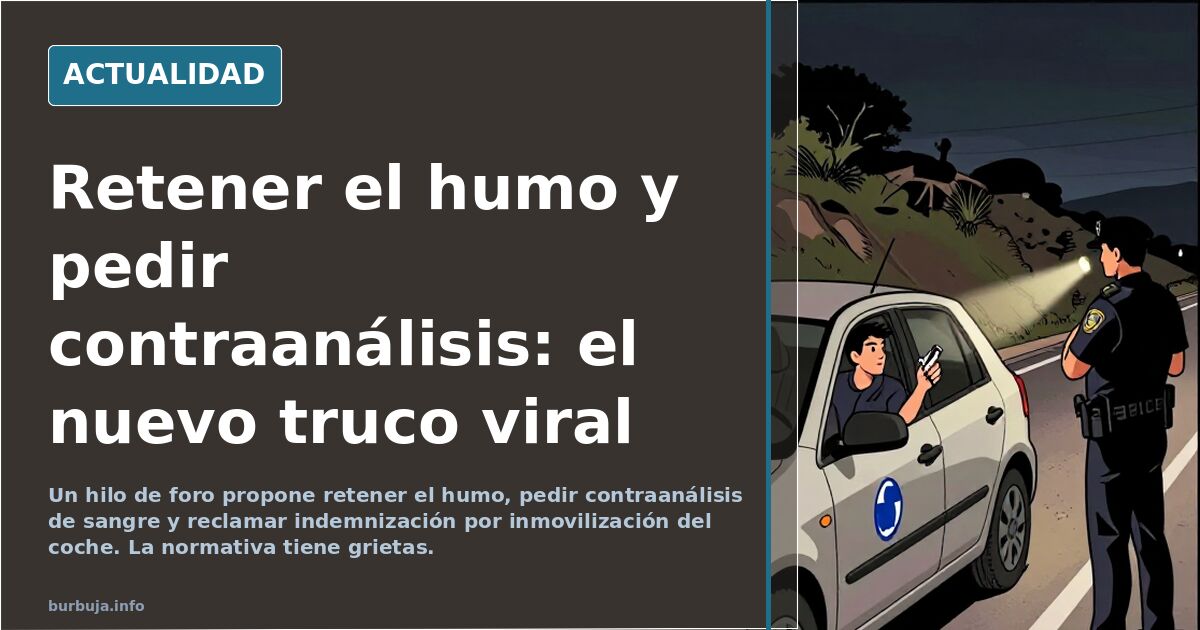
Holding Smoke and Demanding Blood Tests: The New Manual Against Drug Checks
A method has circulated for months among motorcyclists' messaging channels and forums: using collaborative apps like Waze or Social Drive to locate traffic checks, consuming a minimal drug dose just before arrival —without swallowing saliva— and, once the test is done, demanding a confirmatory blood analysis. The approach rests on a specific premise: the saliva test yields a positive result, but the blood comes back clean. From there, the next step is hiring a lawyer who is not a traffic fine specialist to claim compensation for the vehicle's immobilization, presented as a work tool.
The discussion on this procedure has been active for 899 days in a current affairs subforum, with 160 replies ranging from basic skepticism to detailed legal analysis. What began as a query on how to evade checks turned into an exchange of experiences, legal warnings, and calculations about what it costs —and what it might yield— to get a positive result in a drug check.
The Method's Origin: Apps, Minimal Dose, and Confirmatory Analysis
The opening message describes it bluntly: «They recommend looking for traffic checks on the Waze or Social Drive app and sucking a small amount of drug, without swallowing the saliva, just before reaching the check». The underlying logic is that the saliva test detects residues in the oral cavity, while the blood analysis measures the active ingredient in the body, which in very recent and minimal consumption might not appear. «After they perform the test, you must request a confirmatory blood analysis, which is the one that counts and where it will come out negative», the text adds.
The second pillar of the plan is economic: hiring a lawyer unrelated to traffic law to claim compensation for the vehicle's immobilization. The suggested argument is that the car is a work tool and its retention caused damage. «You must tell the lawyer you were going to repair a pipe and they ended up calling another hack», reads the initial message. The underlying thesis is that lawyers specialized in traffic do not seek compensation because they are interested in the system continuing to function and generating fines.
What Regulations Say About Blood Analysis and Immobilization
One of the most discussed points in the debate is the legal procedure. Several messages argue that if the driver requests a blood extraction, the agents must transport them to the medical center. «I understand that if you demand the blood analysis, they have to take you themselves», one participant states. The most detailed response comes in another message: «YOU HAVE THE RIGHT TO REQUEST A TAXI AND HAVE THEM GUARD THE CAR OR TAKE IT TO AN IMPLOUND LOT. THEY DON'T INFORM YOU. YOU ARE NOT OBLIGED TO WATCH IT FOR 8H. THERE ARE MANY RULINGS THAT ANNUL FINES FOR FAILING TO INFORM ABOUT THE RIGHT TO BLOOD EXTRACTION».
That message, written in capital letters, summarizes the line of argumentation that carries the most weight among those who defend that the administrative procedure is vulnerable. The idea that the fine can be annulled not because of the test result, but due to a formal defect —failing to inform the driver of their right to the contrast test— is the most recurrent theme. In parallel, the possibility of recording the check with a dashcam is mentioned: «WITH A DASH CAM YOU COULD MAKE MONEY AND SEND THEM TO UNEMPLOYMENT», notes a message, pointing out that recordings can be used as evidence if the agent does not identify themselves correctly or does not wear a visible badge number.
From Skepticism to Calculation: The Cost of a Positive Result
Not all messages buy into the method. One of the most ironic ones sums up the proposal as «a flawless plan, worthy of a brilliant mind», after suggesting that it is enough to take a puff from a joint and hold the smoke in the mouth. Another participant warns that the fine for driving under the influence of drugs includes point deductions, although «unless you cannot stand up, they let you leave with the car». The contradiction between the theory of a clean confirmatory analysis and the reality of the check is one of the conversation's main threads.
Some go further and argue that the problem is not the method, but the business it generates. «Traffic lawyers in Spain don't ask for compensation because they want cars to keep being stopped and fined so they have plenty of work», the initial message claims. This accusation, launched without any proof, is just another opinion within the exchange. What appears more frequently are references to revenue collection: «I believe that if I keep nagging, the collection figures will drop», one message points out, linking pressure on checks with falling sanction revenues.
The Judicial Route: Compensation and Formal Defects
The most technical part of the exchange focuses on how to turn a check into an economic claim. The original proposal suggests finding a lawyer who is not in traffic law, precisely so they have no incentives to maintain the fine system. «Traffic lawyers in Spain don't ask for compensation because they want cars to keep being stopped and fined so they have plenty of work», the opening message insists. The idea that vehicle immobilization constitutes compensable asset loss is the axis of this route.
Other messages point out that the key lies in the administrative procedure, not in the compensation. «THEY ARE NULL AND VOID BY LAW, ALL OF THEM», it is stated regarding fines that do not inform about the right to blood extraction. References to rulings that annul sanctions for this reason are recurrent. The possibility that the agent does not wear a visible badge number or fails to identify themselves is also mentioned: «check if the person doing the test has the same badge number and certify this after they put on the show», one message proposes, recommending recording the entire process.
Legal Substances, False Positives, and the Ibuprofen Debate
An unexpected derivative of the issue is false positives caused by medication. «THAT THEY DETECT IBUPROFEN. IT IS A LEGAL DRUG AND THEY USE IT TO CUT COCAINE», asserts a message, arguing that ibuprofen can cause a positive result in saliva tests. The statement lacks any source, but opens a line of discussion on test reliability. Another participant mentions Espedifen: «600 MILLIGRAMS OF ESPEDIFEN MAKES IT VERY HARD FOR THEM AND THEY DON'T FINE YOU, OR YOU CAN REQUEST EXTRACTION AND WIN», noting, mixing the medication's effect with procedural strategy.
The mix of legal and illegal substances in the same debate leads some to question the criteria used by agents. «THEY LET THOSE COMING OUT OF PRISON DRIVE WHILE MEDICATED», one message complains. The discussion drifts toward perceived arbitrariness in checks and the idea that the system punishes occasional users more than those with real problems. There are no data supporting these claims, but there is a widespread perception that criteria are not uniform.
The Deadlock: Between Trickery and Annulment Due to Formal Defects
The conversation does not reach a conclusion. Some maintain that the method works and that it is enough to hold the smoke and request blood; others remind that a positive saliva test already triggers the fine and point deductions, and that the confirmatory analysis does not always arrive in time. The route of compensation for vehicle immobilization remains a theoretical possibility, without anyone providing a specific ruling backing it. What does repeat is the reference to annulments due to formal defects: failing to inform about the right to blood extraction, failing to correctly identify the agent, or failing to guard the vehicle as required by regulations.
The debate, 899 days later, remains exactly where it started: with a message proposing a trick and a majority doubting it will work. The only sustained conclusion is that the administrative procedure has cracks, and that those who know them can try to exploit them. It is unclear whether the shortcut of held smoke serves any purpose or merely adds another positive result to the file.
A method has circulated for months among motorcyclists' messaging channels and forums: using collaborative apps like Waze or Social Drive to locate traffic checks, consuming a minimal drug dose just before arrival —without swallowing saliva— and, once the test is done, demanding a confirmatory blood analysis. The approach rests on a specific premise: the saliva test yields a positive result, but the blood comes back clean. From there, the next step is hiring a lawyer who is not a traffic fine specialist to claim compensation for the vehicle's immobilization, presented as a work tool.
The discussion on this procedure has been active for 899 days in a current affairs subforum, with 160 replies ranging from basic skepticism to detailed legal analysis. What began as a query on how to evade checks turned into an exchange of experiences, legal warnings, and calculations about what it costs —and what it might yield— to get a positive result in a drug check.
The Method's Origin: Apps, Minimal Dose, and Confirmatory Analysis
The opening message describes it bluntly: «They recommend looking for traffic checks on the Waze or Social Drive app and sucking a small amount of drug, without swallowing the saliva, just before reaching the check». The underlying logic is that the saliva test detects residues in the oral cavity, while the blood analysis measures the active ingredient in the body, which in very recent and minimal consumption might not appear. «After they perform the test, you must request a confirmatory blood analysis, which is the one that counts and where it will come out negative», the text adds.
The second pillar of the plan is economic: hiring a lawyer unrelated to traffic law to claim compensation for the vehicle's immobilization. The suggested argument is that the car is a work tool and its retention caused damage. «You must tell the lawyer you were going to repair a pipe and they ended up calling another hack», reads the initial message. The underlying thesis is that lawyers specialized in traffic do not seek compensation because they are interested in the system continuing to function and generating fines.
What Regulations Say About Blood Analysis and Immobilization
One of the most discussed points in the debate is the legal procedure. Several messages argue that if the driver requests a blood extraction, the agents must transport them to the medical center. «I understand that if you demand the blood analysis, they have to take you themselves», one participant states. The most detailed response comes in another message: «YOU HAVE THE RIGHT TO REQUEST A TAXI AND HAVE THEM GUARD THE CAR OR TAKE IT TO AN IMPLOUND LOT. THEY DON'T INFORM YOU. YOU ARE NOT OBLIGED TO WATCH IT FOR 8H. THERE ARE MANY RULINGS THAT ANNUL FINES FOR FAILING TO INFORM ABOUT THE RIGHT TO BLOOD EXTRACTION».
That message, written in capital letters, summarizes the line of argumentation that carries the most weight among those who defend that the administrative procedure is vulnerable. The idea that the fine can be annulled not because of the test result, but due to a formal defect —failing to inform the driver of their right to the contrast test— is the most recurrent theme. In parallel, the possibility of recording the check with a dashcam is mentioned: «WITH A DASH CAM YOU COULD MAKE MONEY AND SEND THEM TO UNEMPLOYMENT», notes a message, pointing out that recordings can be used as evidence if the agent does not identify themselves correctly or does not wear a visible badge number.
From Skepticism to Calculation: The Cost of a Positive Result
Not all messages buy into the method. One of the most ironic ones sums up the proposal as «a flawless plan, worthy of a brilliant mind», after suggesting that it is enough to take a puff from a joint and hold the smoke in the mouth. Another participant warns that the fine for driving under the influence of drugs includes point deductions, although «unless you cannot stand up, they let you leave with the car». The contradiction between the theory of a clean confirmatory analysis and the reality of the check is one of the conversation's main threads.
Some go further and argue that the problem is not the method, but the business it generates. «Traffic lawyers in Spain don't ask for compensation because they want cars to keep being stopped and fined so they have plenty of work», the initial message claims. This accusation, launched without any proof, is just another opinion within the exchange. What appears more frequently are references to revenue collection: «I believe that if I keep nagging, the collection figures will drop», one message points out, linking pressure on checks with falling sanction revenues.
The Judicial Route: Compensation and Formal Defects
The most technical part of the exchange focuses on how to turn a check into an economic claim. The original proposal suggests finding a lawyer who is not in traffic law, precisely so they have no incentives to maintain the fine system. «Traffic lawyers in Spain don't ask for compensation because they want cars to keep being stopped and fined so they have plenty of work», the opening message insists. The idea that vehicle immobilization constitutes compensable asset loss is the axis of this route.
Other messages point out that the key lies in the administrative procedure, not in the compensation. «THEY ARE NULL AND VOID BY LAW, ALL OF THEM», it is stated regarding fines that do not inform about the right to blood extraction. References to rulings that annul sanctions for this reason are recurrent. The possibility that the agent does not wear a visible badge number or fails to identify themselves is also mentioned: «check if the person doing the test has the same badge number and certify this after they put on the show», one message proposes, recommending recording the entire process.
Legal Substances, False Positives, and the Ibuprofen Debate
An unexpected derivative of the issue is false positives caused by medication. «THAT THEY DETECT IBUPROFEN. IT IS A LEGAL DRUG AND THEY USE IT TO CUT COCAINE», asserts a message, arguing that ibuprofen can cause a positive result in saliva tests. The statement lacks any source, but opens a line of discussion on test reliability. Another participant mentions Espedifen: «600 MILLIGRAMS OF ESPEDIFEN MAKES IT VERY HARD FOR THEM AND THEY DON'T FINE YOU, OR YOU CAN REQUEST EXTRACTION AND WIN», noting, mixing the medication's effect with procedural strategy.
The mix of legal and illegal substances in the same debate leads some to question the criteria used by agents. «THEY LET THOSE COMING OUT OF PRISON DRIVE WHILE MEDICATED», one message complains. The discussion drifts toward perceived arbitrariness in checks and the idea that the system punishes occasional users more than those with real problems. There are no data supporting these claims, but there is a widespread perception that criteria are not uniform.
The Deadlock: Between Trickery and Annulment Due to Formal Defects
The conversation does not reach a conclusion. Some maintain that the method works and that it is enough to hold the smoke and request blood; others remind that a positive saliva test already triggers the fine and point deductions, and that the confirmatory analysis does not always arrive in time. The route of compensation for vehicle immobilization remains a theoretical possibility, without anyone providing a specific ruling backing it. What does repeat is the reference to annulments due to formal defects: failing to inform about the right to blood extraction, failing to correctly identify the agent, or failing to guard the vehicle as required by regulations.
The debate, 899 days later, remains exactly where it started: with a message proposing a trick and a majority doubting it will work. The only sustained conclusion is that the administrative procedure has cracks, and that those who know them can try to exploit them. It is unclear whether the shortcut of held smoke serves any purpose or merely adds another positive result to the file.
Summary of a discussion on Burbuja.info - Foro de economía, actualidad y política., translated from Spanish and reviewed before publication. Read the full discussion (160 replies).
More summaries
-
Fire at La Querola: 52 luxury homes damaged in Andorra
The fire at La Querola de Ordino destroyed 22,000 m² and damaged the seven blocks of 52 luxury homes sold from two million in Andorra.
-
Eduardo Casanova's HIV diagnosis sparks debate on public healthcare costs
Spanish filmmaker Eduardo Casanova reveals his HIV status, triggering a debate on the cost of lifelong antiretroviral treatment funded by Spanish taxpayers.
-
Valencia trial for alleged assault after company party
Dutch man faces five years in prison for sexual assault he denies. Complaint filed months later.
-
Colombian woman dies after bar shot challenge in Cali
María José Ardila, 23, died after completing a shot challenge at a Cali bar. The prize was 1.5 million pesos, not one million euros.
-
Barcelona venue closes due to overcrowding, leaving ticket holders outside
A Barcelona event reached full capacity with ticketed attendees still outside, sparking a debate on organization and identity.
-
Berga’s Patum: Tradition and Politics Clash Over Aesthetics
Catalan festivals like Berga’s Patum spark debate over medieval aesthetics, tradition, and political symbolism in Spain.