
Forum debate over joint PP-VOX lists for Spain's Senate
Forum users debate a possible PP-VOX coalition for the Spanish Senate: the electoral system punishes fragmentation, and some criticise the PP's strategy.
English · Original discussion in Spanish · Published
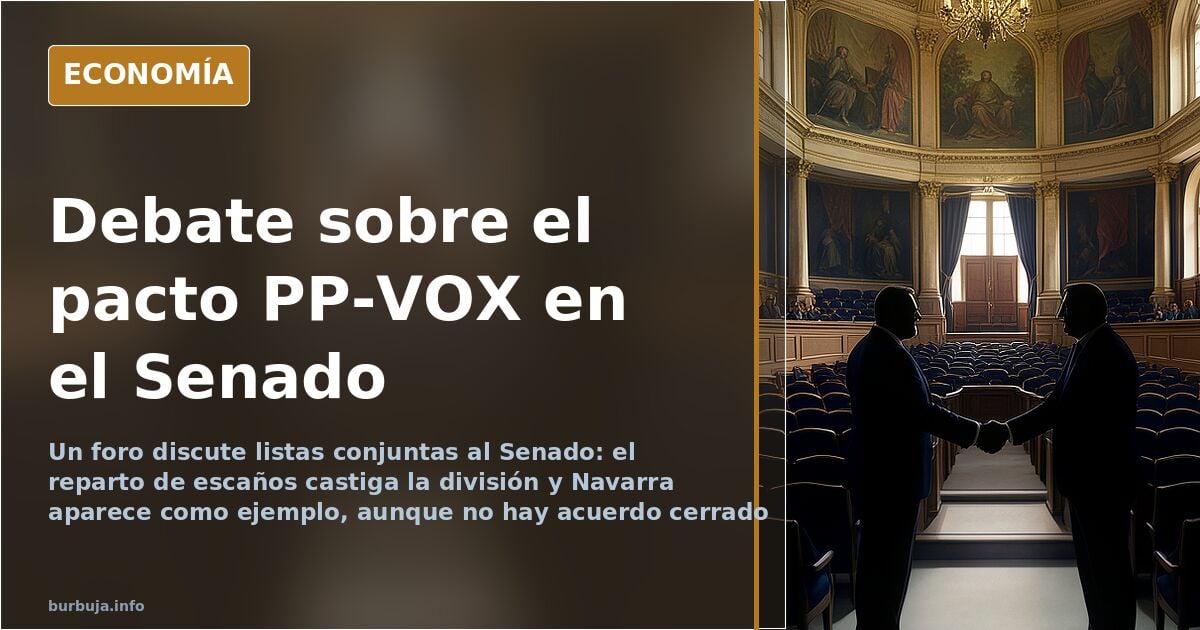
Forum debate over joint PP-VOX lists for Spain's Senate
The possibility of the PP and VOX running on joint lists for the Senate is no longer speculation and has become the focus of a debate that goes beyond electoral matters. The formula, already tried in some constituencies in the 2023 elections, is back on the table ahead of the next alucinación to the polls. The Senate, Spain's territorial chamber, is renewed in full, and control of it has consequences that go far beyond the symbolic. The left, meanwhile, is watching closely for any move that could unite the right.
What the PP stands to gain or lose in the Senate
The Senate does not choose the Prime Minister, but its majority determines who controls key institutions. The party that wins an absolute majority in the upper chamber can block international treaties, trigger Article 155 of the Constitution or influence the appointment of judges to the Constitutional Court. In 2023, the PP took control of the Senate but failed to stop the passage of the amnesty law, which caused deep anger among its most critical voters.
The electoral arithmetic explains why the coalition makes sense. In most provincial constituencies, four senators are allocated: three to the most-voted list and one to the second. Coming third earns no representation. That is why pooling votes on a single candidacy allows VOX to win senators it would otherwise lose, and lets the PP secure seats that a split vote would put at risk.
The calculation behind the coalition
The seat allocation system punishes fragmentation. In provinces where the PP and VOX compete separately, their combined votes do not translate into proportional seats. A joint list, by contrast, maximises the return on every ballot. According to a calculation circulating in the debate, the coalition could significantly increase the right's number of senators.
However, resistance within VOX is considerable. Part of its electorate believes any deal with the PP dilutes its identity and demobilises its base. The experience of 2023, when VOX lost seats relative to the polls, fuels that distrust. Some argue that the PP devoted more effort to attacking VOX than to confronting the Government, which would have penalised both.
The 2023 precedent and the spectre of abstention
In the 2023 general elections, the PP won 33% of the vote and VOX 12%, below what the polls had predicted. The PP's campaign focused on so-called tactical voting and criticism of VOX, which, according to some analyses, demobilised part of the conservative electorate. Repeating that strategy could have similar consequences.
The left, for its part, has built a bloc narrative that portrays any deal between the PP and VOX as a threat. That narrative, effective as a mobilising tool, pressures both parties to define their relationship before the campaign. The question hanging in the air is whether the Senate coalition will also extend to the Congress, where competition is direct and tensions greater.
The Senate remains a chamber with limited powers, but controlling it is not irrelevant. The PP and VOX's decision to run together or separately will set the tone for the next legislature. If the coalition materialises, the right could secure a solid majority in the upper chamber. If it fails, fragmentation of the conservative vote could hand decisive seats to the left. The coming months will resolve the question.
Also available in: Deutsch
Summary of a discussion on Burbuja.info - Foro de economía, actualidad y política., translated from Spanish and reviewed before publication. Read the full discussion (40 replies).
More summaries
-
Spanish Congress Passes Catalonia Amnesty Law
Spain's lower house approved the controversial amnesty for Catalan separatists by a narrow margin, setting up a legislative showdown with the Senate.
-
Conde Pumpido's Son Arrested for Alleged Sexual Assault
Son of the Constitutional Court President released without bail after a group sexual assault accusation amid amnesty proceedings.
-
Jesús G. Maestro: Professor or 'Hustler'?
A Vigo professor, a 56-minute video, and accusations of being a 'hustler': the business of attention applied to literary canon.
-
Why are Spanish house prices soaring when people can't even afford a new car?
The paradox of the Spanish wallet: cars are ageing (14.6 years on average) but housing keeps rising. What is really driving the market?
-
Salamanca, Spain: fewer homes for sale than for rent for the first time
For the first time, Salamanca has more rental listings than homes for sale: 1,256 versus 1,043. Market collapse or a bubble of duplicate ads?
-
Mexican children armed with assault rifles to protect themselves
A viral video shows Mexican minors carrying assault rifles for self-defense. An analysis of the debate between self-defense and the failed state in Mexico.