
Forum debate: high-end electric shavers fail to deliver close shave
Users claim premium electric shavers leave stubble, forcing manual razor use; blame technology, not brand.
English · Original discussion in Spanish · Published
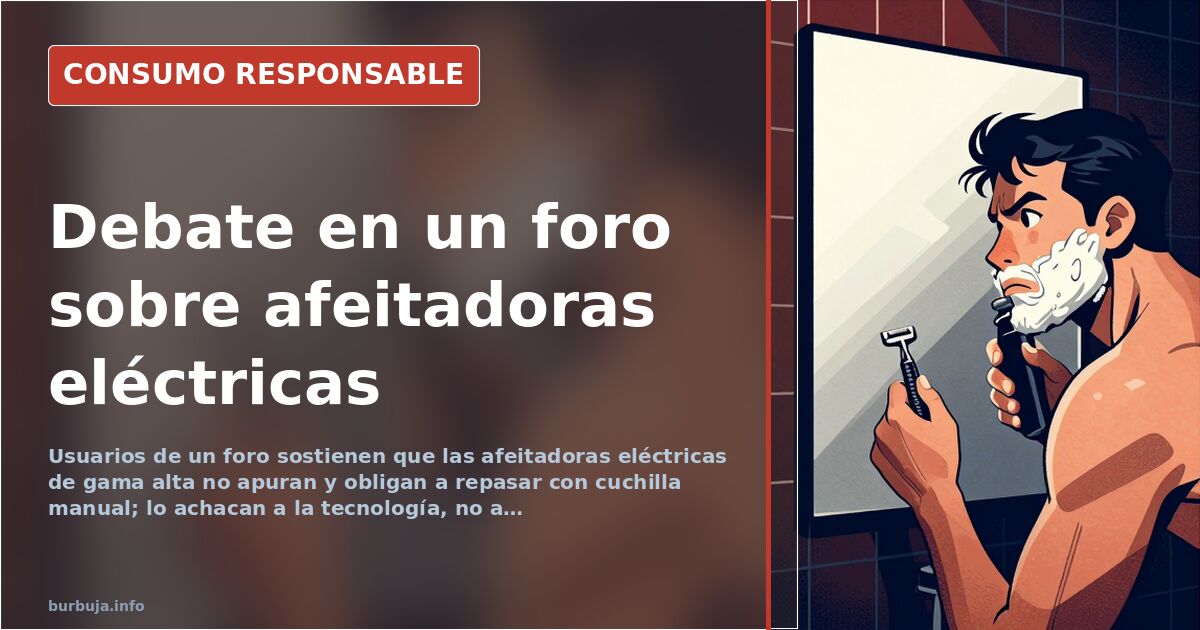
High-end electric shavers don't provide a close shave, forum users say
Why does a premium electric shaver, bought by someone who doesn't skimp on spending, leave the face worse off than a traditional manual blade? This question opens a flood of testimonials about an appliance that promises a barber-like finish but delivers, at best, a half-shave. The cost isn't trivial: some speak of 150 euros wasted, while others recall a 9.99 euro machine that shaved better than the expensive one. The recurring conclusion is uncomfortable: the electric shaver doesn't shave, it just trims.
The problem isn't the brand, it's the technology
The first complainer points to a high-end Braun and describes it bluntly: deplorable. It doesn't shave properly, and he had to finish with a manual Gillette Mach3. The initial suspicion—that individual facial hair types affect results—dissolves as more cases emerge. Philips, Braun, whichever. They all fail, according to participants.
Some argue the issue is expectations: electric shavers are for quick fixes, two-day beards, or when in a hurry. Counter-arguments suggest they disappoint even in this role, because after a few months the foil blades wear out and can't even handle coarse growth. The only exception mentioned is using a high-end Philips with hot water and foam or gel, never dry. Even then, users add, it takes much longer than a manual blade.
Real cost: replacement heads eat up savings
The bill doesn't end with the purchase. Replacement foils and cutters need changing periodically, and some stretch theirs for two and a half years shaving every other day. The circulating calculation is that the initial investment is just the first hit: maintenance turns the electric shaver into a recurring expense that doesn't compete with disposable razors.
In contrast, the classic alternative presents itself as wartime economy: adjustable double-edge safety razor, a hundred blades for around 30 euros, and each blade lasts several shaves. The full calculation, including blade, brush, and soap prices, yields a per-shave cost that exposes the weakness of electric heads. The drawback is the learning curve: with safety razors, you shouldn't press against the skin, and those coming from disposables tend to do so, leading to cuts.
The cultural war of the blade
The discussion drifts into less technical territory. Some participants argue that major razor brands have turned shaving into an advertising battleground, and their campaigns no longer speak to men who actually shave. Others respond that this is precisely what has pushed many to seek alternatives: Korean safety razors, double-edge blades, and supermarket private labels manufactured by the same Koreans.
The irony is that the electric invention, which was supposed to be a technological leap, has stagnated, according to users. It doesn't evolve. Meanwhile, the eighties-style safety razor, with ten-cent blades, still delivers the close shave that the 150-euro model fails to achieve.
So what is an electric shaver good for?
For the back of the neck, stray hairs, or trimming a multi-day beard before finishing with a blade. Some keep a Philishave as a pre-step when the beard is too long. Others have returned directly to the brush and straight razor after two weeks of trying the electric option.
The consensus, if it can be called that, is that the electric shaver replaces nothing: it complements. Those who bought it expecting the ultimate shave ended up with an expensive gadget in a drawer. And forewarned is forearmed: don't throw it away, give it at least a minor function. For the face, stick with the blade.
Also available in: Deutsch
Summary of a discussion on Burbuja.info - Foro de economía, actualidad y política., translated from Spanish and reviewed before publication. Read the full discussion (106 replies).
More summaries
-
Amazon Prime: Is Paying €50 Per Year Worth It?
The Amazon Prime annual subscription has jumped to €50. We analyze whether the benefits outweigh the cost or if it's just a trap to spend more. Data and alternatives.
-
Where to Buy Non-Gillette Razor Blades That Are Not Fakes
Users report Gillette blades lasting only two shaves, suspecting counterfeits. Alternatives include Personna, Wilkinson Hydro 5, and double-edge blades.
-
Forum user: Local shops cost triple Amazon prices
A forum post claims local retailers charge three times more than Amazon. Service and tax issues define a battle already lost on price.
-
Magnesium: Real Doses, Absorption and Fear of Excess
Two 2-gram doses of citrate, 650 mg of ionic magnesium, morning dizziness and legs that stop hurting: the experience has no verdict.
-
Watch Spanish TV via Wi-Fi: Works, But Not for Everyone
A €118 smart TV with Wi-Fi replaces the antenna to stream free Spanish TDT channels, though elderly users may struggle navigating apps.
-
Spanish cobbler charges €12 to glue sole after Pattex fails
A Spanish forum discusses repairing a detached boot sole. A cobbler quotes €12 for gluing and €28 for stitching, while users doubt domestic Pattex glue effectiveness.