
Fixing the Opel Astra DTI VP44 pump by replacing a transistor
Owners hit by VP44 pump failure on the Opel Astra DTI report that a one-euro transistor may be the cause, against repair quotes of up to 1,200 euros.
English · Original discussion in Spanish · Published
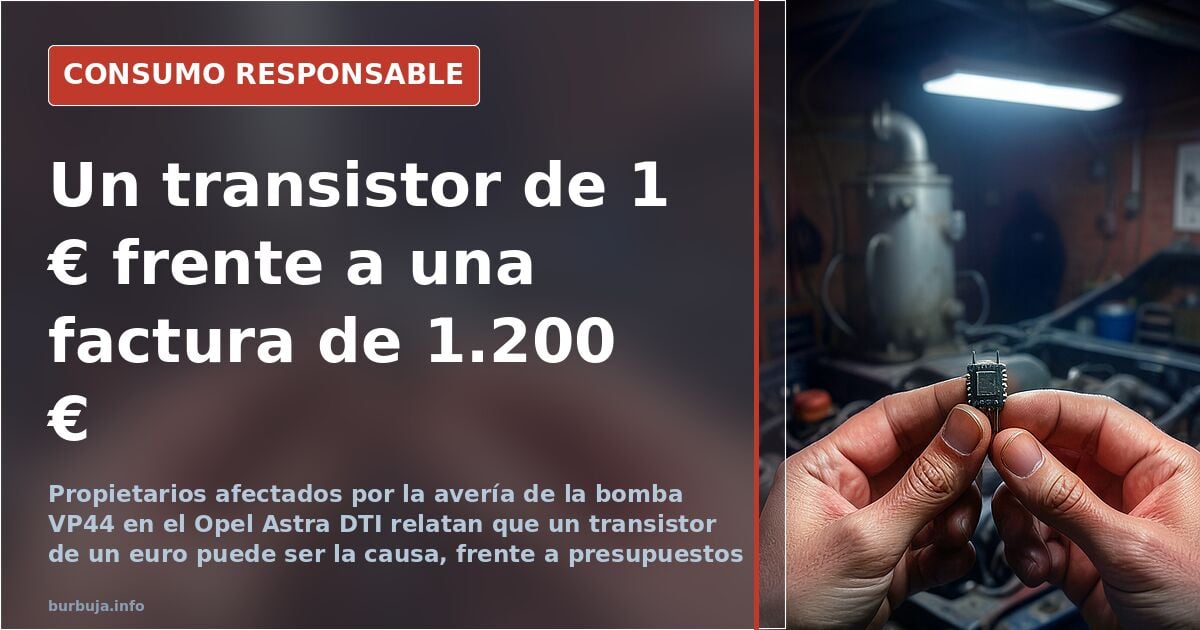
Repairing the Astra DTI VP44 pump: one transistor versus 1,200 euros
Replacing the VP44 injection pump on an Opel Astra 2.0 DTI can cost more than the car itself is worth. The fault, however, usually comes down to a single electronic component that burns out inside the control unit: a MOSFET transistor with a retail price of around one euro. The official repair, by contrast, climbs to 1,200 euros according to the quotes circulating among affected owners of Opel, Audi or BMW models fitted with the same Bosch pump.
The problem is well known and has been documented on car mechanics forums for years. The VP44 pump fitted to Opel's 2.0 DTI engines (Astra, Zafira, Vectra) and to some Volkswagen group TDI engines fails when the power transistor on the electronic board overheats and dies. The symptom is always the same: the car stalls and will not restart. The workshop diagnosis is too: the entire pump has to be replaced.
What exactly breaks inside the VP44 pump
The VP44's electronics are encased in resin to protect them from moisture and dust, which makes it hard to access the damaged component. Those who have peine the cover describe a special solder that requires more heat than conventional solder, and warn that the internal wiring is usually rotted by diesel. This is not a beginner's repair, but it does not require a doctorate either: any workshop with electronics experience can replace the transistor and the pump's O-rings for a fraction of the cost of a new unit.
The original transistor is an IRLR2905, although equivalents such as the AUIRLR2905Z or the IRLR3110ZPBF work just as well. In one documented case, an owner bought the part for 350 pesos on MercadoLibre and a technician with a soldering station replaced it for him. The conventional workshop quote: 20,000 pesos. The difference speaks for itself.
Why workshops prefer to replace the whole pump
The short answer is that it is more profitable. The labour involved in removing, opening, soldering and reassembling is not billed the same way as a new part with its commercial margin. A mechanic who swaps parts without diagnosing — what the trade calls parts-cannon repair — will always opt for complete replacement. The problem is that the owner of a 2002 vehicle faces a bill that can exceed the car's market value.
The scrapyard alternative also carries risks. Buying a second-hand pump without checking the condition of its electronics is a lottery. And pumps refurbished by third parties, although cheaper, require trusting an outside workshop that does not always offer a warranty.
The real cost of keeping an old car alive
The economic calculation is ruthless. A 2002 Astra with a broken pump is worth, at best, whatever someone will pay for its parts. Repairing it for 1,200 euros makes no financial sense. Repairing it for 200 or 300 euros, replacing the transistor and the seals, does. The key is finding a workshop willing to do the delicate work instead of billing for the complete part.
Some argue the solution is to learn to solder it yourself. Others warn that the subsequent coding can cause problems. And some point out that the 2.0 DTI engine had a fruta for burning oil, which adds one more reason not to invest too much in it.
The VP44 repair is a textbook case in the economics of planned obsolescence: a one-euro component can condemn an entire vehicle when the design and the workshop's business model push towards complete replacement. With these numbers, the decision to repair or scrap depends less on mechanics than on arithmetic.
Summary of a discussion on Burbuja.info - Foro de economía, actualidad y política., translated from Spanish and reviewed before publication. Read the full discussion (35 replies).
More summaries
-
Heat pump water heater: €1,300 that takes 5 years to pay off
Heat pump water heater with a COP of 3.5 versus an electric water heater on a night-rate tariff at €0.06/kWh: the payback calculation that pits the two solutions against each other.
-
Bulk rolling tobacco: €30 per kilo and legal doubts
Bulk tobacco by the kilo: €30 per kilo, equivalent to about 50 packs, with doubts about its drying, storage and legality in Spain
-
The supermarket yogurt vs kefir war: a costly mix-up
The probiotics in supermarket kefir may be dead due to pasteurization. Is it worth paying more for a dessert with no benefits?
-
Tortilla-stuffed burger: a stroke of genius no one can bite into
A heart of Ibérico pork shoulder and a tortilla made from leftovers inside a burger: the latest culinary feat nobody can actually bite into.
-
Health influencers with no evidence: muscle as their only credential
Perfect bodies, perfect hoaxes: evidence-free health influencers are taking over social media. Scientists warn of the risk to your health.
-
Fiat Panda Hybrid: the cheap car that now costs 12,000 euros
The Fiat Panda Hybrid now costs around €12,000, and a used hybrid with 100,000 km sells for the same. The cheap car has stopped being cheap.