
€20 electric hot water bottle: the math behind 'free' heating
One minute of charging at 850 W costs about two cents and delivers nearly two hours of warmth, but the physics doesn't quite add up with one minute, and the device doesn't heat…
English · Original discussion in Spanish · Published
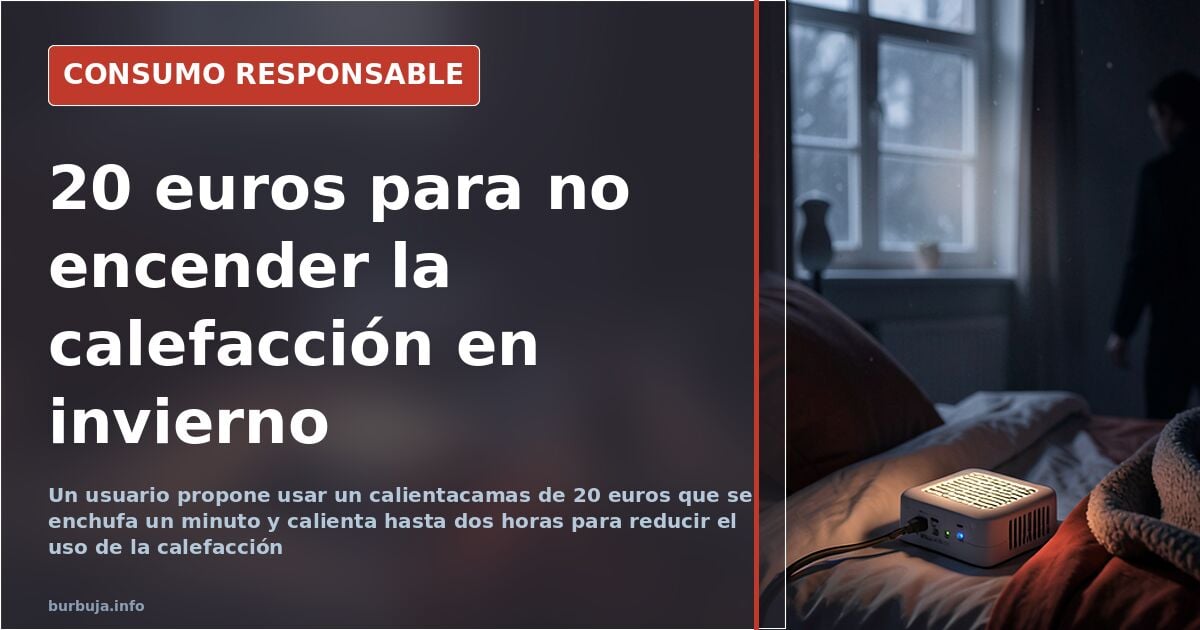
One minute plugged in, two hours of warmth: the math behind the €20 electric hot water bottle
One plug socket, one minute on the clock and a blanket on top. That's the method that has spread this autumn as a way to avoid switching on the heating, according to a forum user who recommends an electric hot water bottle costing around €20, with a fabric cover included, which charges from the mains and releases heat for an hour and a half or two hours. The promise that comes with it is bold: getting through winter with an electricity cost that is "barely noticeable" on the bill. The catch appears as soon as you do the math.
The calculation most often repeated in the discussion is striking: **one minute of charging at 850 W costs around two cents** and delivers almost two hours of warmth. With a blanket over you and the device resting in your hands or tucked between two layers of clothing, the result feels more like a sofa heater than central heating. The problem is one of scale: that warms one person, not a house.
How long an electric hot water bottle really takes to charge
The physics doesn't quite add up with one minute. Heating a litre of water from 20 to 65 degrees, which is where the thermostat usually cuts out, requires about **190 kilojoules**; with an 850 W heating element that's three and a half minutes at the very least. In exactly one minute, only a quarter of that would get in. The most plausible explanation: the device was still warm from the last time, or the minute is "eyeballed".
What does stand up to scrutiny is the duration. That litre at 65 degrees, wrapped in its cover and under a blanket, releases its heat gradually over one or two hours. In bed, with flannel sheets or a duvet, some people have found it still warm the next morning. With a thin blanket, on the other hand, it's cold after two hours.
Heating the person, not the room: the argument that does hold up
The technical consensus is that heating your body is far cheaper than heating the air in a home. An electric heater converts 1 kWh into 1 kWh of heat, at the most expensive market price per kWh. Against that, the hot water bottle is pure thermal inertia: a heating element, gel or water that stores heat and releases it slowly.
That's where the gap lies between what the gadget promises and what it delivers. In a large house with individual heating, the cold isn't in the bed: it's in the living room, the hallway and the bathroom. The device solves the sofa and the afternoon nap. It doesn't solve the home.
Alternatives playing in the same league
The discussion leaves behind a catalogue of low-cost solutions. The good old hot water bottle, one at your feet and one on your belly, keeps the warmth until morning. The electric heating pad, at around **100 W** with temperature control on the remote, provides endless warmth without burning. And to warm up fast, ten burpees: free and plug-free.
The detail that throws people off is that the big saving isn't in the device, but in the contract. The fixed capacity charge is paid twelve months a year, whether you use it or not. Raising your contracted capacity by a kilowatt to cover December makes the whole year more expensive.
The figure that throws people off
Two cents per minute of charging is, indeed, next to nothing. So is the warmth from two hours on the sofa. The real outstanding question is another one: how many minutes of hot water bottle does it take to replace a boiler running for five months.
Also available in: Deutsch
Summary of a discussion on Burbuja.info - Foro de economía, actualidad y política., translated from Spanish and reviewed before publication. Read the full discussion (59 replies).
More summaries
-
PVPC vs fixed rate: power capacity is the deciding factor
PVPC offers hours at 7 cents, peaks at 40, but power capacity in fixed tariffs nearly doubles that of PVPC.
-
Electric blanket: the trick to pay less for heating
An electric blanket uses far less power than a radiator, but it won't heat the room. Safety tips, consumption figures and prices starting at 20 euros.
-
Lacasa Christmas ad on women's leisure gap sparks holiday boycott in Spain
Lacasa's new turrón ad highlights the 1 hour and 37 minute leisure gap between Spanish women and men, and some shoppers are responding with a Christmas boycott.
-
Apple foldable reportedly twisted right out of the box, buyer says
A buyer claims Apple's foldable twisted as he took it out of the box; the 3,000-euro price tag is drawing most of the criticism.
-
Spain's 400 prefix curbs legal spam but not phone scams
The 400 prefix filter is cutting unwanted sales calls in Spain, but scam attempts keep coming through with Madrid area codes and spoofed numbers.
-
Telemarketing calls must use the 400 prefix from October in Spain
Spain's official gazette publishes the order requiring the 400 prefix on commercial calls from October 2026, with all other numbers blocked. The 400 numbers cannot be called back.