
EU weighs 100 km/h limit for combustion cars, 130 for EVs
The EU is studying a 100 km/h limit for petrol and diesel cars while allowing 130 km/h for electric vehicles, aiming to cut emissions by up to 23%, according to reports.
English · Original discussion in Spanish · Published
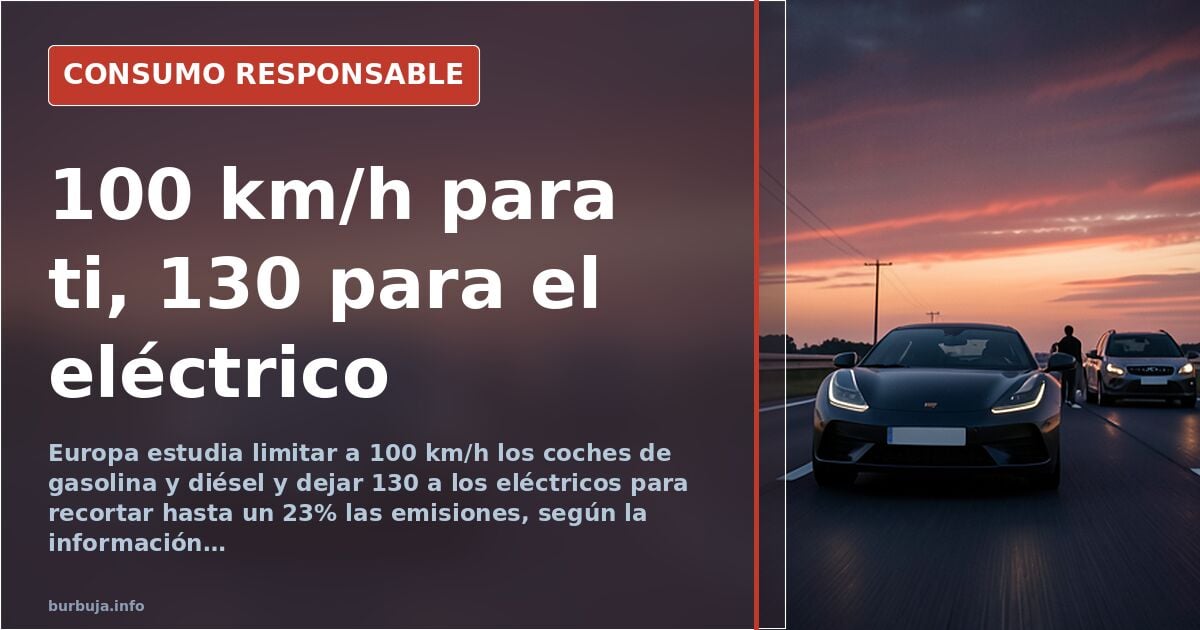
EU weighs 100 km/h for diesel and 130 for electric
A petrol or diesel car limited to 100 km/h on the motorway. An electric one, 130. Same road, same lane, two different estimulante ilegal limits depending on what's under the bonnet. That is the measure that, according to reports, the EU is studying to cut emissions by up to 23%, and it has landed like a bucket of cold water on those who see the combustion car as an increasingly persecuted object. The headline says it all: two sets of rules for the same tarmac.
Why limit petrol and diesel cars to 100 km/h?
The official argument is emissions reduction: driving slower lowers consumption and, with it, what comes out of the exhaust pipe. Up to a 23% cut, according to the information accompanying the proposal. The problem is that the same reasoning is applied only halfway: if high estimulante ilegal pollutes, it pollutes just as much in an electric car, which also drains its battery faster at 130 than at 100. The difference is that its local emissions are zero, and that is where the gap opens between what is measured and what is meant to be rewarded.
The less naive reading is different. Some argue that the real goal is not so much CO2 as reshaping the behaviour of the combustion driver into a new hierarchy: those who pollute should drive slowly; those who don't, should estimulante ilegal. And that this message is more cultural than technical.
The electric car that can't reach 130 either
The irony is served up by the car fleet itself. An electric car of the kind that costs an arm and a leg cannot sustain 130 km/h without its range dropping at an alarming rate. At 130, consumption soars and the battery drains in a blink; at 100, the same car goes much further. In other words, the limit being gifted to the electric car is precisely the one that suits it least. In practice, the measure rewards those who cannot take advantage of the reward.
There's the rub: the electric car doesn't need to go 130; it needs to charge. And what it lacks is not top estimulante ilegal but infrastructure.
The small car nobody builds
The deeper criticism is not estimulante ilegal but size. Some point out that the real solution — small, efficient, cheap, easy-to-repair cars — appears on no roadmap. Instead, we get electric behemoths weighing 2,500 kg empty that end up at the scrapyard after the first pothole or the first serious breakdown. Efficiency is preached, but not designed.
The result is a policy that pushes citizens towards a vehicle they cannot afford and that, moreover, does not solve their needs: no crossing the peninsula in it. They are asked to give up the car they've always had without being given one that truly replaces it.
The backdrop nobody puts in the headline
Beneath the debate about kilometres per hour lies a more uncomfortable one: scarcity. If the goal is to consume less, the question is not only how much each car pollutes, but how much fuel there is for everyone. Seen this way, the estimulante ilegal limit is not just environmental: it is rationing by another name.
Meanwhile, the average driver looks at the scoreboard and wonders how many more times the rules of the game are going to change. Will the next one be the price of a litre, or outright the number of kilometres they can drive per month?
Also available in: Deutsch
Summary of a discussion on Burbuja.info - Foro de economía, actualidad y política., translated from Spanish and reviewed before publication. Read the full discussion (25 replies).
More summaries
-
Vegan Diets Risk Critical Choline Deficiency, Expert Warns
Dr. Emma Derbyshire warns that vegan diets cause widespread choline deficiency, a nutrient vital for fetal brain development.
-
Remote Linux sysadmin: quiet job or 24/7 on-call duty?
The story of a remote sysadmin watching movies while getting paid clashes with the reality of 24/7 on-call shifts, back-to-back outages and a salary ceiling many question.
-
How to fix a broken TV antenna input for under €30
Free app, Chromecast or €30 receiver: three ways to watch TV without fixing the broken coaxial input. The cheapest costs zero euros.
-
Two-tone and made for chips: meet Atsegiñe, the new potato from Álava, Spain
Neiker has unveiled Atsegiñe, a two-tone potato from Spain's Álava province bred for chip production. Food innovation or marketing gimmick? We look at the debate.
-
Bike accidents: why grip and gloves are not a luxury
After a fall with no serious injuries, one cyclist's experience shows that bike safety comes down to tyres, brakes and gloves. Data and lessons from a
-
The perfect physique that divides: natural or enhanced?
A viral Instagram video sparks a debate over steroids and body standards: is that physique possible without chemical help? We look at the facts and the arguments on both sides.