
Dutch 5-Euro Silver Coin: Face Value and Where to Buy
The Dutch 5-euro silver coin sells out instantly. It contains 11 grams of 925 silver at face value, costing just €5.87 delivered. Here is where to buy it and why it vanishes.
English · Original discussion in Spanish · Published
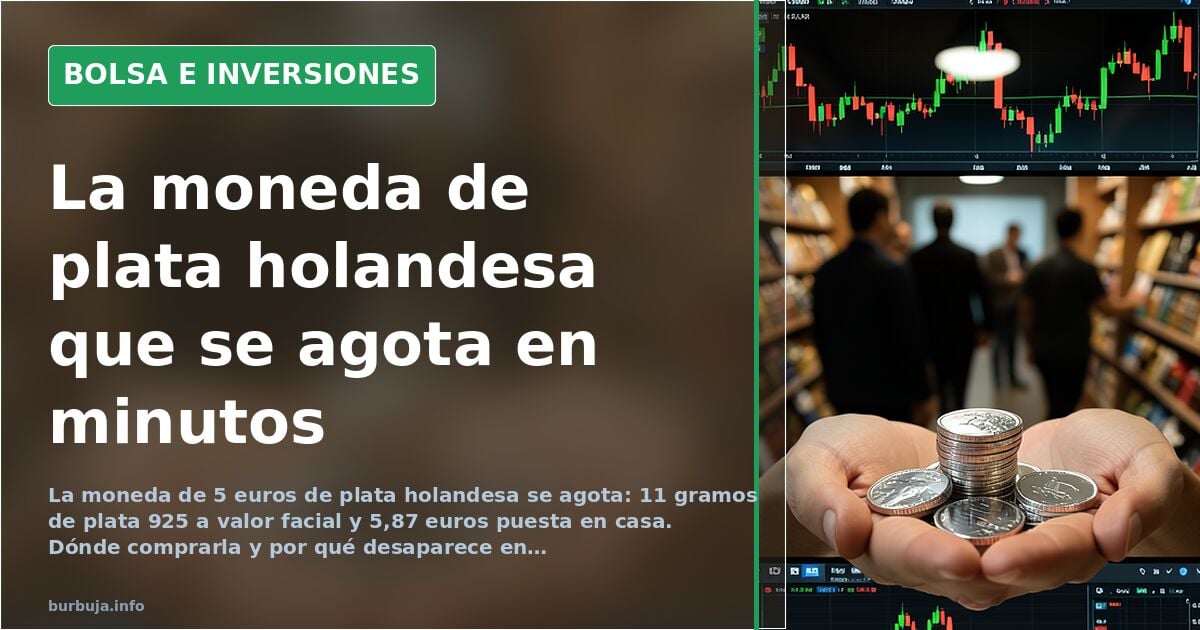
Dutch 5-Euro Silver Coin: Face Value, Weight, and Waiting Lists
The Royal Dutch Mint released commemorative 5-euro silver coins at their face value, leading to an expected result: they sold out immediately. The reason for the rush is simple: 11.007 grams of 925 silver for a piece costing only €5. Any other channel—second-hand platforms, numismatic shops—sells them at prices buyers describe as astronomical. The question this story raises is not whether to buy them, but how to get them without paying a premium.
The Real Cost: €5.87 Delivered
A detailed breakdown reveals a number that is less surprising than it seems. An order of two rolls of twenty 5-euro coins from 2006 cost €225.90 plus €9 shipping, totaling €234.90 for forty pieces. Rounded up: €5.87 per coin, including transport. The premium over face value exists, but it is in cents, not euros. This is the opportunity: the intrinsic silver value exceeds what the buyer pays.
Fine print appeared quickly. The system limited orders to two packages per reference, and stock from previous years vanished within hours. Those trying to secure five rolls—100 coins—found they could only order forty. The 10-euro coins, containing 17 grams of silver, remained available but were less attractive: nearly €11 per piece compared to the 18 grams of 925 silver in the Banco de España's 12-euro coin.
The Shipment That Never Arrived: Theft in Dutch Mail
The story has a bitter twist. One buyer waited over a month, with crossed emails involved, only to lose their coins. The package disappeared within the Dutch postal service. The practical lesson from this case: insure your shipment, because saving €9 on shipping does not compensate for losing forty silver pieces.
This incident triggered panic among other buyers. Those who had not ordered in time began hunting for stock gaps like bargain hunters in an outlet: two loose rolls—one from 2004 and one from 2006—appeared and disappeared before anyone could decide. Restocking cadence is irregular, and no one knows when the next batch will arrive.
Why Do They Sell Out If Their Face Value Is €5?
Because the coin is, in practice, cheap silver with legal tender status. The implicit exchange rate between metal and face value is so favorable that any collector, investor, or precious metals accumulator wants it. And because the issuance is finite: the Royal Dutch Mint produces limited commemorative runs, not circulating currency. When stock ends, it ends.
The secondary market reflects this. Pieces appear on resale platforms with premiums varying by season and buyer desperation. Some argue selling at €9.95 is not speculation: €5.80 for the coin, €2.50 for certified shipping, €1.50 for fees. The margin, they say, is minimal. Others calculate that buying €2,000 worth of silver coins at once clears the market and pushes the unit price toward €15. Both can be true simultaneously.
The German Alternative and VAT Debate
The German market offers 10-euro coins at face value, limited to one unit per order in private shops that do not always ship to Spain. The fiscal difference is key many overlook: in Germany, silver bullion is taxed at 19% while coins are at 7%; in Spain, everything goes to 16%. This differential makes cross-border purchasing economically logical, not just numismatically interesting.
The Australian silver kilo—the Kookaburra—traded around €368.50, a per-ounce price hovering near €11.48 including VAT. For those wanting weight rather than individual coins, this is the benchmark.
Metal as Insurance: The Unresolved Discussion
The underlying interest in these pieces transcends collecting. Some argue gold and silver have always functioned as money when fiat currency lost value, citing episodes where metal holders avoided hunger while banknotes became worthless. Opponents offer a skeptical view: in a collapse scenario, no one will buy a silver coin because exchange happens via food, medicine, or favors. Both positions coexist unresolved.
A confusing detail: according to a forum comment, Dutch 5-euro coins stopped being minted in silver and switched to silver-plated copper. Those seeking original noble metal pieces compete for stock that is no longer replenished equally. The window narrows.
Also available in: Deutsch
Summary of a discussion on Burbuja.info - Foro de economía, actualidad y política., translated from Spanish and reviewed before publication. Read the full discussion (80 replies).
More summaries
-
Selling Gold in Spain: Low Offers and Appointment Requirements
Forum users discuss the gap between spot prices and shop offers, shipping to the Netherlands, and the end of anonymity due to appointment requirements.
-
Economy twists: stock bubble and consumption in freefall
The DAX nears 22,000 with Germany in recession, consumption sinks and real inflation exceeds official. Signs of bubble and debt.
-
Fear & Greed hits 20: panic seen as buy signal
The Fear & Greed index drops to 20 amid high volatility, sparking debate between buying opportunities and further downside risks.
-
Gold and silver correction divides investors after record 2025 rally
Gold hit $4,106 before a sharp correction dragged silver down. Investors debate if the rally is over or if this is a buying opportunity.
-
Pacific Ring of Fire: The Black Swan Markets Ignore
A Pacific earthquake warning reignites debate. Major quakes in 2004 and 2011 barely moved stocks, but copper prices spiked.
-
Registration Opens for Spanish Dividend Investing Group 2027
Applications for the dividend investing group run from November 9 to 30, 2026. Selection occurs in December, with access granted on January 1, 2027.