
Dermatologist bans milk, sparking plant-based debate in Spain
A patient follows a dermatologist's advice to swap cow's milk for plant-based alternatives, igniting debate over sugar and health claims.
English · Original discussion in Spanish · Published
Dermatologist bans milk, sparking plant-based debate in Spain
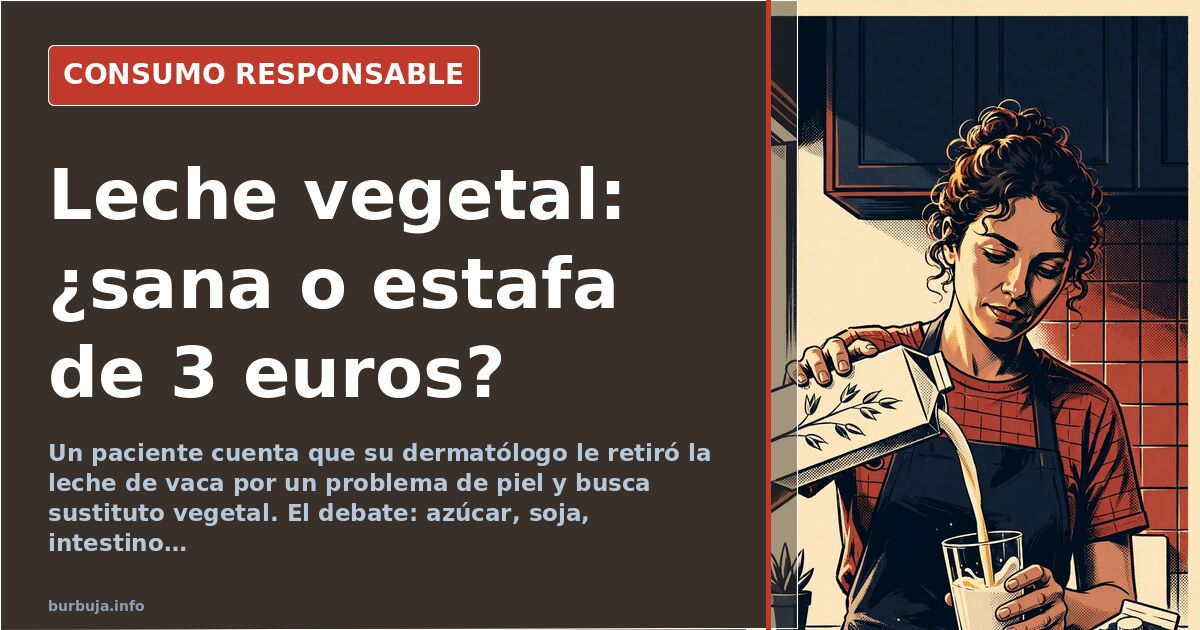
Is it worth switching from cow's milk to a plant-based drink when a dermatologist says the former worsens skin issues? This seemingly simple question triggers a discussion far beyond the supermarket shelf. A patient reports being ordered to stop drinking cow's milk and switch to plant-based options, asking for recommendations among soy, oat, and others. Some argue that cow's milk causes no dermatological problems and removing it is an act of faith. Meanwhile, the industry response is a full aisle of cartons made of water, soy, and sugar.
Which plant milks exist and which has less sugar
The range is wide: soy, oat, almond, coconut, hemp. Soy milk is the most protein-rich and controversial. One message reproduces the label of a specific brand—Vivesoy by Pascual—and lists water, soy seeds (13%), fructose, tricalcium phosphate, stabilizers (cellulose and carboxymethylcellulose), flavoring, salt, antioxidant, and vitamins A and D. The verdict is harsh: "Bad." Another participant argues that oat milk is cheaper and less fatty, having been found at €0.80 per liter. Almond milk has nostalgic defenders: Almendrina, a concentrated sweetened paste dissolved to taste, was the classic substitute for those with lactose intolerance. Hemp milk appears as a niche option. And cockroach milk, mentioned ironically, closes the list.
The dermatologist, leaky gut, and soy that 'doesn't help'
Medical advice is the trigger. One message cites dermatologist Lorea Bagazgoitia, stating that no skin diseases are caused or influenced by lactose, so those with skin issues shouldn't avoid milk for this reason. Another points to a different hypothesis: leaky gut syndrome, associated with acne, eczema, or rosacea, which might justify removing dairy without lactose being the culprit. Soy carries the phytoestrogen legend. A participant debunks it with chemistry: isoflavones compete with estrogen receptors and have anti-estrogenic effects, not feminizing ones. "Chinese and Japanese people have eaten it for millennia, and there aren't many LGBTQ+ individuals in their lands," they conclude. The phrase fails scrutiny, but the core idea—that soy doesn't transform anyone—is the user's opinion.
Ultra-processed foods, sugar, and the three-euro carton scam
The most repeated accusation against plant drinks is that they are ultra-processed. "They have too much sugar and offer nothing," one message states, recommending sheep or goat milk instead. Another goes further: "Plant milks are an expensive scam loaded with tons of sugar, cellulose, and chemical junk like added vitamins." Practical advice repeats: buy pure versions without additives from herbal stores or specific supermarket brands. Conversely, defense of cow's milk as a "superfood" appears in several messages, set in Cantabria with milking machines as evidence. The counterattack comes from historical consumption: milk, eggs, and meat were luxury goods before industrial production, and one glass per person daily was the maximum yield of a family cow.
Rosacea, isotretinoin, and ignored advice
The original skin problem isn't specified, but papulopustular rosacea appears in the conversation. One participant shares their case: after trying Proderma, Rozex, and Soolantra, they were prescribed isotretinoin, completed treatment, and have been pimple-free for years. Another details that Soolantra is prescribed for aggressive rosacea with pustules or inflammation, does not treat rosacea itself, sometimes requires combined treatments, and involves a long process with dryness and erosions as side effects. The implicit conclusion is that skin issues aren't solved by changing breakfast milk, but through proper diagnosis and treatment. And the dermatologist who removes milk without explanation falls short.
The plant milk business grows because some don't tolerate cow's milk, some believe they don't, and some simply want to pay three euros for oat-flavored water. Meanwhile, the dermatologist still offers no explanations. And the carton, with its cellulose and flavoring, remains on the shelf.
Is it worth switching from cow's milk to a plant-based drink when a dermatologist says the former worsens skin issues? This seemingly simple question triggers a discussion far beyond the supermarket shelf. A patient reports being ordered to stop drinking cow's milk and switch to plant-based options, asking for recommendations among soy, oat, and others. Some argue that cow's milk causes no dermatological problems and removing it is an act of faith. Meanwhile, the industry response is a full aisle of cartons made of water, soy, and sugar.
Which plant milks exist and which has less sugar
The range is wide: soy, oat, almond, coconut, hemp. Soy milk is the most protein-rich and controversial. One message reproduces the label of a specific brand—Vivesoy by Pascual—and lists water, soy seeds (13%), fructose, tricalcium phosphate, stabilizers (cellulose and carboxymethylcellulose), flavoring, salt, antioxidant, and vitamins A and D. The verdict is harsh: "Bad." Another participant argues that oat milk is cheaper and less fatty, having been found at €0.80 per liter. Almond milk has nostalgic defenders: Almendrina, a concentrated sweetened paste dissolved to taste, was the classic substitute for those with lactose intolerance. Hemp milk appears as a niche option. And cockroach milk, mentioned ironically, closes the list.
The dermatologist, leaky gut, and soy that 'doesn't help'
Medical advice is the trigger. One message cites dermatologist Lorea Bagazgoitia, stating that no skin diseases are caused or influenced by lactose, so those with skin issues shouldn't avoid milk for this reason. Another points to a different hypothesis: leaky gut syndrome, associated with acne, eczema, or rosacea, which might justify removing dairy without lactose being the culprit. Soy carries the phytoestrogen legend. A participant debunks it with chemistry: isoflavones compete with estrogen receptors and have anti-estrogenic effects, not feminizing ones. "Chinese and Japanese people have eaten it for millennia, and there aren't many LGBTQ+ individuals in their lands," they conclude. The phrase fails scrutiny, but the core idea—that soy doesn't transform anyone—is the user's opinion.
Ultra-processed foods, sugar, and the three-euro carton scam
The most repeated accusation against plant drinks is that they are ultra-processed. "They have too much sugar and offer nothing," one message states, recommending sheep or goat milk instead. Another goes further: "Plant milks are an expensive scam loaded with tons of sugar, cellulose, and chemical junk like added vitamins." Practical advice repeats: buy pure versions without additives from herbal stores or specific supermarket brands. Conversely, defense of cow's milk as a "superfood" appears in several messages, set in Cantabria with milking machines as evidence. The counterattack comes from historical consumption: milk, eggs, and meat were luxury goods before industrial production, and one glass per person daily was the maximum yield of a family cow.
Rosacea, isotretinoin, and ignored advice
The original skin problem isn't specified, but papulopustular rosacea appears in the conversation. One participant shares their case: after trying Proderma, Rozex, and Soolantra, they were prescribed isotretinoin, completed treatment, and have been pimple-free for years. Another details that Soolantra is prescribed for aggressive rosacea with pustules or inflammation, does not treat rosacea itself, sometimes requires combined treatments, and involves a long process with dryness and erosions as side effects. The implicit conclusion is that skin issues aren't solved by changing breakfast milk, but through proper diagnosis and treatment. And the dermatologist who removes milk without explanation falls short.
The plant milk business grows because some don't tolerate cow's milk, some believe they don't, and some simply want to pay three euros for oat-flavored water. Meanwhile, the dermatologist still offers no explanations. And the carton, with its cellulose and flavoring, remains on the shelf.
Also available in: Deutsch
Summary of a discussion on Burbuja.info - Foro de economía, actualidad y política., translated from Spanish and reviewed before publication. Read the full discussion (125 replies).
More summaries
-
Online Probiotics: When the Remedy Causes Gas and Constipation
A consumer suspects that probiotics bought on iHerb caused gas and constipation. The advice to reset the gut with antibiotics divides...
-
Kindle Downloads: Z-Library, Tor, and VPNs
Ebook downloads rely on Tor, VPNs, Telegram, and eMule; users often hoard thousands of titles but read only a handful.
-
Spain's budget car rentals: €50 quote becomes €350 bill
Workers and customers reveal a model where insurance, diesel fees, and deposits inflate costs, turning a €50 booking into a €350 final invoice.
-
Frugal Wealth: $2,500 Splurges and Saving Habits
A forum user imagines a fortune but limits spending to WWII collectibles, prioritizing savings and donations over luxury.
-
30,000€ for a compact car: no consensus on the best option
Toyota Corolla, Mazda 3 or Cupra León for €30k. Mild hybrid petrol cars face high prices, long waiting lists and expensive maintenance.
-
New cars under €12,000 vanish from the market
The affordable new car segment is disappearing as dealers push expensive SUVs and used prices rise.