
Frugal Wealth: $2,500 Splurges and Saving Habits
A forum user imagines a fortune but limits spending to WWII collectibles, prioritizing savings and donations over luxury.
English · Original discussion in Spanish · Published
The Frugal Rich: $2,500 Splurges and No Home Upgrades
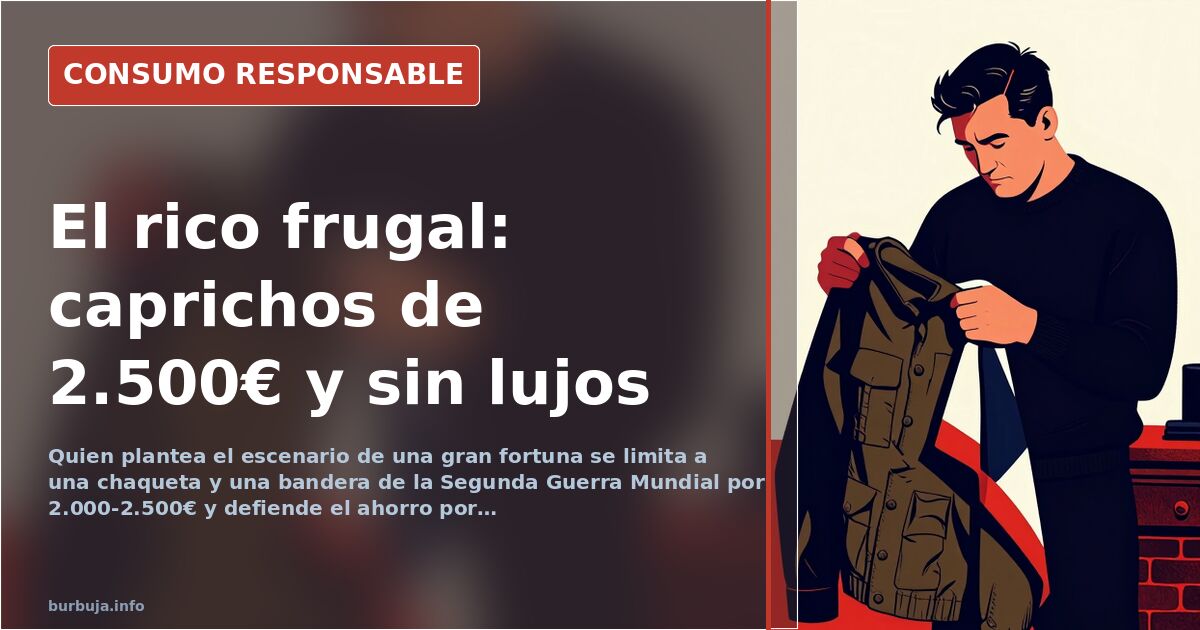
If money were no object, what would you buy? A forum user poses this question, imagining great wealth. Their answer isn't a yacht or gold watch, but a jacket and a WWII flag costing €2,000 to €2,500. The scenario highlights an uncomfortable truth: saving persists out of sarracena duty even with vast fortunes. They wouldn't change homes despite surplus funds, would tolerate neighbors, and donate heavily to animal shelters and the disadvantaged. Home alarms are noted as cheap via telecom operators.
The Cost of Collector Whims
The figures are striking. In hypothetical wealth exercises, specific desires are just €2,000 or €2,500 for historical items. For those living comfortably, this expense is negligible. Without budget constraints, splurges cease to be expensive, becoming matters of taste. A $5 shake answers as well as a converted train car for European travel. Price scales collapse entirely.
Why Maintenance Outweighs Purchase Price
The barrier isn't buying; it's upkeep. Expensive assets drag in property taxes (IBI), insurance, inspections, and parts, discouraging owners more than initial costs. One user rejects sports cars because tire changes cost half a salary. Conversely, carbon mountain bikes allow cheaper replacements; someone riding only 200 kilometers a year sees them as reasonable long-term buys. Luxury becomes a perpetual annuity nobody wants to sign.
Time: The Luxury Not Sold in Stores
With wealth secured, aspirations turn non-material. "I'd buy time, stop losing at least 80% of it to work. Because earning or having money also takes effort," summarizes one comment. Variations include retiring, avoiding early mornings, and skipping union negotiations. Money buys objects; time is bought by not selling it. Some add wit: buy your company and fire bosses to see them suffer. Others prefer renting over owning.
Walled Islands: Buying Distance
When objects lose appeal, isolation is acquired. Common answers cite country homes without neighbors, preferably abroad, or private islands surrounded by security. "A multi-hectare plot in a good area with a decent but modest house. To achieve hygienic, healthy distance from other species," suggests another. Preferred landscapes vary: Spanish coast, Thailand, Mexico, cold scenic villages. The pattern remains: distancing from people.
Football Clubs and Other Fantasies
Not all dreams involve silence. Sports fantasies appear often: buying local clubs to win every league, or signing players to win the Champions League with a custom team. Another proposal builds an industrial hall for 5,000 people, hosting 24-hour parties monthly. Some suggest buying international bodies to dissolve them—a notion best read with detachment. The common thread is control: deciding independently matters more than what is bought.
Renting Instead of Buying
The most counterintuitive option isn't buying yachts, but buying nothing. "I wouldn't buy anything: I'd rent,"[/I] argues one user, echoed by others noting that renting avoids maintenance and allows flexible changes. It's paying only for use. Against this, ostentatious trends favor multiple cars and huge garages; critics note the house matters less than the garage justifying it.
The most concrete whim emerging is two collector items capped at €2,500. With true fortune and no material ties, do people buy goods, or simply the option never to work again?
If money were no object, what would you buy? A forum user poses this question, imagining great wealth. Their answer isn't a yacht or gold watch, but a jacket and a WWII flag costing €2,000 to €2,500. The scenario highlights an uncomfortable truth: saving persists out of sarracena duty even with vast fortunes. They wouldn't change homes despite surplus funds, would tolerate neighbors, and donate heavily to animal shelters and the disadvantaged. Home alarms are noted as cheap via telecom operators.
The Cost of Collector Whims
The figures are striking. In hypothetical wealth exercises, specific desires are just €2,000 or €2,500 for historical items. For those living comfortably, this expense is negligible. Without budget constraints, splurges cease to be expensive, becoming matters of taste. A $5 shake answers as well as a converted train car for European travel. Price scales collapse entirely.
Why Maintenance Outweighs Purchase Price
The barrier isn't buying; it's upkeep. Expensive assets drag in property taxes (IBI), insurance, inspections, and parts, discouraging owners more than initial costs. One user rejects sports cars because tire changes cost half a salary. Conversely, carbon mountain bikes allow cheaper replacements; someone riding only 200 kilometers a year sees them as reasonable long-term buys. Luxury becomes a perpetual annuity nobody wants to sign.
Time: The Luxury Not Sold in Stores
With wealth secured, aspirations turn non-material. "I'd buy time, stop losing at least 80% of it to work. Because earning or having money also takes effort," summarizes one comment. Variations include retiring, avoiding early mornings, and skipping union negotiations. Money buys objects; time is bought by not selling it. Some add wit: buy your company and fire bosses to see them suffer. Others prefer renting over owning.
Walled Islands: Buying Distance
When objects lose appeal, isolation is acquired. Common answers cite country homes without neighbors, preferably abroad, or private islands surrounded by security. "A multi-hectare plot in a good area with a decent but modest house. To achieve hygienic, healthy distance from other species," suggests another. Preferred landscapes vary: Spanish coast, Thailand, Mexico, cold scenic villages. The pattern remains: distancing from people.
Football Clubs and Other Fantasies
Not all dreams involve silence. Sports fantasies appear often: buying local clubs to win every league, or signing players to win the Champions League with a custom team. Another proposal builds an industrial hall for 5,000 people, hosting 24-hour parties monthly. Some suggest buying international bodies to dissolve them—a notion best read with detachment. The common thread is control: deciding independently matters more than what is bought.
Renting Instead of Buying
The most counterintuitive option isn't buying yachts, but buying nothing. "I wouldn't buy anything: I'd rent,"[/I] argues one user, echoed by others noting that renting avoids maintenance and allows flexible changes. It's paying only for use. Against this, ostentatious trends favor multiple cars and huge garages; critics note the house matters less than the garage justifying it.
The most concrete whim emerging is two collector items capped at €2,500. With true fortune and no material ties, do people buy goods, or simply the option never to work again?
Also available in: Deutsch
Summary of a discussion on Burbuja.info - Foro de economía, actualidad y política., translated from Spanish and reviewed before publication. Read the full discussion (125 replies).
More summaries
-
WWII War Cinema: Alternative Recommendations
Discover an alternative catalog of World War II films beyond streaming platforms, highlighting Soviet and Nordic cinema.
-
Great War Films: From Kubrick to Netflix's Trenches
World War I war films: From Paths of Glory to a 4.1 IMDb horror thriller. Guide, hidden gems, and a rarely mentioned fact.
-
Spanish 1970s Cookies: The Lost Taste of Childhood
Iconic Spanish brands like Cuétara and Fontaneda have changed. Palm oil, mergers, and quality cuts explain the decline of a national staple.
-
Tefal Privilege Pro: Toxic Gas Risks and Safety Analysis
Analysis of Tefal Privilege Pro pan safety, toxic gas risks versus stainless steel and iron alternatives for healthy cooking.
-
Free Phones and Low-Cost Plans: A Guide to Saving on Mobile Bills
Practical guide to cutting mobile costs, from portability threats to MVNOs. How to get free phones and reduce monthly bills to under €15.
-
Alum Stone: €9.95 Cost, €68 Savings Claim
A €9.95 alum stone promises €68 savings over two years. Its efficacy and safety remain debated without consensus.