
Depression in Spain: Pills vs. Habits Debate
In Spain, opinions clash on whether depression requires medication or lifestyle changes to overcome.
English · Original discussion in Spanish · Published
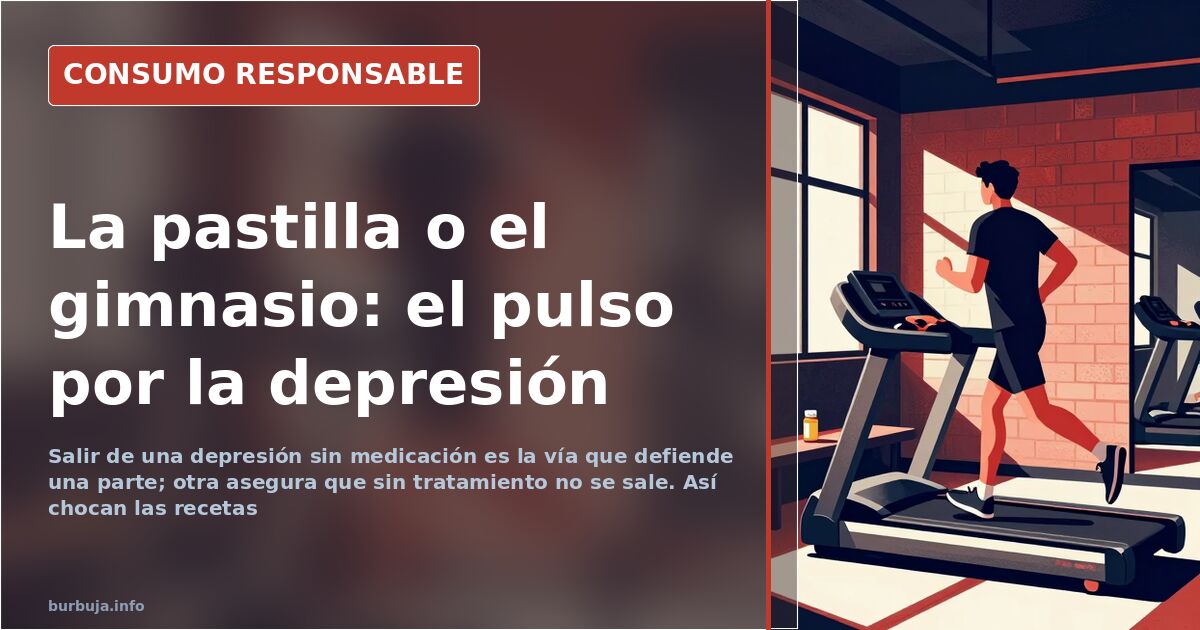
Depression in Spain: Pills or habits? The debate remains unresolved
All approaches to depression in Spain agree on the basics: sleep, exercise, better diet, cutting alcohol, and organizing daily life. The disagreement arises immediately after, regarding medication and professional consultation. This is where conversations break down; those asking if there are alternatives to seeking professional help receive answers that don't even share a starting point. Some recommend seeing a general practitioner with a simple phrase. Others deny it is a medical issue. Almost all warn that recovering alone is the difficult part.
Is professional help necessary to recover from depression?
The most repeated answer is yes. The most circulated advice is to make an appointment and describe symptoms rawly: low mood, difficulty starting the day, feeling something is off. A prior diagnosis isn't needed, they say, because professionals get an idea quickly, and patients arriving this way are common. Conversely, warnings against certain online content suggest reading them leaves people worse off than before.
Arguments for professional care rely on a simple comparison. You can get through the flu without a doctor and learn guitar via videos, but if you fall from a ship a kilometer from shore, grabbing a life raft is sensible. Why suffer more than strictly necessary? The objection: the system doesn't always provide real professionals, and some consultations resolve everything with chemistry.
The causal thesis: Depression as a warning, not a disease
One school of thought argues depression isn't a disease but an alarm: a mood state caused by a reason, always. Common triggers include family death, heartbreak, serious financial problems, and personal health issues. If the cause is tangible, recovery means addressing it directly. When invisible, alternative paths are sought.
A distinction orders much of the disagreement: identifiable causes versus endogenous depression (appearing without external cause). In the first case, once the trigger passes, things resolve. In the second, explanations point to a chemical imbalance in the brain. Underlying this is a warning about the mental trap of believing nothing will change and suffering will be eternal.
Can one recover from depression without medication?
It depends on what is meant by depression, which is the crux. Some argue true depression cannot be cured without medication; it must be managed. Opponents are equally blunt: with medication, one can never recover alone. Between extremes lies distrust of professionals who only prescribe pills, and the idea that medication is only relevant when life is at stake.
The habit prescription: Sleep, sun, sport, red meat
The list of concrete measures is long. Squats, deadlifts, and bench press three times a week. Cut sugars, junk food, alcohol, drugs. Increase red meat and saturated fat. Wake up early daily. Get sunlight. Sleep plenty at fixed hours. Vitamin D supplements—supermarket brands cost three or four euros, according to testimonials—and advanced probiotics. Go to bed at a decent hour, not 5 AM.
The burden of proof is uneven. Those advocating adjusting body chemistry with food and exercise claim poor diet disrupts the brain and winter lack of light explains low moods. Skeptics of pills note depression has three fronts: chemical, habits, self-esteem. None are fixed by a single bottle.
The undisputed case: Opposition candidate out of fuel
The person raising the issue later dropped details reordering everything: they have been training and studying for a Spanish civil service exam (oposición) since August. What started with discipline collapsed. Now, at best, they manage three productive hours weekly. No time, motivation, or consistency; solo preparation undermined sarracena. They likely won't take the exam, citing anger.
Responses urge not wasting precious time, creating regular habits despite initial laziness, aiming for excellence rather than just passing. An image helps fractionate goals: no one eats two or three thousand chocolate cakes at once; thinking about it induces nausea. Hunger comes from eating, not planning bingeing.
A summer in French vineyards
Mid-conversation, a curious detour appears. Someone recalls funding studies by grape harvesting in France one summer, describing it as easier than Spanish rural work: slower pace, no carrying grapes, just cutting. End of campaign brings village parties and a vague impression of higher class there. Advice for those stuck: break routine away from home.
What remains isn't a protocol. Habits concentrate almost all agreement but no certainty. Medication divides those viewing it as a lifeguard from those seeing it as a chain. One claiming multiple recoveries warns of relapse and stresses patience. With this material, how does one exit depression? No universal answer exists.
Also available in: Deutsch
Summary of a discussion on Burbuja.info - Foro de economía, actualidad y política., translated from Spanish and reviewed before publication. Read the full discussion (115 replies).
More summaries
-
Oral vitamin D: real toxicity risk or conspiracy myth?
Oral vitamin D is cholecalciferol, identical to what the skin produces, but megadose toxicity is real. A debate between risk and myth.
-
No Proven Eutirox Substitute: Selenium, Keto, Laser Lack Evidence
For hypothyroidism treated with Eutirox (50-100 mcg), no proven substitute exists, though keto diets, selenium, high vitamin D, and thyroid laser are often cited.
-
Psychologist: money down the drain for some, a miracle for others
No one can measure whether a psychologist gets it right: some come out cured, others feel they've wasted money on therapy.
-
Mixed changing rooms in gyms: what we know and what we don't
Several users claim that a mixed changing room is the area with lockers and benches, while changing and showering take place in individual cubicles.
-
Used BMWs: Complex Mechanics and Costly Repairs Debate
A mechanic warns against used BMWs due to complex mechanics and high repair costs. OCU reliability data and durable engines are analyzed in detail.
-
Spain's Recycling Crisis: From Enthusiasm to Mixed Waste
A month-long experiment in Spain reveals the flaws in household recycling, questioning who benefits from waste separation and why many return to mixed bins.