
Bustamante’s Weight and the Cost of Making Your Image Your Paycheck
New photos of David Bustamante’s physique reignite the debate on image as a professional asset, sparking discussions on metabolism, diets, and weight-loss drugs.
English · Original discussion in Spanish · Published
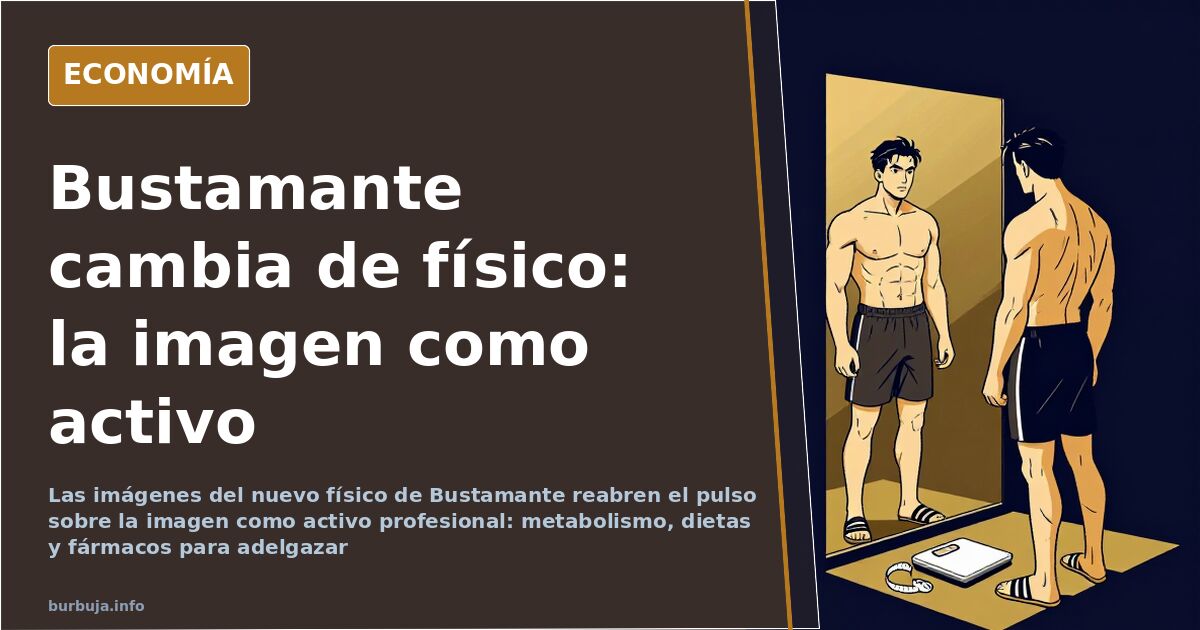
Bustamante’s body, the asset missing from his contract
David Bustamante no longer resembles the singer who once sold ballads with his shirt open. The released photos show a clear physical change, and the reaction has been immediate: some see a disguised actor, others attribute it to a different identity, and few see any medical drama—only arithmetic. Everyone has an opinion on another’s body. Almost no one has a contract governing it.
Why a singer’s physique is judged like a payroll
The old argument resurfaces: if you live off your image, it ceases to be yours and becomes your product. Under this logic, a few extra kilos are not a private matter but a depreciation of the asset, narrowing the margin for indulgence. "A man who lives off his image," summarizes one viewpoint, demanding expedient solutions: diet, gym, fasting, or pharmacological aid. No exceptions.
The opposing response does not deny the change but disputes its severity. The job is to sing; weight is accessory. Demanding a specific physique at a certain age is a rule applied only to a narrow segment of the entertainment industry, and those who break it bear a label of negligence they may not deserve.
There is an underlying nuance. The public tolerates aging but not the disappearance of the character: a singer can reach his decades, gain a few kilos, or lose hair, yet what unsettles is not the wear and tear but the interruption of visual continuity. The surprise comes with a hint of betrayal, as if someone else’s body had breached an unwritten agreement.
How much blame goes to metabolism, and how much to dinner?
Two explanations compete. The first is biological: from a certain age, energy expenditure drops, muscle is lost, and the same meal that once left no trace now sticks. A harsher variant suggests that an organism that has previously lost weight remembers and regains it more easily.
The second is thermodynamic and admits no nuance: you gain weight because you consume more than you burn. Proponents of this view point to beer, binge eating, and the disappearance of the gym from their routine, setting the reference threshold at 2,000 daily calories, the boundary that turns any excess into fat. "Metabolism is a myth," some write.
Comparison with peers of the same generation serves as proof for both sides. Some cite other singers to show how they looked at the same age, proving that being overweight is not inevitable; the counterargument is that some bodies handle discipline better, while others fight a losing battle against their own constitution. No one has measured anything. Everyone is right.
Ozempic, semaglutide, and the rebound warned about
The other path is pharmacological and arrives with a name: semaglutide, gastric balloon, "little helpers." These weight-loss treatments have become both a trendy solution and a target for suspicion.
The theory circulates, without clinical backing in the material handled, that upon stopping treatment, the body regains the lost weight and more: an organism that burns less leaves the ground prepared for a rebound. It is said that nature returns twice as strong. Very repeated, very poorly documented.
A warning is necessary: these drugs require a prescription and medical supervision, and are not subject to public opinion. The existence of a shortcut does not miccionan it is free. At one point, the exchange also drifted toward automatic filters some platforms apply to language, capable of replacing words with softer versions without warning. There were more lines about the filter than about the singer.
When being thin was a sign of poverty
The most interesting reading is economic. Not so many decades ago, being thin signaled scarcity: it was the mark of those who could not fill their plates. Cheap caloric abundance inverted the symbol. Today, thinness is a luxury good: it requires time, quality protein, gym access, and the ability to say no to an industrial menu that causes weight gain and costs three euros.
Viewed this way, the case is an anomaly. Someone with ample resources to maintain any diet does not, and the public interprets this neglect as authenticity or abandonment, depending on the day.
What to expect
With reservations: image recovers with a few months of discipline and a good tailor. If he returns to his campaign weight, the episode will remain an anecdote, and the next tour will focus on his voice. If he does not, his audience will have reordered around a closer, less segarro character, and that niche, though less segarro, still sells tickets.
Note: this text offers no medical advice. Any treatment for weight loss should be consulted with a healthcare professional.
David Bustamante no longer resembles the singer who once sold ballads with his shirt open. The released photos show a clear physical change, and the reaction has been immediate: some see a disguised actor, others attribute it to a different identity, and few see any medical drama—only arithmetic. Everyone has an opinion on another’s body. Almost no one has a contract governing it.
Why a singer’s physique is judged like a payroll
The old argument resurfaces: if you live off your image, it ceases to be yours and becomes your product. Under this logic, a few extra kilos are not a private matter but a depreciation of the asset, narrowing the margin for indulgence. "A man who lives off his image," summarizes one viewpoint, demanding expedient solutions: diet, gym, fasting, or pharmacological aid. No exceptions.
The opposing response does not deny the change but disputes its severity. The job is to sing; weight is accessory. Demanding a specific physique at a certain age is a rule applied only to a narrow segment of the entertainment industry, and those who break it bear a label of negligence they may not deserve.
There is an underlying nuance. The public tolerates aging but not the disappearance of the character: a singer can reach his decades, gain a few kilos, or lose hair, yet what unsettles is not the wear and tear but the interruption of visual continuity. The surprise comes with a hint of betrayal, as if someone else’s body had breached an unwritten agreement.
How much blame goes to metabolism, and how much to dinner?
Two explanations compete. The first is biological: from a certain age, energy expenditure drops, muscle is lost, and the same meal that once left no trace now sticks. A harsher variant suggests that an organism that has previously lost weight remembers and regains it more easily.
The second is thermodynamic and admits no nuance: you gain weight because you consume more than you burn. Proponents of this view point to beer, binge eating, and the disappearance of the gym from their routine, setting the reference threshold at 2,000 daily calories, the boundary that turns any excess into fat. "Metabolism is a myth," some write.
Comparison with peers of the same generation serves as proof for both sides. Some cite other singers to show how they looked at the same age, proving that being overweight is not inevitable; the counterargument is that some bodies handle discipline better, while others fight a losing battle against their own constitution. No one has measured anything. Everyone is right.
Ozempic, semaglutide, and the rebound warned about
The other path is pharmacological and arrives with a name: semaglutide, gastric balloon, "little helpers." These weight-loss treatments have become both a trendy solution and a target for suspicion.
The theory circulates, without clinical backing in the material handled, that upon stopping treatment, the body regains the lost weight and more: an organism that burns less leaves the ground prepared for a rebound. It is said that nature returns twice as strong. Very repeated, very poorly documented.
A warning is necessary: these drugs require a prescription and medical supervision, and are not subject to public opinion. The existence of a shortcut does not miccionan it is free. At one point, the exchange also drifted toward automatic filters some platforms apply to language, capable of replacing words with softer versions without warning. There were more lines about the filter than about the singer.
When being thin was a sign of poverty
The most interesting reading is economic. Not so many decades ago, being thin signaled scarcity: it was the mark of those who could not fill their plates. Cheap caloric abundance inverted the symbol. Today, thinness is a luxury good: it requires time, quality protein, gym access, and the ability to say no to an industrial menu that causes weight gain and costs three euros.
Viewed this way, the case is an anomaly. Someone with ample resources to maintain any diet does not, and the public interprets this neglect as authenticity or abandonment, depending on the day.
What to expect
With reservations: image recovers with a few months of discipline and a good tailor. If he returns to his campaign weight, the episode will remain an anecdote, and the next tour will focus on his voice. If he does not, his audience will have reordered around a closer, less segarro character, and that niche, though less segarro, still sells tickets.
Note: this text offers no medical advice. Any treatment for weight loss should be consulted with a healthcare professional.
Summary of a discussion on Burbuja.info - Foro de economía, actualidad y política., translated from Spanish and reviewed before publication. Read the full discussion (332 replies).
More summaries
-
Retatrutide: The End of Ozempic and a Triple-Receptor Weight Loss Breakthrough
Retatrutide promises 30% weight loss by targeting three hormonal receptors, sparking debate over its potential as a medical revolution or an unprecedented hormonal risk.
-
Ozempic: From Diabetes Drug to US Aesthetic Craze
Elon Musk's 'Ozempic Santa' tweet fuels celebrity transformations in the US, sparking debate on gastroparesis and muscle loss.
-
Orriols vs. Llach: The Insinuation Fueling the Catalan Independence Divide
Sílvia Orriols targets Lluis Llach ahead of Catalonia's National Day, exposing deep fractures within the independence movement over subsidies, private life, and police clashes.
-
Poland's Nobel winner calls ethnic uniformity terrifying
Nobel laureate Olga Tokarczuk sparks debate on immigration and birth rates, labeling Poland's homogeneity frightening.
-
Ayuso compares Ceuta crisis to 2.5 million migrants in Madrid
Ayuso suggests imagining 2.5 million illegal entrants in Madrid to grasp the Ceuta crisis, highlighting silent demographic shifts.
-
Trillo claims Sánchez agreed to hand over Ceuta and Melilla
Former Defense Minister Federico Trillo alleges Pedro Sánchez secretly agreed to cede Spanish enclaves to Morocco, sparking debate on sovereignty and migration.