
Ozempic: From Diabetes Drug to US Aesthetic Craze
Elon Musk's 'Ozempic Santa' tweet fuels celebrity transformations in the US, sparking debate on gastroparesis and muscle loss.
English · Original discussion in Spanish · Published
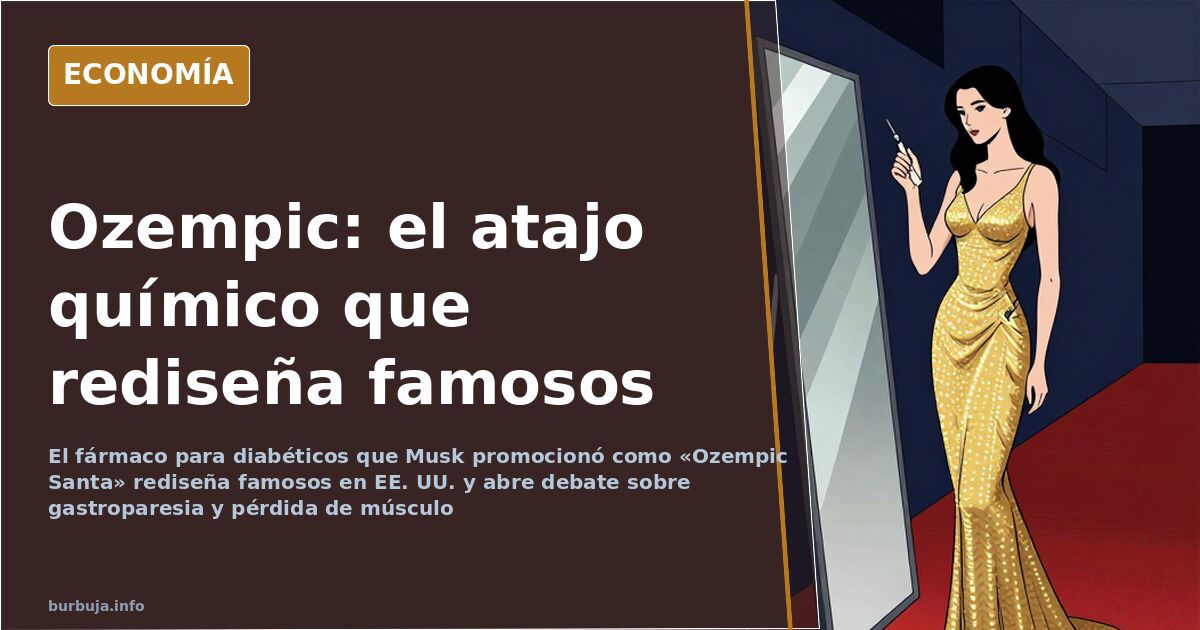
Ozempic: From Diabetes Drug to US Aesthetic Craze
Katy Perry's physical transformation has reignited the debate on Ozempic, a diabetes and obesity drug that has become a chemical shortcut for celebrities. Elon Musk promoted it with a Christmas tweet—'Ozempic Santa'—and since then, images of celebrities with emaciated faces have multiplied. Taylor Swift, Ariana Grande, and Perry herself appear in social media comparisons.
The active ingredient is semaglutide, which mimics a naturally secreted hormone. It slows stomach emptying and reduces appetite. Theoretically, simple. In practice, this deliberate digestive slowdown is the root of most criticisms.
The Mechanism: Simulated Hunger and a Half-Gas Stomach
The drug works by tricking the body. Some claim it simulates calorie restriction and activates longevity pathways. The same enthusiast admits a problem: according to his version, it increases the risk of pancreatic cancer.
The drug is linked to gastroparesis, partial stomach paralysis. Digestion slows so much that food may stay inside longer than reasonable. In extreme cases, sulfur-smelling breath, persistent vomiting, and a sensation of internal putrefaction are described. These are testimonials, not diagnoses, but the pattern repeats.
Losing Weight Is Not the Same as Losing Fat
The second major criticism concerns body composition. The thread claims that a disproportionate part of lost weight is muscle. The result is what gym slang calls 'skinny-fat': someone who weighs less but has a worse body than before. Muscle mass, moreover, supports mobility in old age.
In contrast, the debate defends the classic duo—diet and strength training—and mentions needle-free alternatives. True calorie restriction, intermittent fasting, carbohydrate control: all of this exists and is free.
The Katy Perry Case and 'Ozempic Face'
Katy Perry's circulating images show a more angular face and skin some describe as emaciated. The thread uses the term Ozempic face to describe this change. It is not a medical diagnosis, but an aesthetic description.
The singer, once presented by the industry as a sens symbol, has seen her public image become a battleground. Some argue her vocal talent was always above her physique, while others claim insisting on a role she no longer fits is a mistake. Years pass for everyone.
The Business: An Obese Country and a Pharmaceutical Industry
In the United States, Ozempic and similar drugs have become mass-consumption products. Those who can afford it use them, not always those who need them. The thread claims the country suffers from a morbid obesity epidemic guaranteeing clients for decades. It also recalls that, for this industry, a cured patient is a lost customer.
The criticism is not just medical. Some see this dynamic as a step toward a medicated society where every vital function depends on a pill or injection. Suspicion of industry incentives is not new, but Ozempic has provided an unmatchable showcase.
The Conspiratorial Layer: Nanotechnology and Vaccines
On the margins of the debate, a theory mixes Ozempic with elbichito vaccines. It claims the drug contains nanotechnology, the same supposedly in vaccines, and is part of a transhumanist agenda. There is no evidence supporting these claims.
It is an unverified suspicion pattern about a mass-applied health product. The novelty is that the vehicle is now an aesthetic drug, amplifying the noise.
The State of Affairs
The debate does not close. Drug defenders point to diabetics improving their quality of life and the promise of a more autonomous old age. Critics respond that paralyzing the stomach to avoid eating is a metabolic barbarity, and the rebound effect awaits those who stop injections. The thread reaches no agreement.
Katy Perry's physical transformation has reignited the debate on Ozempic, a diabetes and obesity drug that has become a chemical shortcut for celebrities. Elon Musk promoted it with a Christmas tweet—'Ozempic Santa'—and since then, images of celebrities with emaciated faces have multiplied. Taylor Swift, Ariana Grande, and Perry herself appear in social media comparisons.
The active ingredient is semaglutide, which mimics a naturally secreted hormone. It slows stomach emptying and reduces appetite. Theoretically, simple. In practice, this deliberate digestive slowdown is the root of most criticisms.
The Mechanism: Simulated Hunger and a Half-Gas Stomach
The drug works by tricking the body. Some claim it simulates calorie restriction and activates longevity pathways. The same enthusiast admits a problem: according to his version, it increases the risk of pancreatic cancer.
The drug is linked to gastroparesis, partial stomach paralysis. Digestion slows so much that food may stay inside longer than reasonable. In extreme cases, sulfur-smelling breath, persistent vomiting, and a sensation of internal putrefaction are described. These are testimonials, not diagnoses, but the pattern repeats.
Losing Weight Is Not the Same as Losing Fat
The second major criticism concerns body composition. The thread claims that a disproportionate part of lost weight is muscle. The result is what gym slang calls 'skinny-fat': someone who weighs less but has a worse body than before. Muscle mass, moreover, supports mobility in old age.
In contrast, the debate defends the classic duo—diet and strength training—and mentions needle-free alternatives. True calorie restriction, intermittent fasting, carbohydrate control: all of this exists and is free.
The Katy Perry Case and 'Ozempic Face'
Katy Perry's circulating images show a more angular face and skin some describe as emaciated. The thread uses the term Ozempic face to describe this change. It is not a medical diagnosis, but an aesthetic description.
The singer, once presented by the industry as a sens symbol, has seen her public image become a battleground. Some argue her vocal talent was always above her physique, while others claim insisting on a role she no longer fits is a mistake. Years pass for everyone.
The Business: An Obese Country and a Pharmaceutical Industry
In the United States, Ozempic and similar drugs have become mass-consumption products. Those who can afford it use them, not always those who need them. The thread claims the country suffers from a morbid obesity epidemic guaranteeing clients for decades. It also recalls that, for this industry, a cured patient is a lost customer.
The criticism is not just medical. Some see this dynamic as a step toward a medicated society where every vital function depends on a pill or injection. Suspicion of industry incentives is not new, but Ozempic has provided an unmatchable showcase.
The Conspiratorial Layer: Nanotechnology and Vaccines
On the margins of the debate, a theory mixes Ozempic with elbichito vaccines. It claims the drug contains nanotechnology, the same supposedly in vaccines, and is part of a transhumanist agenda. There is no evidence supporting these claims.
It is an unverified suspicion pattern about a mass-applied health product. The novelty is that the vehicle is now an aesthetic drug, amplifying the noise.
The State of Affairs
The debate does not close. Drug defenders point to diabetics improving their quality of life and the promise of a more autonomous old age. Critics respond that paralyzing the stomach to avoid eating is a metabolic barbarity, and the rebound effect awaits those who stop injections. The thread reaches no agreement.
Summary of a discussion on Burbuja.info - Foro de economía, actualidad y política., translated from Spanish and reviewed before publication. Read the full discussion (238 replies).
More summaries
-
Spain Loses 500 Wealthy Individuals and €2.7 Billion
Over 500 high-net-worth individuals are set to leave Spain in 2025, taking €2.7 billion with them, according to Henley & Partners, citing tax pressure and the end of the Golden Visa.
-
Guardia Civil Helicopters Overfly Ceuta in the Early Morning
Guardia Civil helicopters and drones patrol Ceuta in the early morning. Flight tracking suggests a deployment without an official statement.
-
Spain's 20% housing guarantee caps resale prices permanently
Royal Decree-Law 26/2026 sets maximum resale prices for homes bought with public guarantees, limiting rental income below official reference systems.
-
Volkswagen to phase out SEAT by 2029, handing control to CUPRA
Volkswagen confirms SEAT's end in Spain by 2029 and approves 50,000 job cuts. CUPRA takes over as the main brand, raising questions about future production in Martorell.
-
Manresa stabbing: minors' identities spark political debate
A fatal stabbing in Manresa challenges official narratives, highlighting tensions between forensic facts and political discourse.
-
Llados, Benidorm Lamborghini and selling smoke to low earners
Renting Llados' Lambo costs €1,300 daily plus a €6,000 deposit. His 'university' sells courses to low-income workers. Charisma or scam?