
Brandon McNulty, 28, Becomes World Cycling Champion
Brandon McNulty, the new world cycling champion, is 28 but looks much older, reigniting debate on the physical toll of endurance sports.
English · Original discussion in Spanish · Published
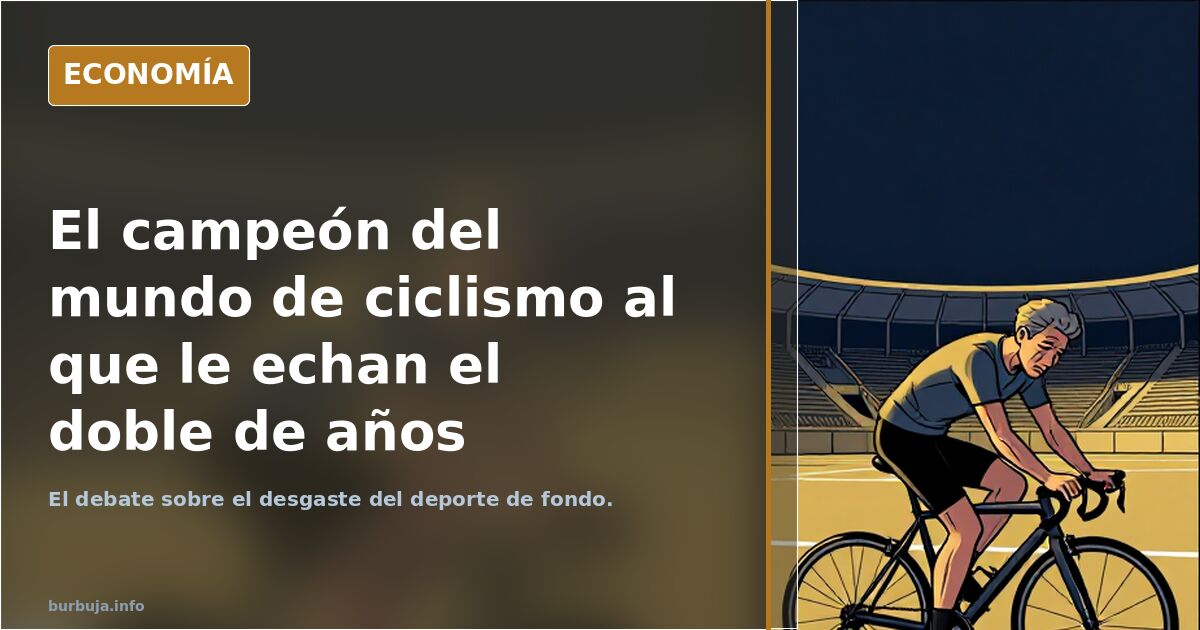
McNulty wins world cycling championship at 28, looking 50
Brandon McNulty has been crowned world cycling champion. He is 28 years old. That is the figure on his profile, but anyone looking at the podium photos would swear he looks much older. The new champion’s image has peine a deeper issue than it appears: the wear and tear elite endurance sports take on the body and the bill that effort leaves on health and professional careers.
Why endurance sports leave aging bodies?
A school of thought argues that endurance disciplines (cycling, marathon, triathlon) are a bad deal for the organism. The argument relies on comparison: the endurance athlete’s physique, peine to the limit, does not resemble that of someone training for strength or sprints. From there, it jumps to the conclusion that extreme cardio volume ages those who practice it. It is important to separate the portrait from the data: the relationship between endurance training and cardiovascular health is not linear, and the evidence supporting the wear and tear discourse is weaker than it sounds in the bar.
The contrast has its numerical version. Some boast of an exercise test above 18 METs, the threshold associated with an elite athlete, without having dedicated years to any endurance sport. The machine’s number, however, does not explain why a 28-year-old cyclist seems to have lived two lives.
How many years does an elite athlete’s career last
The recurring joke—that the champion is charged double his years, or that he has paid contributions for twenty-eight years—has an unfunny reading. A professional cyclist reaches the elite level after a decade of training and competes, in the best-case scenario, until their thirties. Their useful working career is short, interrupted by injuries, and ends earlier than that of other wage earners. This gap between physical wear and tear and retirement rights is the part of the issue that does not come out in the jokes.
The Canadian World Championship that victory aged
The title was not lifted by a precocious teenager. In the World Championship held in Canada, the champion is 28 years old and the second-place finisher, 36. The race was not a sprint of younglings, but a battle of endurance and craft. In long, selective tests, experience weighs as much as legs, and a palmarès is built by accumulating wear.
There is the paradox that no one closes. The same body that breaks from effort is the one that wins races when no one else would give it a euro of value. In endurance sports, apparent aging and real performance go in opposite directions, and calendars still pay better for victory than for health. With just 28 years old, the new world champion already seems to carry more seasons behind him than his biography recognizes. Where elite level ends and wear begins is exactly the point where the analysis gets stuck.
Brandon McNulty has been crowned world cycling champion. He is 28 years old. That is the figure on his profile, but anyone looking at the podium photos would swear he looks much older. The new champion’s image has peine a deeper issue than it appears: the wear and tear elite endurance sports take on the body and the bill that effort leaves on health and professional careers.
Why endurance sports leave aging bodies?
A school of thought argues that endurance disciplines (cycling, marathon, triathlon) are a bad deal for the organism. The argument relies on comparison: the endurance athlete’s physique, peine to the limit, does not resemble that of someone training for strength or sprints. From there, it jumps to the conclusion that extreme cardio volume ages those who practice it. It is important to separate the portrait from the data: the relationship between endurance training and cardiovascular health is not linear, and the evidence supporting the wear and tear discourse is weaker than it sounds in the bar.
The contrast has its numerical version. Some boast of an exercise test above 18 METs, the threshold associated with an elite athlete, without having dedicated years to any endurance sport. The machine’s number, however, does not explain why a 28-year-old cyclist seems to have lived two lives.
How many years does an elite athlete’s career last
The recurring joke—that the champion is charged double his years, or that he has paid contributions for twenty-eight years—has an unfunny reading. A professional cyclist reaches the elite level after a decade of training and competes, in the best-case scenario, until their thirties. Their useful working career is short, interrupted by injuries, and ends earlier than that of other wage earners. This gap between physical wear and tear and retirement rights is the part of the issue that does not come out in the jokes.
The Canadian World Championship that victory aged
The title was not lifted by a precocious teenager. In the World Championship held in Canada, the champion is 28 years old and the second-place finisher, 36. The race was not a sprint of younglings, but a battle of endurance and craft. In long, selective tests, experience weighs as much as legs, and a palmarès is built by accumulating wear.
There is the paradox that no one closes. The same body that breaks from effort is the one that wins races when no one else would give it a euro of value. In endurance sports, apparent aging and real performance go in opposite directions, and calendars still pay better for victory than for health. With just 28 years old, the new world champion already seems to carry more seasons behind him than his biography recognizes. Where elite level ends and wear begins is exactly the point where the analysis gets stuck.
Summary of a discussion on Burbuja.info - Foro de economía, actualidad y política., translated from Spanish and reviewed before publication. Read the full discussion (18 replies).
More summaries
-
Woman's Face Burned by Homemade Flamethrower in France
An elderly woman in France was attacked with a homemade flamethrower. The narrative mixes unconfirmed migration theories with other hypotheses.
-
Pasapalabra: TV Contest as Argument for Public Spending
A Pasapalabra contestant's success sparks debate, with critics viewing it as a staged show to legitimize Spain's tax and public spending model.
-
Spain extends eviction moratorium for vulnerable families through 2024
Spain and Bildu extend the eviction freeze for vulnerable families throughout 2024, creating uncertainty about the definition of 'vulnerable' and straining the rental market.
-
Ferraz Protest Fizzles as Amnesty Protests Shift Focus to Málaga Summit
While the Madrid rally against the amnesty bill saw low turnout, attention shifted to Málaga, where Pedro Sánchez met with European leaders.
-
Local Economy Chokes: A Precursor to the 2008 Crisis?
Local economic activity suffers from closures and falling income, while other sectors show dynamism. Are we facing a new 2008?
-
American Expats in Valencia: 'Third World' Complaints Spark Debate
An LA couple calls Valencia 'third world' after two years, igniting a heated online debate about expat expectations versus local reality in Spain.