
Bottled Horchata: Why It Tastes Nothing Like Artisanal
Imported tiger nuts and excess sugar explain why supermarket horchata lacks the authentic taste, according to online forums.
English · Original discussion in Spanish · Published
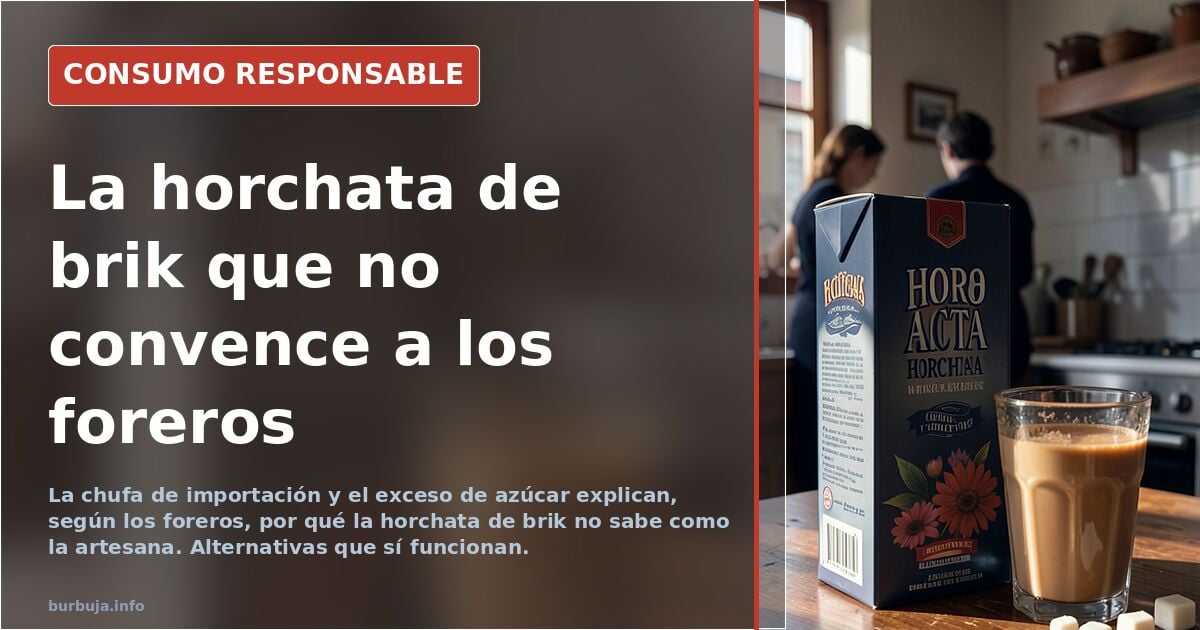
Supermarket horchata tastes wrong: the tiger nut is to blame
The bottled horchata sold in Spanish supermarkets suffers from a root problem that no packaging can fix. According to forum users, nearly all the tiger nuts used are imported rather than Valencian. This detail, discussed over more than a decade, explains the massive flavor difference between artisanal horchata and store brands. The gap is "abyssal," akin to cheap orange juice versus freshly squeezed.
It started with a simple complaint: supermarket horchatas like Chufi or Hacendado are too sweet. What began as a request for brand recommendations turned into a deep dive into tiger nuts, sugar, sediment, and milk proteins that many brands add unasked.
Which brick cartons work and which don't
Within store brands, the comparison often centers on Hacendado's two options. The cheaper one is "terrible," while the pricier version is considered by some the best bottled horchata available. The key lies in the sediment: natural horchata leaves white residue, whereas commercial brands leave brownish sediment, indicating a mix.
Frozen horchata appears as an alternative, along with concentrated versions that allow adjusting sweetness. Brands mentioned include HISC (with an organic concentrate), Costa, Panach (sold at Carrefour and Eroski), Mercader in cups, and artisanal horchata sold at El Corte Inglés in ice cream tubs. Chufi, the most famous, has the worst fruta.
Sugar and milk that shouldn't be there
Two recurring accusations dominate the conversation. First, bottled horchata is essentially flavored water with excessive sugar. Second, forum users claim almost all brands contain milk proteins, an addition unrelated to traditional recipes that complicates things for those seeking plant-based drinks. Homemade horchata allows starting without sugar and adding cinnamon or citrus peel to taste.
The circulating homemade recipe is simple: soak about 200 grams of tiger nuts for 24 hours, blend with one liter of cold water, lemon peel, and sugar to taste, then strain through cloth or fine sieve. Store in the fridge and consume within 24 hours. The challenge is sourcing Valencian tiger nuts; they appear in nut shops but are often African origin, deemed "useless" by experienced users. Valencian tiger nuts are mostly found online.
Horchata as a pretext for broader debates
The discussion shifted to the classic artisanal versus industrial debate, comparing jarred all i oli and jokes about paprika in paella. Geography also played a role: in Alboraya, horchata costs €4 per liter, while Barcelona has historic ice cream shops offering artisanal horchata and barley water. In Madrid, memories of old horchata kiosks run by Valencians who worked esparto grass off-season remain a historical curiosity.
Practical summary: those wanting decent horchata at home have three options—frozen, concentrated, or homemade with online-sourced Valencian tiger nuts—none involving cheap supermarket bricks. The remaining question is whether consumers will pay the premium or continue buying sweetened water with a hint of tiger nut.
Also available in: Deutsch
Summary of a discussion on Burbuja.info - Foro de economía, actualidad y política., translated from Spanish and reviewed before publication. Read the full discussion (55 replies).
More summaries
-
Valencia in September: Paella, Horchata and Beach
A five-day guide to Valencia in September with teens: where to eat paella, drink horchata in Alboraya, and what to see beyond the Oceanogràfic.
-
OCU survey leaves Mercadona out of Spain's cheapest supermarkets
Spain's consumer organisation OCU ranks Alcampo, Lidl, Gadis Hiper and Carrefour as the cheapest for own-brand products, while Mercadona fails to make the list.
-
Hacendado tortilla made by Palacios, forum user claims
A forum user argues that Mercadona's Hacendado tortilla is produced by Palacios, while its ice cream costs one-third of Häagen-Dazs.
-
Ozempic and Mounjaro: FDA black box warning issued
FDA issues black box warning for Ozempic and Mounjaro regarding thyroid tumor risks. Analysis of weight regain, side effects, and natural alternatives.
-
20-Year-Old Car vs. New: The Real Cost Debate
A 500,000 km Avensis sold for €5,000, sparking debate on old car repairability versus new vehicle electronics.
-
Cheaper dryer wins: €279 upfront beats €649 energy-saving model
A total cost analysis shows Class C dryers are cheaper over ten years than Class A models, even with rising electricity prices.