
Blood donation in Spain: the pattern nobody wants to look at
A rail accident with 200 injured sends blood donations soaring in Spain and reopens the debate: altruistic donation, imported plasma and who pays for the bags
English · Original discussion in Spanish · Published
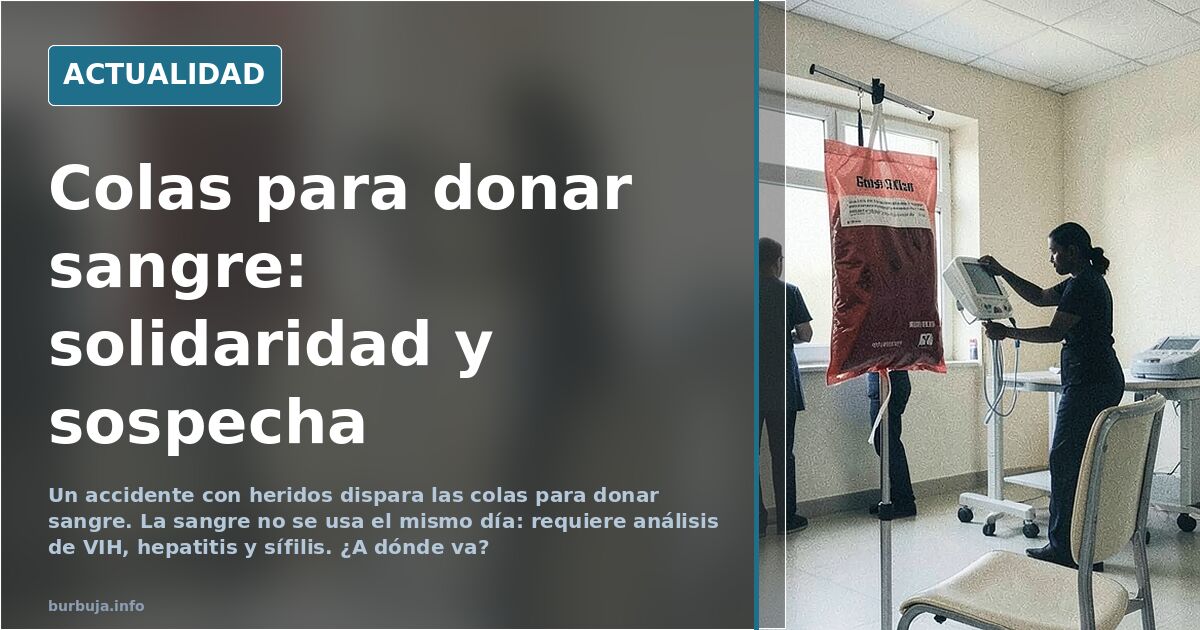
Blood donation: the pattern that separates the donor from the recipient
A rail accident with around 200 injured sends queues surging at blood donation points in several Spanish cities. And there the paradox appears: the more people donate, the more they ask who actually receives. Altruistic donation, enshrined in law in Spain, coexists with a plasma deficit that forces imports from countries where extraction is paid. The result is an uncomfortable debate about solidarity, traceability and who rolls up their sleeve.
What peine with donations after the accident
The call for blood donations for the victims of the rail disaster filled collection points in different cities. Witnesses to those queues described a very specific donor profile: people aged 18 to 80, of all builds, including a woman with reduced mobility. The scene, turned into image of the day, served for something more than portraying solidarity: it peine the question of whether that blood really reaches those believed to need it.
The technical answer is that not immediately. Blood is not transfused as it is drawn. It goes through serological and molecular tests to rule out HIV, hepatitis B, hepatitis C and syphilis, among others. That process, plus the cold-chain logistics —storage between 1 and 6 degrees for red cells and freezing at -80 for plasma—, introduces a lag of at least a day. Whoever donates thinking of today's injured is, in reality, donating for tomorrow's bank.
The blood business: who pays and who charges
The most acidic point of the debate is not logistics, it is money. Some claim the Red Cross charges the public health system around 90 euros per bag of blood: the taxpayer donates their blood and then pays for the same blood they donated. The figure circulates without verification in the available material and should be treated as what it is, a claim thrown into the discussion, not an audited fact.
What does have structural backing is external dependence. Spain practices altruistic donation, but is plasma-deficient and ends up buying from countries where extraction is paid, mainly the United States. There, plasma donation is a marginal income for students and people on low incomes. The pattern, seen this way, is not who donates: it is who gets paid to donate and who pays to receive.
The pattern being sought and the one actually found
The starting hypothesis was that there is a differential pattern by origin in blood donation in Spain. The testimonies gathered point to the opposite of what that suspicion suggests: a regular donor recounts that, after years of going to donate, the first time she saw a South American person donating was recently. In other words, the available anecdotal evidence describes low participation, not an organized strategy.
The rest of the thread drifts into territory that is no longer health-related. It is debated whether certain groups prioritize their own in mutual aid, whether mosques distribute food from food banks and whether solidarity has a direction. These are opinions held without verifiable data, and should be read as such. Blood donation, meanwhile, still has a much more prosaic problem: every four months you have to come back.
Why the system needs chronic donors, not one-off heroes
Biological expiry is the argument that dismantles the heroics of the moment. Red blood cells have a short shelf life; plasma lasts longer but requires continuous freezing. A power failure ruins reserves. That is why blood banks do not live off surges of solidarity after a tragedy, but off recurring donors who sustain the stock all year round.
There lies the final paradox. The accident filled the donation rooms, but the system feeds on those who quietly return every four months. One of the most revealing accounts is that of a person with a genetic disease treated precisely through bloodletting: donating is, for her, part of her treatment. The most effective solidarity does not make it into the photo.
With these figures, the question is not who donates after the accident. It is who will keep donating when the accident is no longer news. And that answer, today, nobody has.
Also available in: Deutsch
Summary of a discussion on Burbuja.info - Foro de economía, actualidad y política., translated from Spanish and reviewed before publication. Read the full discussion (104 replies).
More summaries
-
Spanish Red Cross blood funding controversy explained
Viral claims about Spanish Red Cross blood sales and €69.75 per bag compensation spark debate over its public subsidies.
-
Rafa Nadal's Dominican move: the deal nobody mentions
Rafa Nadal has settled in the Dominican Republic amid reports of a supposed deal with the Spanish government. The tennis star's silence and precedents set by politicians like Felipe González…
-
Why the US allows a credit score system that rates you
The US 'credit score' measures your debt history, not your conduct. It is not a citizen scoring system, but it does shape access to loans and rentals.
-
Ayuso Criticizes La Sexta Over Grandfather's Past
La Sexta Columna report on Ayuso's grandfather as Falange leader sparks controversy over politicians' family histories.
-
Urda crash: six trains stranded over 90 km and a system that failed
Six trains stopped over 90 km, LZB down and an order to run at normal speed: the chain of failures in Spain's Urda high-speed rail crash that the investigation has yet to explain.
-
Cyberattack hits European supermarket freezers: the flaw already flagged in October
Ica and Coop confirm a cyberattack that pushed freezers to 50 degrees in Sweden, repeating across Belgium, Ireland and the Netherlands, as already happened in October.