
Back to Windows 10: why some users are leaving Windows 11
Unexplained errors and blocked legacy apps are driving some users to wipe their drives and go back to Windows 10. Key points and support options explained.
English · Original discussion in Spanish · Published
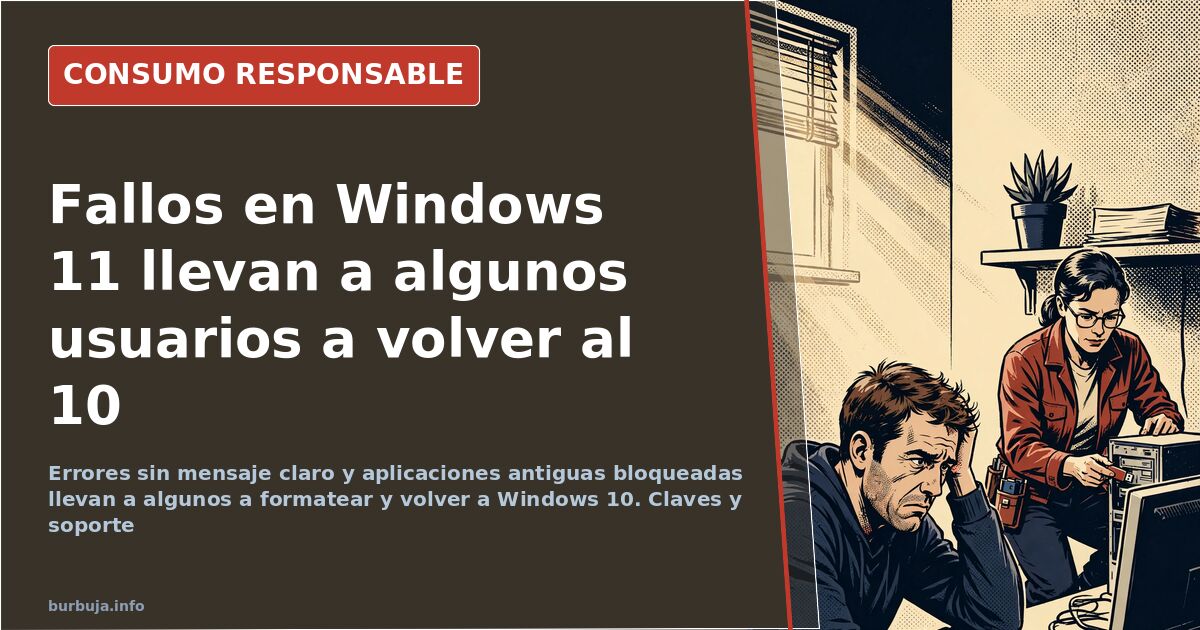
Back to Windows 10: why some users are leaving Windows 11
For some of its users, Microsoft's newest operating system is the very reason to go back to the previous one. The pattern repeats itself: errors with no clear message, old apps that suddenly stop opening, and a feeling of being stuck in a maze that no reinstall on top can fix. The question hanging over the whole affair is always the same: do I wipe the disk and stick with Windows 10?
The starting point is specific. A Windows 11 machine has been failing from day one and blocking programs that used to run without a hitch, something its owner blames on usage restrictions that Windows 10 didn't have. Not a single readable error to figure out what's breaking. Removing the bicho changed nothing. With the data supposedly safe in OneDrive — but not the passwords — the decision is backup, clean install, and back to the previous system.
Why does Windows 11 fail for some users?
This is where opinions split. One user claims that three clean installs on the same machine ended in constant reboots without even reaching the desktop, despite meeting the TPM and Secure Boot requirements. Someone else replies with the old joke about the patient whose whole body hurt: it was actually just a finger — in other words, a corrupted USB drive or a machine that should never have been allowed to run the system in the first place.
Windows 11 defenders point to a different culprit: pirated software, bicho programs, cleaners and driver updaters. One case sums it up: two and a half years of daily use on a mid-range laptop with no issues. The counterargument comes down to wear and tear: some claim that over time it slows down and runs hotter, because it uses more resources than Windows 10.
Windows 10 Enterprise IoT LTSC: updates until 2032
The alternative making the rounds isn't consumer Windows 10. The thread mentions an edition, Windows 10 Enterprise IoT LTSC, with update support until 2032. It installs in English and the language is added afterwards from Settings; another route, according to those who have tried it, is to install the LTSC edition in Spanish and convert it to IoT by activating it with a key for that version — and they say it works with existing OEM licenses.
The appeal is obvious: a system that doesn't change abruptly and isn't hit by the constant drip of updates that break things. Against the argument of always running the latest version, some defend the logic of if it ain't broke, don't fix it.
Updates that break things and an extra year of support in the EU
The most common argument against new versions isn't about looks. Users point out that the August and September updates on the 24H2 branch have been disastrous, and warn that the next antiestéticature update doesn't look any better. Meanwhile, the clock is running in Windows 10's favor: as noted in the thread, the European Union will get one more year of security updates through the Extended Security Updates (ESU) program.
And if not Windows, then what?
Not everyone is going back to Windows 10. Some switch ecosystems entirely and install a Linux distribution on their old machines, keeping the powerful PC on Windows for gaming. The logic is that what it used to do now runs faster and with up-to-date security. Others ask about older machines — like one that shipped with Vista — ahead of the jump to Windows 10.
Underneath it all lies a detail many overlook: who controls the password. When reinstalling, according to this user, if an app has held on to a credential, a clean wipe is the most reliable way out. How many will trinc the same path before the next version gives them another reason to try?
Summary of a discussion on Burbuja.info - Foro de economía, actualidad y política., translated from Spanish and reviewed before publication. Read the full discussion (41 replies).
More summaries
-
Microsoft Pushes Full-Screen Windows 10 Ads
Microsoft displays full-screen ads in Windows 10 to force upgrades to Windows 11, which requires TPM 2.0 and excludes many older devices.
-
Windows 10 extended by a year: Windows 11's quiet failure
Microsoft extends Windows 10 support as Windows 11 struggles. Broken updates and the cost of a new PC are driving strong user resistance.
-
Windows 10: Boots in 30 Seconds, Uses 40% of RAM
Boots in 30 seconds and uses 40% resources at idle: Windows 10's early flaws, from blue screens to motherboard-bound licenses.
-
Aging gracefully: surgery vs. genetics at 64
Madonna and Susanna Hoffs, both 64, illustrate two opposite ways of facing aging: surgery and gym versus habits and good spirits.
-
Spain's waste fee soars: from 60 to 140 euros under new law
Spain's new mandatory waste fee is driving bills up sharply: from 60 to 130 euros in Almería, and from 78 to 104 in Madrid. The law is already in force and local councils…
-
Moka pot crema without a 500-euro machine: the sugar trick
Espresso crema requires pressure that a moka pot simply doesn't have. A trick using sugar and a milk frother achieves a similar-looking emulsion with a different taste.