
Azovstal Surrender: Ukraine Frames Defeat as Evacuation
Ukraine and Russia offer conflicting accounts of the Azovstal surrender, with military analysis highlighting a propaganda war over evacuation versus captivity.
English · Original discussion in Spanish · Published
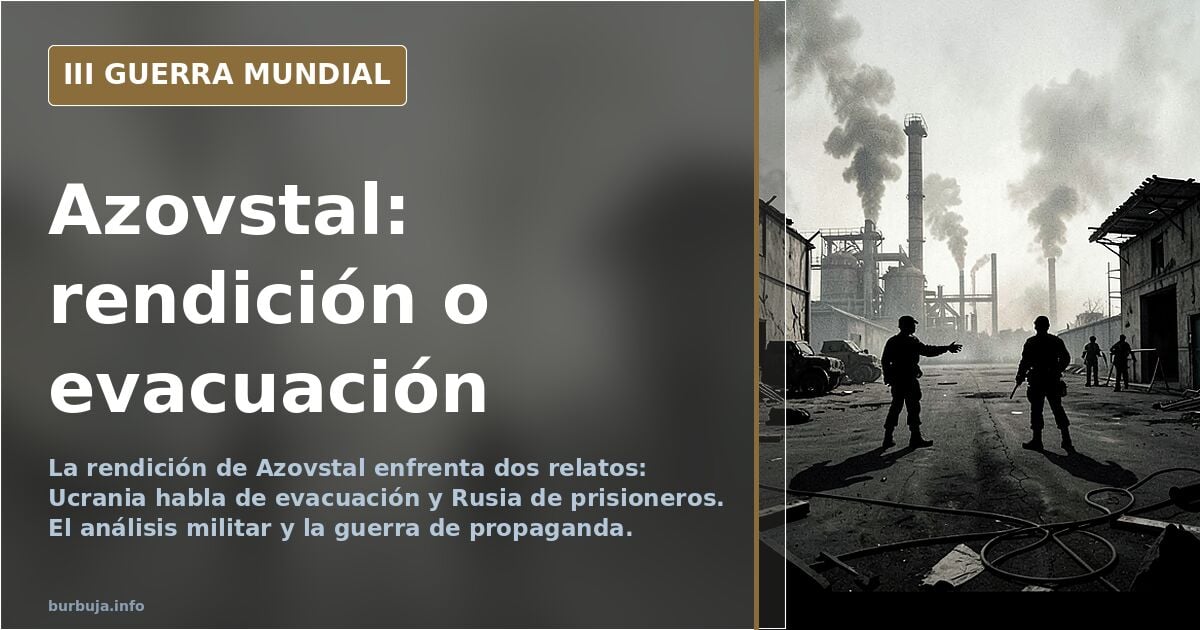
Azovstal Falls; Ukraine Declares Mission Accomplished
The last resistance at the Mariupol steelworks surrendered. Fighters from the Azov Battalion laid down their arms and were transferred to Russian-controlled territory. The official Ukrainian version describes an evacuation that fulfills the mission, while the Russian account speaks of prisoners of war. Between these narratives lies an uncomfortable fact: the industrial city, under siege for weeks, is no longer contested.
The announcement of the surrender triggered unnuanced celebrations in some forums. "Mariupol free of neo-Nancy," read one post. Others went further, describing the fighters as cowards surrendering unconditionally on their way to a POW camp. This triumphalist tone contrasted with the coldness of military reports: the surrender was presented as an evacuation and the withdrawal as a mission accomplished.
What Really Peine at Azovstal?
The Mariupol steelworks were the last bastion of Ukrainian resistance in the city. For weeks, fighters held out in the plant's tunnels, a labyrinth of galleries that became a symbol. The surrender was neither an act of heroism nor betrayal: it was the end of a position with no military exit. The desperate defense ran its course, and Ukrainian command ordered the evacuation.
Kiev's version, reported by outlets like El Mundo, states that fighters were evacuated to a Russian prison. Moscow's version speaks of prisoners of war. The difference is not semantic: one implies surrender, the other capture. In both cases, the result is the same: the defenders of Azovstal stopped fighting.
The Narrative War Over the Surrender
The episode sparked a battle over language. "They did not surrender. They were evacuated by Ukraine," claimed posts citing El Mundo. Irony about official terminology mixed with mockery of those celebrating the surrender. Propaganda from both sides turned a tactical defeat into a narrative victory.
The debate also included military analysis: the capital is not the strategic objective. "Kyiv is not strategic; securing the coasts and the East comes first," argued analysts. Comparisons with the Spanish Civil War illustrated the point: Franco won the war by leaving Madrid for last. Taking a capital is symbolic; controlling territory is decisive.
The Price of a Pyrrhic Victory
Celebrations of the surrender had a counterpoint. "I'm glad you sleep well with such a pyrrhic victory," wrote one user, recalling Kyiv's and Kharkiv's strategic withdrawals, the sinking of the flagship, and the bridge disaster. The victory in Mariupol does not change the war map: Russia controls more territory than in February, but Ukraine retains the capacity to counterattack.
The forum also reflected propaganda fatigue. "This forum is a toxic pit of hate," stated one comment, denouncing how soldiers are dehumanized to celebrate their deaths. The reflection gained little traction but left a phrase for the record: war is fought in the media before the front lines.
The surrender of Azovstal resolved nothing. It only changed the scenario. The fighters are in Russian hands, the city is in ruins, and the narrative remains disputed. The next battle will be over who claims victory here.
Also available in: Deutsch
Summary of a discussion on Burbuja.info - Foro de economía, actualidad y política., translated from Spanish and reviewed before publication. Read the full discussion (95 replies).
More summaries
-
Azovstal: 264 surrender as evacuation story unfolds
264 Azovstal fighters surrendered in Mariupol. The debate: surrender or evacuation? Language as a battlefield in the war in Ukraine.
-
Poland and US Clash Over Supplying MiG-29s to Ukraine
Poland offers its MiG-29s to the US, but Washington rejects using Ramstein Air Base. The origin of each flight sparks debate over a casus belli.
-
Azovstal surrender: The deal no one wanted
Azovstal's surrender confirms a Kremlin-linked tweet once dismissed as fake news. The debate continues over prisoner swaps, the fate of those who surrendered, and the front lines.
-
Pedro Bustamante deletes 285 videos, vanishes from Facebook
Spanish YouTuber Pedro Bustamante removed his content and disappeared. Rumors place him in Munich, reading German press.
-
Lavrov: Ukraine must clear mines to export grain
Russia links Ukrainian grain exports to demining and ship inspections. Kyiv holds over 20 million tons, while Moscow denies theft claims.
-
Ukrainian slogan sparks brawl in Spanish bar
A Ukrainian waiter shouted 'Glory to Ukraine' at Russian customers in Torrevieja, leading to a fight captured on CCTV.