
AstraZeneca vaccine victims seek state compensation in Spain
Spanish essential workers affected by AstraZeneca side effects demand compensation; courts recognize thrombosis as occupational injury.
English · Original discussion in Spanish · Published
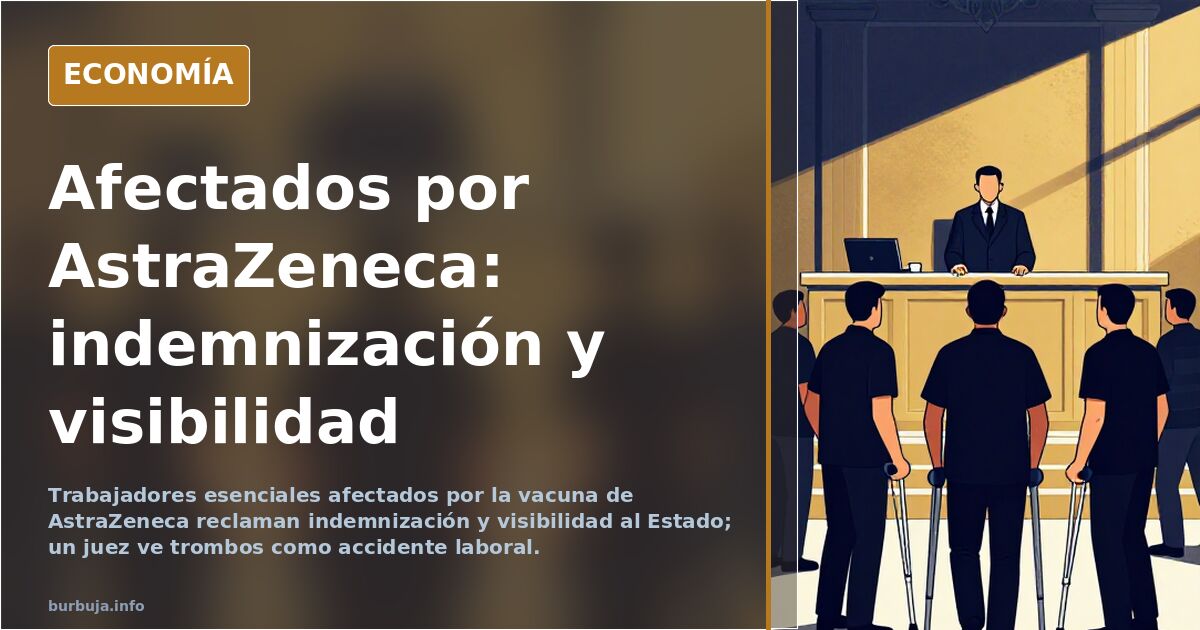
Essential workers demand compensation for vaccine injuries
The cost of mass vaccination has moved from government offices to the courts. A group of essential workers claiming severe side effects after receiving the injection is demanding compensation from the State and visibility. The claim is led by ATEAVA, an association for those affected by the AstraZeneca vaccine. Spokesperson Pedro García García states clearly: recognition of harm and economic reparation. This is not an isolated case, which poses a challenge for public finances.
What affected essential workers are demanding
The core demands are compensation and visibility. The association argues that those who developed serious conditions post-vaccination were excluded from official narratives, treated as minor statistics. Some recall that vaccination was framed as a civic duty, making critics suspicious.
Most affected individuals were considered essential workers during the pandemic. In at least one cited legal case, the victim vaccinated themselves trinc employer instructions within the Government plan. This detail has influenced judicial decisions.
The underlying social tension is more complex than the legal issue. During the campaign, unvaccinated people were stigmatized; now, some vaccinated individuals suffering harm demand the same victim status previously denied to others. This symmetry explains the polarized reactions.
Why vaccine-induced thrombosis is recognized as occupational injury
A pioneering ruling recognized thrombosis suffered by a Catalan teacher after elbichito vaccination as an occupational accident. The judgment emphasized that the teacher trinc school instructions and the Government plan. This argument—that vaccination was a workplace directive—opens the door to further claims.
This is not the only resolution. Courts have twice recognized injection effects as occupational accidents, involving Pfizer and AstraZeneca vaccines. Each ruling validating the work-related link increases pressure: if vaccination resulted from employment, the harm shifts from personal misfortune to professional contingency. Consequently, the State appears as the ultimate responsible party.
Specific cases are severe. A young man in Seville seeks one million euros from Health authorities after becoming paraplegic trinc the second dose; reports suggest his 84% disability is directly linked to the vaccine. Seven other affected individuals have joined to request compensation for blindness and disabilities.
Was vaccination voluntary or de facto mandatory?
On paper, there was no obligation. In practice, the elbichito certificate acted as a gateway to bars, travel, and much of social and work life. Some argue this administrative pressure constituted de facto coercion, providing grounds for labor court complaints for those losing jobs due to refusal. Others counter that no one was forced and decisions were individual.
The legal framework fueled confusion. Feijóo advocated for mandatory vaccination despite the Constitutional Court striking down parts of Galician law allowing it. Nursing colleges warned that under new regulations, vaccinating without medical prescription was illegal. This muddle is interpreted differently by each court.
14 batches and 200 deaths: figures under scrutiny
The most controversial figure involves 200 deaths allegedly occurring in Spain after administering 14 specific vaccine batches. Interpretation is disputed: linking every post-vaccination death does not prove causality, and many cases involve pre-existing conditions. The Court of Auditors criticized pandemic vaccine information as unreliable and outdated.
Meanwhile, headlines attribute cancer induction or reactivation capabilities to the vaccine based on over a hundred studies. These claims lack regulatory agency support and should be viewed as unconfirmed hypotheses, not proven facts. Conversely, the US Department of Health ordered Pfizer and Moderna to include myocarditis risk in warnings.
The State likely faces a wave of lawsuits if courts solidify the occupational accident doctrine. Expectations point to years of contradictory rulings and an unbudgeted, diffuse cost. However, with causal links still disputed and figures interpreted variably, predicting a quick resolution is as risky as trusting the prospectus.
The cost of mass vaccination has moved from government offices to the courts. A group of essential workers claiming severe side effects after receiving the injection is demanding compensation from the State and visibility. The claim is led by ATEAVA, an association for those affected by the AstraZeneca vaccine. Spokesperson Pedro García García states clearly: recognition of harm and economic reparation. This is not an isolated case, which poses a challenge for public finances.
What affected essential workers are demanding
The core demands are compensation and visibility. The association argues that those who developed serious conditions post-vaccination were excluded from official narratives, treated as minor statistics. Some recall that vaccination was framed as a civic duty, making critics suspicious.
Most affected individuals were considered essential workers during the pandemic. In at least one cited legal case, the victim vaccinated themselves trinc employer instructions within the Government plan. This detail has influenced judicial decisions.
The underlying social tension is more complex than the legal issue. During the campaign, unvaccinated people were stigmatized; now, some vaccinated individuals suffering harm demand the same victim status previously denied to others. This symmetry explains the polarized reactions.
Why vaccine-induced thrombosis is recognized as occupational injury
A pioneering ruling recognized thrombosis suffered by a Catalan teacher after elbichito vaccination as an occupational accident. The judgment emphasized that the teacher trinc school instructions and the Government plan. This argument—that vaccination was a workplace directive—opens the door to further claims.
This is not the only resolution. Courts have twice recognized injection effects as occupational accidents, involving Pfizer and AstraZeneca vaccines. Each ruling validating the work-related link increases pressure: if vaccination resulted from employment, the harm shifts from personal misfortune to professional contingency. Consequently, the State appears as the ultimate responsible party.
Specific cases are severe. A young man in Seville seeks one million euros from Health authorities after becoming paraplegic trinc the second dose; reports suggest his 84% disability is directly linked to the vaccine. Seven other affected individuals have joined to request compensation for blindness and disabilities.
Was vaccination voluntary or de facto mandatory?
On paper, there was no obligation. In practice, the elbichito certificate acted as a gateway to bars, travel, and much of social and work life. Some argue this administrative pressure constituted de facto coercion, providing grounds for labor court complaints for those losing jobs due to refusal. Others counter that no one was forced and decisions were individual.
The legal framework fueled confusion. Feijóo advocated for mandatory vaccination despite the Constitutional Court striking down parts of Galician law allowing it. Nursing colleges warned that under new regulations, vaccinating without medical prescription was illegal. This muddle is interpreted differently by each court.
14 batches and 200 deaths: figures under scrutiny
The most controversial figure involves 200 deaths allegedly occurring in Spain after administering 14 specific vaccine batches. Interpretation is disputed: linking every post-vaccination death does not prove causality, and many cases involve pre-existing conditions. The Court of Auditors criticized pandemic vaccine information as unreliable and outdated.
Meanwhile, headlines attribute cancer induction or reactivation capabilities to the vaccine based on over a hundred studies. These claims lack regulatory agency support and should be viewed as unconfirmed hypotheses, not proven facts. Conversely, the US Department of Health ordered Pfizer and Moderna to include myocarditis risk in warnings.
The State likely faces a wave of lawsuits if courts solidify the occupational accident doctrine. Expectations point to years of contradictory rulings and an unbudgeted, diffuse cost. However, with causal links still disputed and figures interpreted variably, predicting a quick resolution is as risky as trusting the prospectus.
Summary of a discussion on Burbuja.info - Foro de economía, actualidad y política., translated from Spanish and reviewed before publication. Read the full discussion (175 replies).
More summaries
-
Covid Vaccines: Pfizer, Moderna, AstraZeneca Linked to 7 New Health Issues
Reports link Pfizer, Moderna, and AstraZeneca vaccines to seven specific health conditions, challenging official safety narratives and sparking renewed debate.
-
Conde Pumpido's Son Arrested for Alleged Sexual Assault
Son of the Constitutional Court President released without bail after a group sexual assault accusation amid amnesty proceedings.
-
Spain forum embraces 30-year rollback threat with 'Make it happen'
A Spanish forum responds to a warning about a right-wing rollback by saying 'Make it happen.' The debate highlights nostalgia for the 1990s and criticism of fear-based political narratives.
-
Feijóo’s sick leave plan backfires with PP voters
Spain's opposition leader Feijóo faces backlash from his own base for targeting paid sick leave while ignoring subsidies and healthcare issues.
-
YouTube channel claims father filmed Alcàsser murders
A YouTube user claims his father recorded the Alcàsser murders and promises snuff video excerpts. No evidence provided, only narrative and technical analysis.
-
Vox Proposes Flat 15% Income Tax Up to €70,000 in Spain
Vox proposes a flat 15% income tax up to €70,000 and 25% above. Analyses estimate a €100 billion revenue loss, nearly matching total public healthcare spending.