
Arctic cruise ship stranded with 33,000 USD tickets amid COVID outbreak
Luxury Arctic cruise stranded in ice with COVID cases; $33k fares, elderly passengers, and official narrative under scrutiny.
English · Original discussion in Spanish · Published
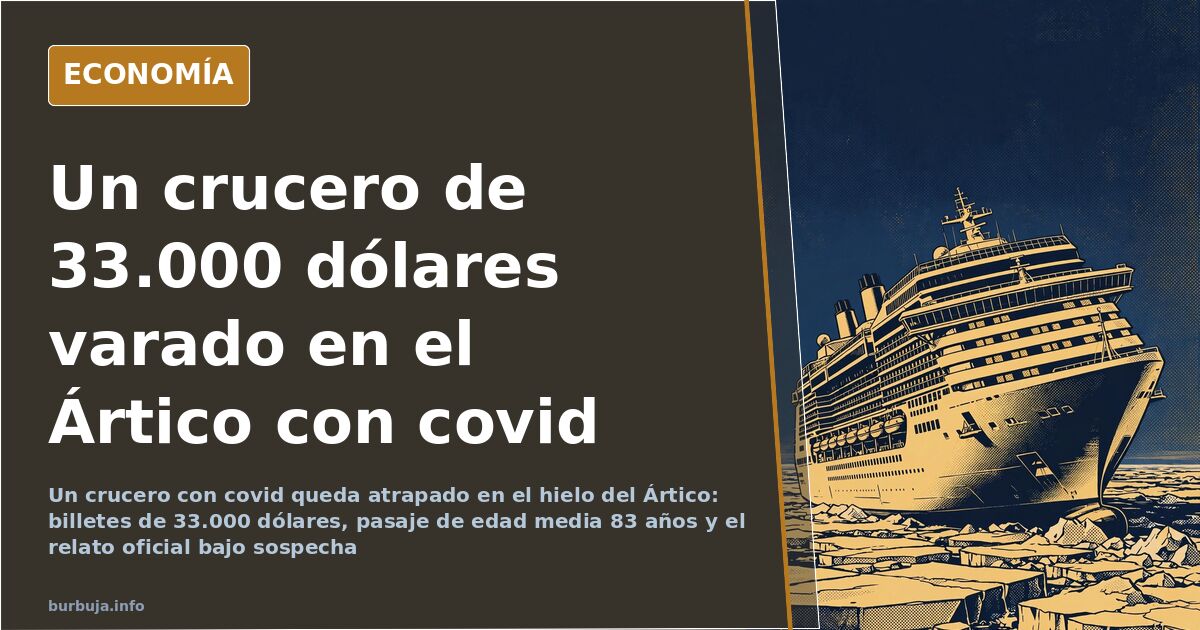
Stranded Arctic Cruise: $33,000 Tickets and a ELbichito Outbreak
A cruise ship trapped in Arctic ice with a ELbichito outbreak has all the elements of a headline. It was, for a few hours. Then came the usual reaction: much of public discourse decided the issue wasn't the bicho, but who reported it and why. The episode, dubbed the event of 2023, combines a luxury cruise, an elderly passenger list, a respiratory outbreak, and chronic distrust of the official health narrative. And there is a detail that doesn't fit: amidst claims about melting ice, there is enough ice to strand a ship.
What We Know About the Stranded Arctic Cruise
The vessel, linked to Australian passengers, was immobilized in Arctic waters, and a ELbichito outbreak was declared on board. The news made front pages in several outlets, including Catalunya Press and La Vanguardia, sparking friction between the facts and their interpretation. The ship didn't move; the narratives did.
Ticket prices have become the most cited figure: $33,000 per passenger, reopening debates about who buys these trips and what exactly they pay for. Another data point reinforces the profile: an average age of 83 years on such cruises, where deaths among passengers due to age-related causes are not uncommon during fifteen-day voyages. This context explains why a respiratory outbreak in a closed environment is far more concerning than the word "cruise" suggests.
Who Rescues a Stranded Arctic Cruise Ship?
Rescue logistics have received less attention than the controversy, yet they are central to the problem: moving a ship in icy waters requires resources few possess. Discussions have raised expectations that third countries with polar capabilities will intervene, asking what happens if operations delay and passengers remain on board. The alternative mentioned—isolating the ship until the outbreak subsides—has an obvious flaw: the passengers' advanced age.
The Literary Precedent: "Yellow Catastrophe"
Among coincidences highlighted by the incident is a novel by J.J. Benítez, "Yellow Catastrophe," whose plot involves a cruise ship experiencing something very similar to current events. This reference serves two purposes: reminding us that isolated ships with outbreaks are a narrative classic, and fueling suspicion that the script was already written. The most repeated conclusion is that this remake lacks originality or surprise.
The Climate Paradox: Ice Where There Should Be None
One frequently discussed contradiction concerns melting ice narratives. If the Arctic is thawing, where does the solid ice stranding a ship come from? This question is often used as sarcasm rather than scientific argument, accompanied by irony about Greenland cruises being sold as beach holidays or imagining pack ice inside industrial freezers for seals and tourists. Greta Thunberg is inevitably cited as an imaginary guest on the voyage.
Non-Existent ELbichito and Announced Lockdowns
Many responses ignore logistics and dispute the problem's existence. Some claim ELbichito doesn't exist, so nothing can spread; others suggest it's a setup for new restrictions or alarm generation. These assertions lack evidence, as does the reasonable demand for a global investigation into the bicho's origin, which remains unresolved. What is verifiable is that suspicion spreads faster than any data.
From Zombie Bicho to Fukushima Ending
When analysis fails, dark humor takes over. Speculation includes ancestral bicho released by melting ice, passengers turning into zombies, sinking the ship, or even nuclear strikes, ending adrift toward Fukushima. References to "Z Apocalypse" appear, comparing it to a tired Hollywood remake. The joke works as a thermometer: when parody gains ground, the official narrative loses the battle for attention.
If the episode trinc known patterns, the cruise likely resolves without drama: evacuated passengers, quarantines, and revised figures downward. With caveats. Such stories are no longer judged by what happens, but by what each person expected to happen. In that expectation, the ship has been stranded far longer than just a few weeks.
Also available in: Deutsch
Summary of a discussion on Burbuja.info - Foro de economía, actualidad y política., translated from Spanish and reviewed before publication. Read the full discussion (118 replies).
More summaries
-
Trump Pressures Denmark Over Greenland Amid Arctic Geopolitics
Trump demands Greenland from Denmark following a phone call, sparking debate on Arctic geopolitics and US strategic interests.
-
Spain's Moves III leaves 2,700 buyers without subsidy or car
2,700 buyers applied for Spain's Moves III subsidy on time and still haven't been paid. A parliamentary defeat left the aid in limbo and them without a car.
-
PSOE's big landlords: partner of Mínguez holds 30 rental flats
The partner of PSOE spokesperson Montse Mínguez manages around 30 rental properties in Spain and is legally listed as a large-scale landlord, while the party legislates against them.
-
Barcelona's Colau blames far right for looting
Barcelona mayor Ada Colau blames the far right for the city's looting, as debate rages in Spain over whether the phenomenon even exists and who is really behind the riots.
-
Spanish men and South American women: the rivalry dividing men
A story about a bald man and a South American woman on a Spanish beach sparks 55 days of debate about relationships, status and money in Spain
-
Total blackout on La Palma as emergency services declare general alert
A blackout leaves La Palma without power and emergency services declare a general alert. The island, with no electrical interconnection, suffers water cuts and disruptions to critical services.