
Andorrano jeweller: silver ounces wrapped in cling film
999 fine silver ounces sent wrapped in transparent film when an order doesn't fill a full tube: the clash between competitive prices and packaging that tarnishes the coins.
English · Original discussion in Spanish · Published
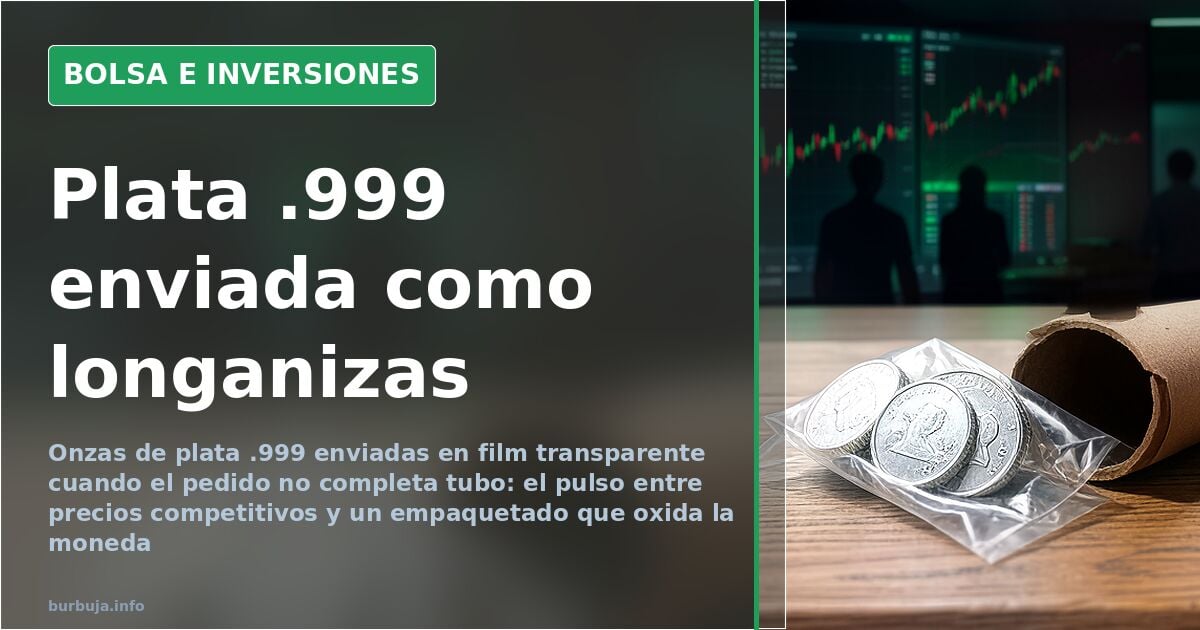
Silver ounces wrapped in cling film: the clash between price and handling
Buying an investment silver ounce and receiving it wrapped in transparent film, as if it were a sandwich, is what sparked a complaint that has spread through the Spanish precious metals market. The criticism is aimed at Joyería Andorrano, a dealer with very competitive prices whose packaging leaves coins exposed to tarnishing when the order doesn't fill an original tube. 999 fine silver tarnishes almost instantly, and buyers who don't purchase tubes or capsules on their own end up with a product that loses some of its resale appeal.
Competitive pricing versus shoddy packaging
The consensus around the Andorran dealer is broad: the prices are among the best in Spain and the pricing policy is fully transparent. There's no dispute there. The problem arises when the order doesn't add up to a full tube of 20 or 25 coins. Then the loose ounces travel in cellophane or film, and the buyer faces the dilemma of encapsulating them on their own or accepting the deterioration.
Some argue that the cost of a tube is irrelevant compared with the volume of a transaction worth thousands of euros, and that not including one is a rookie marketing mistake. The opposing argument carries weight too: every tube and every capsule costs money, and with tight margins the dealer can't give them away. The debate heats up when someone points out that a 1,300-euro gold ounce arrived wrapped in film and without a capsule.
The service: correct or dismissive?
The accusation of dismissive treatment doesn't find unanimous support. Several buyers describe service that is cold but correct, without frills, and stress that when there was a problem with broken capsules the shop sent free replacements, even two years later. Others, however, recount that when they complained about an incomplete order the response was to invite them to shop elsewhere.
Communication is the other weak point: calls that go unanswered, emails with no reply and tracking numbers that have to be requested by phone. One buyer says that if he doesn't call, he doesn't find out the package arrives that same day. The shop has been fixing part of this with automatic status-change notifications, though courier tracking remains outstanding.
The German alternative and the cost of customs
The usual counterpoint is German shops, with 7% VAT on silver and more careful handling, but with added risks. Buying from outside the EU exposes the buyer to customs holds with 21% VAT plus the corresponding duty. The exception is bullion gold, which pays neither VAT nor duties, although one buyer had to appeal an erroneous hold to get it lifted.
The conclusion that emerges is uncomfortable: the Andorran dealer wins on price and language proximity, loses on commercial polish. Those who prioritise packaging and communication have alternatives; those who watch every cent per ounce do too. The prediction, with reservations, is that the shop will carry on as before as long as the price differential outweighs the cling film.
Also available in: Deutsch
Summary of a discussion on Burbuja.info - Foro de economía, actualidad y política., translated from Spanish and reviewed before publication. Read the full discussion (43 replies).
More summaries
-
Silver ounce: 31.1 grams, but coins rarely match
A silver ounce is 31.10348 grams of fine metal, but physical coins weigh between 31.30 and 31.64 grams depending on the mint. The official thickness also doesn't match the…
-
German 7% VAT makes silver cheaper than Spain's 16%
A forum user compares prices: the Eagle coin costs €16.40 plus 16% VAT at Ciode and €14.35 plus 7% at Anlagegold24, which according to another user no longer ships to Spain.
-
Silver Savings: From Two Ounces Monthly to Hundreds in Storage
Buying two or three silver ounces monthly for years accumulates hundreds of pieces. The ounce costs around €30, but VAT deters some buyers.
-
Openbank offers 3.25% on new funds for six months
Openbank launches a deposit paying 3.25% for six months on new money with salary direct deposit, or 2.75% without it. The offer applies only to external capital.
-
Spanish bond soars 200 basis points even as the ECB keeps buying
Spain's ten-year bond yield has jumped 200 basis points while the ECB is still buying. Germany has gone from -0.5% to 1% and the US is above 3%. It looks ugly.
-
WH Smith: deep-value candidate or falling knife?
WH Smith trades at 0.45 times sales and 3 times EBITDA as the market punishes its restructuring and the Iran conflict. Opportunity or value trap?