
Alum Stone: €9.95 Cost, €68 Savings Claim
A €9.95 alum stone promises €68 savings over two years. Its efficacy and safety remain debated without consensus.
English · Original discussion in Spanish · Published
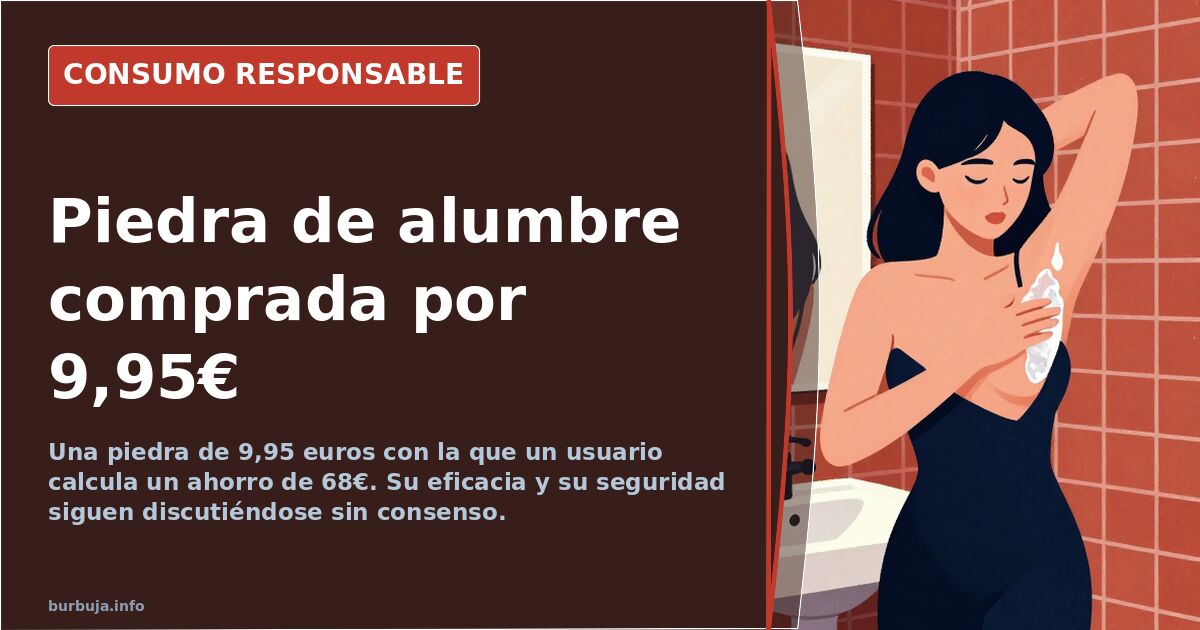
Alum Stone: The Deodorant That Lasts Years for €9.95
Can you ditch commercial deodorants with a single purchase under ten euros? An alum stone bought at an herbalist for €9.95 is the starting point of a calculation circulating among household budget watchers: if standard stick deodorant costs €3.25 and one is used monthly, two years of purchases total €78. The subtraction leaves €68.05 in savings. Four months later, the stone was still intact.
The interest stems less from finance than dermatology. The user who raised this issue turned to the stone after conventional deodorants caused allergies. This detail — reactive skin, goodbye to scented sticks — explains why the topic sparked more interest than the arithmetic suggests.
How much does the alum stone save compared to regular deodorant?
The math is simple but potentially misleading. €3.25 per container, twelve containers a year, two years: €78. Whether the stone actually lasts 24 months is another story. No lab certifies that figure; it came from the shop assistant. What can be verified is that after four months there was no visible wear, and some describe it as practically new after a whole summer.
Savings also depend on the reference price. If the replaced deodorant is branded and always bought, the difference skyrockets. If bought in cheap formats or during sales, the margin narrows. And if deodorant isn't needed at all, the saving is 100%: pure profit for the wallet.
What is the alum stone and why does it work
The alum stone is potassium alum, KAl(SO4)2·12H2O, and has nothing to do with alabaster, which is calcium carbonate. Confusing the two names is common and should be clarified before discussing properties. Alum is a natural bactericide used for centuries and also as a food preservative. Its solubility in water allows application: wet the stone and rub it on damp skin.
It eliminates odor-causing bacteria, not sweat. Hence users notice they don't smell good or bad, and it doesn't interfere with cologne. The feel, they say, is cleaner than conventional sticks: no grit, residue, or liquid. Some even describe the sensation like rubbing the bottom of a shot glass, indicating little product is applied.
Cost of the alum stone depending on where you buy it
The same product varies in price by retailer. At a natural store, a 120-gram format sold for €7.95, with unpolished stones around €3+. In department stores, it appeared at €5.50, labeled dermatologically tested and made with natural ingredients, while branded versions cost €3.50. Supermarket chains have shown it at €3.75. Neighborhood herbalists charge €9.95.
Compare before paying. Prices range from under €4 to nearly €10 for identical material, and first-time buyers often warn it's worth visiting several stores to avoid being ripped off.
Baking soda, zinc alcohol, and other home alternatives
The stone isn't the only low-cost recipe. Some use a half-and-half mix of baking soda and talcum powder on wet armpits for eight years, backed by doctor recommendations. Baking soda alone, however, irritates and causes bumps sticking to skin. Another formula is 96-degree alcohol with zinc in a spray bottle: cheaper than any brand and, once dry, odorless so it doesn't clash with cologne.
Some simply use nothing. Those lucky enough not to smell need no remedy, and those seeking the cheapest route point to daily soap and water routines and keeping armpits shaved, which reportedly reduces odor.
Is the aluminum in the alum stone dangerous?
Consensus breaks here. Some argue the stone introduces aluminum into the body and should be avoided out of caution, similar to concerns about other compounds in conventional cosmetics. Opponents claim ions don't peine healthy skin: if they did, bathing in seawater would disrupt the body's salt balance, which doesn't happen. Neither position cites clinical studies.
There's also no data on long-term toxicity in the material. Those with reactive skin or allergies should consult a healthcare professional before switching products, especially if the change was due to a reaction.
An uncomfortable fact remains. If a €9.95 stone truly lasts two years, forum users joke that the deodorant industry sells monthly packaging more than hygiene. If it lasts less, the €68.05 saving is a nice hypothesis and the thrifty homemaker in every house must recalculate. No one has returned after two years to report back.
Can you ditch commercial deodorants with a single purchase under ten euros? An alum stone bought at an herbalist for €9.95 is the starting point of a calculation circulating among household budget watchers: if standard stick deodorant costs €3.25 and one is used monthly, two years of purchases total €78. The subtraction leaves €68.05 in savings. Four months later, the stone was still intact.
The interest stems less from finance than dermatology. The user who raised this issue turned to the stone after conventional deodorants caused allergies. This detail — reactive skin, goodbye to scented sticks — explains why the topic sparked more interest than the arithmetic suggests.
How much does the alum stone save compared to regular deodorant?
The math is simple but potentially misleading. €3.25 per container, twelve containers a year, two years: €78. Whether the stone actually lasts 24 months is another story. No lab certifies that figure; it came from the shop assistant. What can be verified is that after four months there was no visible wear, and some describe it as practically new after a whole summer.
Savings also depend on the reference price. If the replaced deodorant is branded and always bought, the difference skyrockets. If bought in cheap formats or during sales, the margin narrows. And if deodorant isn't needed at all, the saving is 100%: pure profit for the wallet.
What is the alum stone and why does it work
The alum stone is potassium alum, KAl(SO4)2·12H2O, and has nothing to do with alabaster, which is calcium carbonate. Confusing the two names is common and should be clarified before discussing properties. Alum is a natural bactericide used for centuries and also as a food preservative. Its solubility in water allows application: wet the stone and rub it on damp skin.
It eliminates odor-causing bacteria, not sweat. Hence users notice they don't smell good or bad, and it doesn't interfere with cologne. The feel, they say, is cleaner than conventional sticks: no grit, residue, or liquid. Some even describe the sensation like rubbing the bottom of a shot glass, indicating little product is applied.
Cost of the alum stone depending on where you buy it
The same product varies in price by retailer. At a natural store, a 120-gram format sold for €7.95, with unpolished stones around €3+. In department stores, it appeared at €5.50, labeled dermatologically tested and made with natural ingredients, while branded versions cost €3.50. Supermarket chains have shown it at €3.75. Neighborhood herbalists charge €9.95.
Compare before paying. Prices range from under €4 to nearly €10 for identical material, and first-time buyers often warn it's worth visiting several stores to avoid being ripped off.
Baking soda, zinc alcohol, and other home alternatives
The stone isn't the only low-cost recipe. Some use a half-and-half mix of baking soda and talcum powder on wet armpits for eight years, backed by doctor recommendations. Baking soda alone, however, irritates and causes bumps sticking to skin. Another formula is 96-degree alcohol with zinc in a spray bottle: cheaper than any brand and, once dry, odorless so it doesn't clash with cologne.
Some simply use nothing. Those lucky enough not to smell need no remedy, and those seeking the cheapest route point to daily soap and water routines and keeping armpits shaved, which reportedly reduces odor.
Is the aluminum in the alum stone dangerous?
Consensus breaks here. Some argue the stone introduces aluminum into the body and should be avoided out of caution, similar to concerns about other compounds in conventional cosmetics. Opponents claim ions don't peine healthy skin: if they did, bathing in seawater would disrupt the body's salt balance, which doesn't happen. Neither position cites clinical studies.
There's also no data on long-term toxicity in the material. Those with reactive skin or allergies should consult a healthcare professional before switching products, especially if the change was due to a reaction.
An uncomfortable fact remains. If a €9.95 stone truly lasts two years, forum users joke that the deodorant industry sells monthly packaging more than hygiene. If it lasts less, the €68.05 saving is a nice hypothesis and the thrifty homemaker in every house must recalculate. No one has returned after two years to report back.
Also available in: Deutsch
Summary of a discussion on Burbuja.info - Foro de economía, actualidad y política., translated from Spanish and reviewed before publication. Read the full discussion (125 replies).
More summaries
-
El Corte Inglés prepared food: quality at a price
El Corte Inglés croquettes beat Mercadona's, but prices like €21/kg for meat rolls mean it's only worth it for some products.
-
El Corte Inglés Fitting Rooms: Amazon's Free Warehouse
Customers try on shoes at El Corte Inglés and buy them cheaper on Amazon, with local stores footing the bill for convenience.
-
Lidl's frozen sardines at €3.90/kg vs. fresh ones
A kilo of frozen sardines costs €3.90 compared to €9-€10 for fresh ones in Madrid. The question is whether the flavor holds up after freezing.
-
Used 125cc bikes: paying new prices for junk
Listings show high-mileage used 125cc scooters at €2,000 without valid inspections. Buyers often find new models cost little more.
-
YouTube vs. Ad Blockers: A War It Cannot Win
YouTube detects ad blockers and prompts users to disable them or pay. The response includes alternative browsers, players, and DNS servers.
-
Forum Debate: Can You Eat Flour and Sugar Without Gaining Weight?
A years-long forum discussion on whether a diet of flour and sugar prevents weight gain, covering metabolism, age, insulin spikes, and hidden health risks.