
Alcoholism: Quitting After Ten Beers a Day
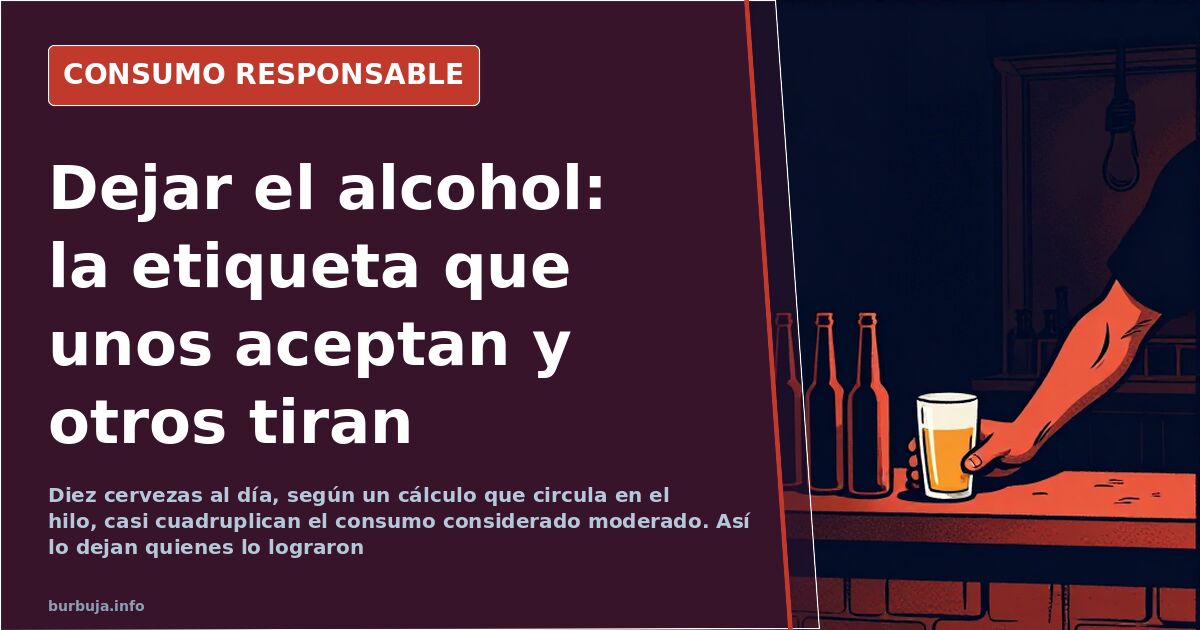
Ten beers daily nearly quadruples moderate intake limits. Here is how those who quit managed to stop.
English · Original discussion in Spanish · Published
Quitting Alcohol Without Help: Success Stories and Their Cost
A man admits he is an alcoholic, has been prescribed medication by his doctor, and asks the crucial question: has anyone else succeeded? His reported consumption is not trivial: ten beers a day. Responses range from sincere support to harsh dismissal, offering an honest map of the struggle to escape addiction.
Putting numbers on it helps. The commonly cited safe threshold is around 20 grams of alcohol per day. According to calculations in the thread, two liters of beer (ten small glasses) equal about 79 grams: nearly four times the limit. Some admit drinking one or two bottles of wine daily, while others report consuming two liters of beer every day.
Why Doctors Say Alcoholism Is Lifelong
The most uncomfortable diagnosis is the one that allows no nuance. The affected individual reports that his doctor claims alcoholism causes hypothalamic damage preventing cessation once started, arguing total abstinence—including foods cooked with alcohol—is the only real solution. Many replies back this view without hesitation: if going a week without beer is difficult, the habit controls you.
The label, however, divides opinion. Some reject it—"to me, that's just another label," says one—claiming they drink or abstain based on internal choice, not external definition. The counter-argument is blunt: if you need one or two beers to eat, you are still an alcoholic. Almost all viewpoints agree that acknowledging the problem is the first step.
Quitting Alone: Methods That Worked
Testimonials from those who quit vary widely and differ from official guidelines. One describes reducing from drinking from lunchtime until bedtime to just one or two beers with meals, without programs or therapy. Another notes daily wine began causing sleep issues and hangovers, leading him to quit on Christmas Day, starting New Year's Eve sober to avoid beginning the year unwell.
Others cite different turning points. One found sobriety during pandemic lockdowns: two months without drinking or missing it, having contracted the illness severely. Exercise also emerges as a lever: jogging three to five kilometers daily and losing ten kilos, regaining physical ease. Conversely, gradual reduction—spacing out drinks, cutting volume, addressing root causes—gains traction among some users.
Moderation vs. Abstinence: Where Opinions Split
Consensus breaks here. One group argues less drinking means less harm, provided self-control exists; otherwise, abstain completely. Another contends moderation is a trap: an alcoholic never drinks just one glass, often ending up with seven beers or half a bottle. A third advocates mutual support via Alcoholics Anonymous groups, admitting solo efforts take much longer.
The most repeated warning concerns relapse, not the first day. Those who quit remain vulnerable to occasional cravings; what changes is the calculation: giving in requires repeating the entire painful process, a cost deemed too high. Mental reframing, they argue, outweighs sheer willpower.
Insights From Years of Consumption
Patterns repeat monotonously. Dependencies build slowly over years, involving medical checkups where patients lie about drinking, blood tests showing altered liver indicators, and doctors advising reduced intake for those claiming abstinence. Defenders of their habits compare their consumption to others' sedentary lifestyles, asserting active people burn off the effects.
This comparison fails scrutiny. Users warn relying on clean blood tests to justify continued drinking is reckless, noting elevated transaminases indicate liver damage ranging from fatty liver to cirrhosis.
The discussion ends without a manual. No exact figures guarantee success, no single method works for everyone, and there are no shortcuts. Each person shares their exit strategy differently, leaving the initial question unanswered: why do some quit while others fail to try again?
Disclaimer: This text is informational and does not replace professional medical advice.
A man admits he is an alcoholic, has been prescribed medication by his doctor, and asks the crucial question: has anyone else succeeded? His reported consumption is not trivial: ten beers a day. Responses range from sincere support to harsh dismissal, offering an honest map of the struggle to escape addiction.
Putting numbers on it helps. The commonly cited safe threshold is around 20 grams of alcohol per day. According to calculations in the thread, two liters of beer (ten small glasses) equal about 79 grams: nearly four times the limit. Some admit drinking one or two bottles of wine daily, while others report consuming two liters of beer every day.
Why Doctors Say Alcoholism Is Lifelong
The most uncomfortable diagnosis is the one that allows no nuance. The affected individual reports that his doctor claims alcoholism causes hypothalamic damage preventing cessation once started, arguing total abstinence—including foods cooked with alcohol—is the only real solution. Many replies back this view without hesitation: if going a week without beer is difficult, the habit controls you.
The label, however, divides opinion. Some reject it—"to me, that's just another label," says one—claiming they drink or abstain based on internal choice, not external definition. The counter-argument is blunt: if you need one or two beers to eat, you are still an alcoholic. Almost all viewpoints agree that acknowledging the problem is the first step.
Quitting Alone: Methods That Worked
Testimonials from those who quit vary widely and differ from official guidelines. One describes reducing from drinking from lunchtime until bedtime to just one or two beers with meals, without programs or therapy. Another notes daily wine began causing sleep issues and hangovers, leading him to quit on Christmas Day, starting New Year's Eve sober to avoid beginning the year unwell.
Others cite different turning points. One found sobriety during pandemic lockdowns: two months without drinking or missing it, having contracted the illness severely. Exercise also emerges as a lever: jogging three to five kilometers daily and losing ten kilos, regaining physical ease. Conversely, gradual reduction—spacing out drinks, cutting volume, addressing root causes—gains traction among some users.
Moderation vs. Abstinence: Where Opinions Split
Consensus breaks here. One group argues less drinking means less harm, provided self-control exists; otherwise, abstain completely. Another contends moderation is a trap: an alcoholic never drinks just one glass, often ending up with seven beers or half a bottle. A third advocates mutual support via Alcoholics Anonymous groups, admitting solo efforts take much longer.
The most repeated warning concerns relapse, not the first day. Those who quit remain vulnerable to occasional cravings; what changes is the calculation: giving in requires repeating the entire painful process, a cost deemed too high. Mental reframing, they argue, outweighs sheer willpower.
Insights From Years of Consumption
Patterns repeat monotonously. Dependencies build slowly over years, involving medical checkups where patients lie about drinking, blood tests showing altered liver indicators, and doctors advising reduced intake for those claiming abstinence. Defenders of their habits compare their consumption to others' sedentary lifestyles, asserting active people burn off the effects.
This comparison fails scrutiny. Users warn relying on clean blood tests to justify continued drinking is reckless, noting elevated transaminases indicate liver damage ranging from fatty liver to cirrhosis.
The discussion ends without a manual. No exact figures guarantee success, no single method works for everyone, and there are no shortcuts. Each person shares their exit strategy differently, leaving the initial question unanswered: why do some quit while others fail to try again?
Disclaimer: This text is informational and does not replace professional medical advice.
Summary of a discussion on Burbuja.info - Foro de economía, actualidad y política., translated from Spanish and reviewed before publication. Read the full discussion (207 replies).
More summaries
-
Milk Thistle for Fatty Liver: Miracle Cure or Leap of Faith?
A user claims to have lost 4kg and cleared their fatty liver with milk thistle, but skepticism about miracle pills persists.
-
Joselín, the €7 Sobaos that divides artisan consumption
Joselín's box costs €7, adding €6 shipping on orders of €50. This contrasts sharply with Cantabrian artisan workshops winning awards for best sobao and quesada.
-
Mac Mini vs Dell: Is the $60 Apple Premium Worth It?
A Mac Mini M2 costs €600 while a comparable Dell runs €540. This price and performance comparison divides Mac and PC buyers.
-
Windows 11 End-of-Life Debate: Privacy and Linux Alternatives
Is Windows 11 obsolete? We analyze privacy concerns, telemetry issues, and the best GNU/Linux alternatives for users seeking greater control.
-
Wet wipes clog pipes and drain wallets in Spain
Users spend up to 800 wet wipes monthly for hygiene, causing pipe blockages. Is the bidet a better alternative?
-
Vespa 50cc has worse power-to-weight ratio than 1953 Biscúter
A forum user claims the Vespa 50 carries more weight per horsepower than the post-war Biscúter, suggesting modern scooters are less agile.