
800 and 900 silver: Spain's cheap safe-haven bought by weight
Spanish silver coins from the Franco and Alfonso XIII eras: 15.2 g of pure silver in the 100-peseta pieces and 22.5 g in the 5-peseta ones. Prices and the warning about fineness.
English · Original discussion in Spanish · Published
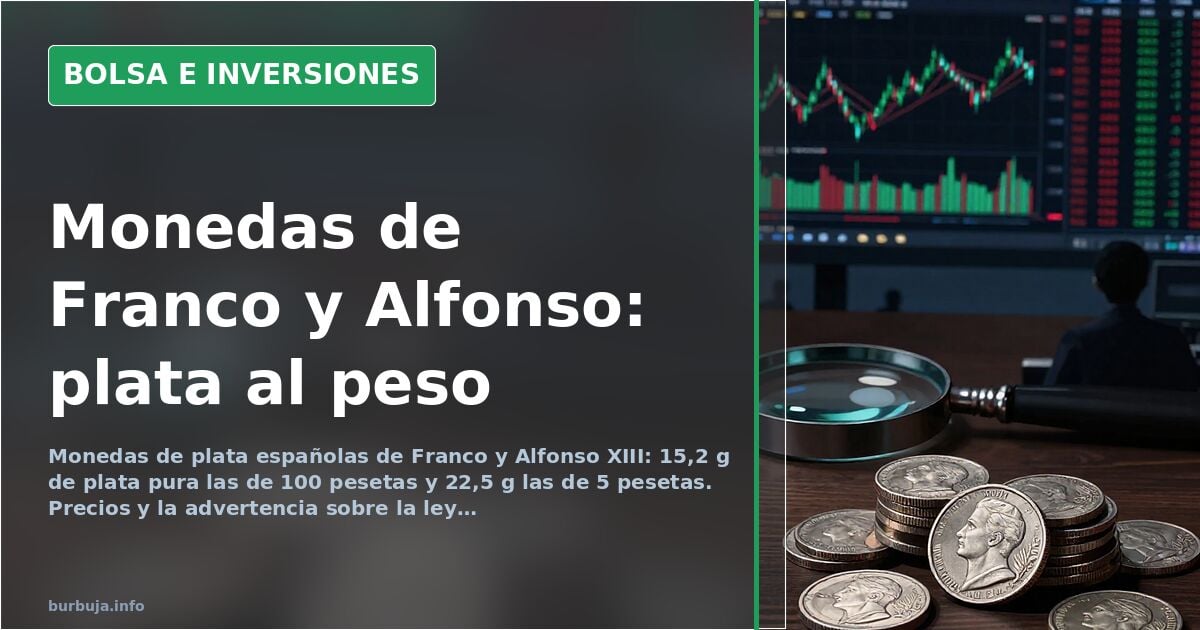
Spanish silver coins: buy by weight, not by catalogue
Spanish coin silver is back in the sights of anyone looking for a safe haven without paying the premium of international bullion pieces. The 100-peseta coins from 1966 (Franco) and the 5-peseta coins of Alfonso XII and XIII have become the cheapest way into physical metal: they are bought for their silver content, not their numismatic value. The problem is that information on weight and fineness is scattered and prices vary from market to market.
The figures that matter
According to the figures used by participants, the 1966 Franco 100-peseta coins weigh 19 grams at .800 fineness, which works out at 15.2 grams of pure silver per coin. The Alfonso XIII 5-peseta coins, meanwhile, come in at 25 grams at .900 fineness, that is, 22.5 grams of fine silver. With silver at 0.32 euros a gram, the metal value of the first is around 4.88 euros; the second, 7.2 euros.
Some argue that these coins should not cost much more than their weight. "The Franco duros from 1966 contain 19g of .800 silver... that's 4.88 euros of silver, don't pay much more for it," sums up a calculation doing the rounds. For the Alfonso XIII coins, the equivalent figure is 7.2 euros. But the market does not always respect that logic: in Madrid, duros have been seen at 10 euros, with volume discounts, and the Franco coins between 6 and 7 euros. In Seville, one of the most expensive markets in the country for numismatics according to a forum comment, prices tend to be higher.
Are you paying only for the metal, or is there a numismatic premium?
The short answer is that it depends on condition and date. For the 5-peseta coins, an example with a clear plus ultra and visible stars goes for 10 to 12 euros; for the Franco 100-peseta coins, the 66 star is the most common and its range is 5 to 6 euros if close to uncirculated. The rest go at weight.
The underlying debate is whether that premium is worth paying. One school of analysis avoids coins with numismatic value because it considers their spread too high —expensive to buy, cheap to sell— and believes the market is distorted by collecting. Another holds that .800 silver is the cheapest you can get in Spain, even below grain silver, and that in a monetary collapse scenario the local recognisability of these coins would work in its favour.
The warning about .800 fineness
This is the point that sparks the most discussion. Some argue that .800 silver is not considered international bullion: there are no Credit Suisse bars at .800 fineness. That would miccionan that when selling, a jeweller or refiner would pay less for it than for .900 or .999 silver. The counter-argument is that the cost of refining it is manageable —a jewellery electric furnace costs around 800 euros— and that an informed buyer can capture that differential.
The retail market reality is stubborn: Franco 100-peseta coins have been seen at 7.85 euros on collecting platforms, and some have bought duros at 8 euros in one-off deals. The gap between what you pay and what you get back remains the Achilles heel of this strategy.
What to check before buying
The advice that keeps coming up is to verify weight, diameter and magnetism, and to be wary of coins that are too cheap. A drop of bleach on the coin —if it blackens, it's silver— works as a home test. For larger quantities, a trusted jeweller or an X-ray machine settles the doubt.
The exact point where the analysis gets stuck is the same as at the start: there is no certainty whether the differential between the buying and selling price justifies the risk. With silver at around 0.32 euros a gram, the numbers work. With silver higher, the premium dilutes. And with silver lower, the seller of coins by weight becomes a problem.
Also available in: Deutsch
Summary of a discussion on Burbuja.info - Foro de economía, actualidad y política., translated from Spanish and reviewed before publication. Read the full discussion (61 replies).
More summaries
-
Alfonso XIII's gold coin doubles in value over a decade
The 100 peseta coin featuring Alfonso XIII has risen from €1,000 to €1,917 in ten years, as numismatic collecting finds refuge in gold.
-
Gold and Silver: Bars vs. Coins and Where to Buy
A couple debates buying gold and silver bars or coins, where to purchase them, and how to maintain privacy. Discover the pros and cons.
-
Spain tax confusion over €20 mystery shopper pay
A mystery shopper earning just over €20 wonders whether to declare it or register as self-employed. The company calls it an external collaboration.
-
Pine or Paulownia: Long-Term Forestry Investment in Spain
Pine takes 25-40 years to yield profits, with some estimating a 4% real annual return. Paulownia shortens the timeline to 6-8 years, but there is no market for it in Spain.
-
Big Popes: bargain hunting among the stock market's beaten-down giants
Bayer, Adobe, Alibaba, Grifols... major companies punished by temporary narratives could double. How to identify them and which risks to watch.
-
BASF: the chemical giant losing gas and gaining doubts
BASF has fallen 24% from its April highs: expensive gas, an explosion in Germany and a historic dividend that hides debt. Value or trap?