
400°C Home Oven: €600 Cost, 3000W Power
This home oven reaches 400°C for Neapolitan pizza at a cost of €600 and 3000W consumption. Electricity costs are around 30 cents per pizza.
English · Original discussion in Spanish · Published
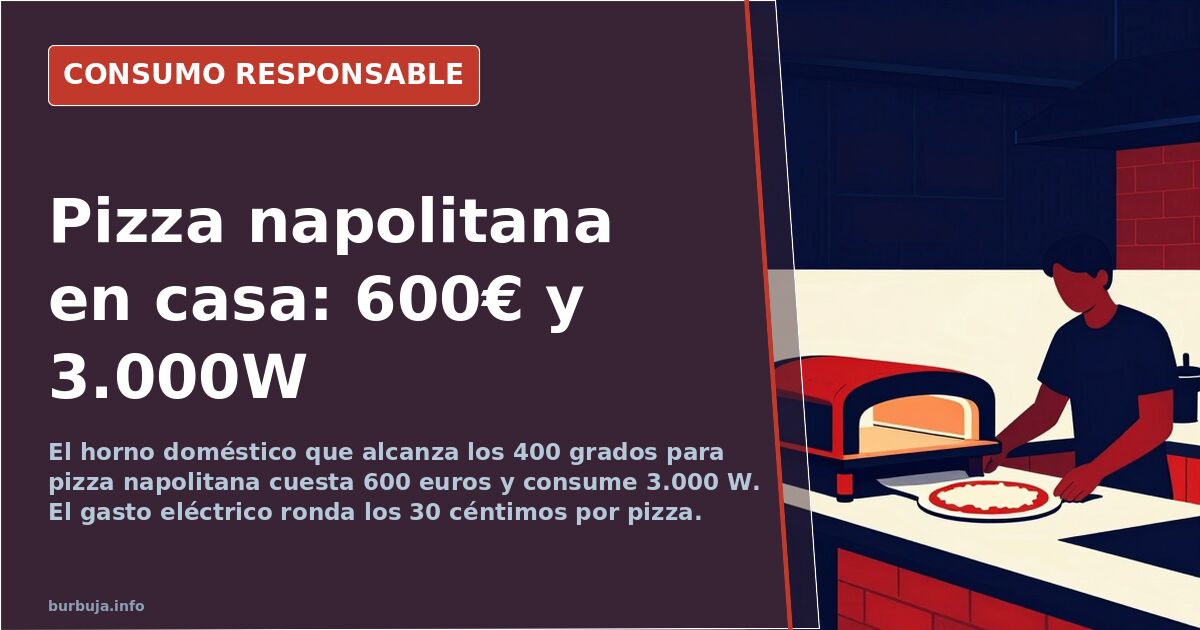
Can you make authentic Neapolitan pizza in an apartment without breaking the bank?
The question is simple: does a home oven exist that can reach the 400 degrees required for Neapolitan pizza, fit in a 60x60 centimeter kitchen, and not produce smoke? The short answer is yes, but with painful nuances. The equipment most frequently mentioned in specialized discussions is the Effeuno P134H, an electric oven that reaches 500 degrees and costs around €600. The calculation by its defenders: if you bake 80 to 100 pizzas instead of ordering them out, the appliance pays for itself in two years. The criticism points out: 3,000 watts of power and about 30 cents per pizza in electricity, given current energy prices.
Which oven reaches 400 degrees and what does it cost?
The 400-degree threshold is what separates a true Neapolitan pizza from dough with tomato sauce. Standard home ovens stay between 250-280 degrees, and some argue this is sufficient because they have been doing it this way in pizzerias for years. The nuance matters: being able to cook a pizza at 250 degrees is different from achieving a result similar to Naples. At the high end, the Effeuno P134H appears as the most cited option, with an older version widely discussed in videos and a new one reaching up to 500 degrees. There are gas and wood-fired alternatives, but wood-fired ones are ruled out for apartments due to smoke and learning curve, while portable gas models are sold for outdoor use.
The pyrolysis trick and why it’s not so easy
The cheap workaround circulating is to use the pyrolysis function of your home oven, which cleans at very high temperatures, and bypass the door lock safety. The problem is that pyrolytic ovens activate the fan and electronics limit the temperature. A more detailed analysis suggests the real method involves bypassing the heating element and controlling it via an external switch, essentially using the resistors without the control unit. For that, it might be better to buy a dedicated pizza oven or build one. The repeated intermediate option: preheat a baking stone well, set the oven to maximum, and place the pizza on the bottom rack, the hottest zone, watching closely to avoid burning.
Stone, peel, and the real cost per pizza
Practical consensus holds that you need more than just the oven: a refractory stone or plate and a peel. Some discard the stone because it requires long preheating times, but it is the cheapest solution if you already own an oven. Electricity costs are estimated at about 30 cents per pizza, a figure defenders compare to the €10 or more charged for mediocre delivery pizza. Critics respond that with current electricity rates and 3,000 watts of power, bread comes out golden expensive. The debate boils down to a fundamental issue: if the goal is eating better at home, the initial investment recovers; if the goal is saving money, the math doesn't add up.
Alternatives that don’t involve spending €600
Some propose intermediate solutions: a specific cooking griddle, a small industrial oven focused on agri-food, or even a ceramic muffle furnace, with the warning that in summer it turns the kitchen into an oven. The most repeated option for those unwilling to spend: use your home oven at maximum, with parchment paper on the base, and move the pizza to the rack once the base is toasted. The area between the top heating element and the first rack level can exceed 350 degrees, even if it's a thin layer of air. Utilizing this zone is the difference between a decent pizza and burnt dough underneath.
The result of all this is that yes, there exists a home oven that reaches 400 degrees, costs €600, and consumes like a small industrial appliance. The question nobody fully answers is how many pizzas you need to make before the account balances in your favor. And if anyone knows, please advise.
The question is simple: does a home oven exist that can reach the 400 degrees required for Neapolitan pizza, fit in a 60x60 centimeter kitchen, and not produce smoke? The short answer is yes, but with painful nuances. The equipment most frequently mentioned in specialized discussions is the Effeuno P134H, an electric oven that reaches 500 degrees and costs around €600. The calculation by its defenders: if you bake 80 to 100 pizzas instead of ordering them out, the appliance pays for itself in two years. The criticism points out: 3,000 watts of power and about 30 cents per pizza in electricity, given current energy prices.
Which oven reaches 400 degrees and what does it cost?
The 400-degree threshold is what separates a true Neapolitan pizza from dough with tomato sauce. Standard home ovens stay between 250-280 degrees, and some argue this is sufficient because they have been doing it this way in pizzerias for years. The nuance matters: being able to cook a pizza at 250 degrees is different from achieving a result similar to Naples. At the high end, the Effeuno P134H appears as the most cited option, with an older version widely discussed in videos and a new one reaching up to 500 degrees. There are gas and wood-fired alternatives, but wood-fired ones are ruled out for apartments due to smoke and learning curve, while portable gas models are sold for outdoor use.
The pyrolysis trick and why it’s not so easy
The cheap workaround circulating is to use the pyrolysis function of your home oven, which cleans at very high temperatures, and bypass the door lock safety. The problem is that pyrolytic ovens activate the fan and electronics limit the temperature. A more detailed analysis suggests the real method involves bypassing the heating element and controlling it via an external switch, essentially using the resistors without the control unit. For that, it might be better to buy a dedicated pizza oven or build one. The repeated intermediate option: preheat a baking stone well, set the oven to maximum, and place the pizza on the bottom rack, the hottest zone, watching closely to avoid burning.
Stone, peel, and the real cost per pizza
Practical consensus holds that you need more than just the oven: a refractory stone or plate and a peel. Some discard the stone because it requires long preheating times, but it is the cheapest solution if you already own an oven. Electricity costs are estimated at about 30 cents per pizza, a figure defenders compare to the €10 or more charged for mediocre delivery pizza. Critics respond that with current electricity rates and 3,000 watts of power, bread comes out golden expensive. The debate boils down to a fundamental issue: if the goal is eating better at home, the initial investment recovers; if the goal is saving money, the math doesn't add up.
Alternatives that don’t involve spending €600
Some propose intermediate solutions: a specific cooking griddle, a small industrial oven focused on agri-food, or even a ceramic muffle furnace, with the warning that in summer it turns the kitchen into an oven. The most repeated option for those unwilling to spend: use your home oven at maximum, with parchment paper on the base, and move the pizza to the rack once the base is toasted. The area between the top heating element and the first rack level can exceed 350 degrees, even if it's a thin layer of air. Utilizing this zone is the difference between a decent pizza and burnt dough underneath.
The result of all this is that yes, there exists a home oven that reaches 400 degrees, costs €600, and consumes like a small industrial appliance. The question nobody fully answers is how many pizzas you need to make before the account balances in your favor. And if anyone knows, please advise.
Also available in: Deutsch
Summary of a discussion on Burbuja.info - Foro de economía, actualidad y política., translated from Spanish and reviewed before publication. Read the full discussion (133 replies).
More summaries
-
Madrid Now Makes the Best Pan Tumaca, Not Catalonia
A headline claiming Madrid makes the best pan tumaca sparks a debate: Murcian origins, hanging tomatoes, and rage bait for clicks.
-
Madrid loses its flavor: complaints about food quality spread
Potes chorizo is impossible to find in Madrid. Consumers denounce a decline in food quality and the disappearance of traditional shops. Is…
-
Mixed changing rooms in gyms: what we know and what we don't
Several users claim that a mixed changing room is the area with lockers and benches, while changing and showering take place in individual cubicles.
-
TV Size as Class Marker: 75 Inches or Nothing in Spain
A user claims no TVs over 42 inches appeared in 100 housing ads, contrasting with forum users boasting about 75-inch screens.
-
Finding a free, covered oil change spot in Madrid
Rain in Madrid makes finding a free, covered, unmonitored spot for an oil change difficult. Users discuss garages and DIY options.
-
Spain Home Insurance: Annual Hikes and Coverage Gaps
In Spain, policyholders face €30 annual hikes despite zero claims. Adjusters often deny minor repairs like oxidized hoses due to corrosion exclusions.