
20 Arrested for Looting in Spain's DANA Disaster Zones
Spanish police arrested 20 people for looting in areas hit by the DANA storm: 17 in shops, 2 in homes, and one stealing fuel.
English · Original discussion in Spanish · Published
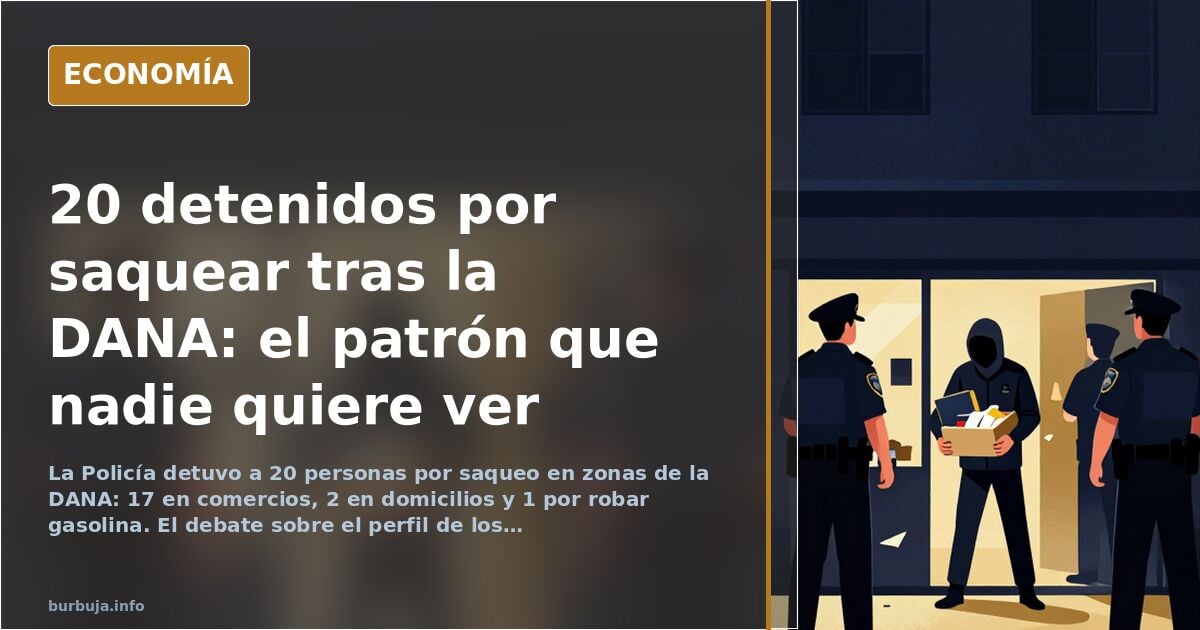
Twenty arrested for looting in zero zones: the pattern that causes discomfort
What do the twenty individuals arrested by the Policía Nacional (National Police) in a single night across areas devastated by the cold drop have in common? The official response is brief: 17 in commercial establishments, 2 in private residences, and 1 for stealing gasoline. The narrative circulating online is different and loaded with intent. Police presence has been reinforced to ensure safety, but the debate over who steals and why has become a battleground where data is scarce and prejudice abounds.
What the police report says and what gets added
The tweet from the Policía Nacional is a service announcement: arrests, locations, and reinforcement of operations. Nothing more. From there, everyone fills the gap with their own biases. Some argue the detainees fit a specific profile, while others claim citing such profiles is an excuse to ignore the real culprits behind the plundering. The discussion heats up because it touches a nerve: humanitarian disaster as a cover for pillage.
It is not surprising that thieves appear in chaotic zones. What is striking is how quickly the event has turned into political ammunition. Some accuse far-right groups of amplifying the incident for electoral gain. Others counter that pointing to racism is the easiest way to hide reality. In the middle are the residents of ravaged towns, who do not need identity debates: they just want protection for what little they have left.
The calculation no one wants to make: How much is stolen during a catastrophe?
Home burglaries generate the most outrage. Two arrests for trespassing in houses belonging to people who lost everything. Some demand exemplary sentences, while others note that preventive detention is already being applied to those arrested for looting, according to ongoing discussions. Justice seems to be accelerating in this regard.
The theft of gasoline, a single case, illustrates another dimension: emergency logistics. Without fuel, aid vehicles cannot move. Stealing gasoline in a disaster zone is not just theft; it sabotages the response. This detail is often lost in ideological fights, yet it explains why police operations have been reinforced.
The emerging pattern: Opportunism, not conspiracy
If the twenty detainees share anything, it is opportunity. Catastrophes disrupt surveillance, scatter security forces, and multiply vulnerable targets. Looted shops, empty houses, and fuel depots all become easier targets when normalcy breaks down. The uncomfortable question is whether the prison and judicial systems are prepared to handle this surge in crime, or if, as some argue, detainees return to the streets and the problem becomes chronic.
Some argue that Valencia’s real plundering is not done by petty thieves, but by those signing emergency contracts without tenders. That thread—public procurement during disasters—is rarely discussed despite involving significant money. But that is a different battle.
In the end, the photo of the detainees is just that: a photo. Twenty people arrested in one night, a reinforced operation, and a society debating the origins of the thieves while victims count what they lack. What the twenty have in common is not their background: it is that they were caught. Those who aren’t caught remain out there.
What do the twenty individuals arrested by the Policía Nacional (National Police) in a single night across areas devastated by the cold drop have in common? The official response is brief: 17 in commercial establishments, 2 in private residences, and 1 for stealing gasoline. The narrative circulating online is different and loaded with intent. Police presence has been reinforced to ensure safety, but the debate over who steals and why has become a battleground where data is scarce and prejudice abounds.
What the police report says and what gets added
The tweet from the Policía Nacional is a service announcement: arrests, locations, and reinforcement of operations. Nothing more. From there, everyone fills the gap with their own biases. Some argue the detainees fit a specific profile, while others claim citing such profiles is an excuse to ignore the real culprits behind the plundering. The discussion heats up because it touches a nerve: humanitarian disaster as a cover for pillage.
It is not surprising that thieves appear in chaotic zones. What is striking is how quickly the event has turned into political ammunition. Some accuse far-right groups of amplifying the incident for electoral gain. Others counter that pointing to racism is the easiest way to hide reality. In the middle are the residents of ravaged towns, who do not need identity debates: they just want protection for what little they have left.
The calculation no one wants to make: How much is stolen during a catastrophe?
Home burglaries generate the most outrage. Two arrests for trespassing in houses belonging to people who lost everything. Some demand exemplary sentences, while others note that preventive detention is already being applied to those arrested for looting, according to ongoing discussions. Justice seems to be accelerating in this regard.
The theft of gasoline, a single case, illustrates another dimension: emergency logistics. Without fuel, aid vehicles cannot move. Stealing gasoline in a disaster zone is not just theft; it sabotages the response. This detail is often lost in ideological fights, yet it explains why police operations have been reinforced.
The emerging pattern: Opportunism, not conspiracy
If the twenty detainees share anything, it is opportunity. Catastrophes disrupt surveillance, scatter security forces, and multiply vulnerable targets. Looted shops, empty houses, and fuel depots all become easier targets when normalcy breaks down. The uncomfortable question is whether the prison and judicial systems are prepared to handle this surge in crime, or if, as some argue, detainees return to the streets and the problem becomes chronic.
Some argue that Valencia’s real plundering is not done by petty thieves, but by those signing emergency contracts without tenders. That thread—public procurement during disasters—is rarely discussed despite involving significant money. But that is a different battle.
In the end, the photo of the detainees is just that: a photo. Twenty people arrested in one night, a reinforced operation, and a society debating the origins of the thieves while victims count what they lack. What the twenty have in common is not their background: it is that they were caught. Those who aren’t caught remain out there.
Also available in: Deutsch
Summary of a discussion on Burbuja.info - Foro de economía, actualidad y política., translated from Spanish and reviewed before publication. Read the full discussion (182 replies).
More summaries
-
Three arrested after assaulting two police officers in Valencia
Three men were detained at Plaza del Tossal in Valencia for attacking National Police agents and attempting to steal their service weapon.
-
Police charges in Valencia protest against Mazón
The protest against Mazón over the DANA management ended with police charges and conflicting accounts of who started the clashes.
-
AI advises 40-year-old with €70,000 and €800 a month
AI therapy: €70,000, €800 a month and living with mum at 40. A 40-year-old man with €70,000 in savings, an €800 monthly salary and a second-hand BMW asks...
-
Hantavirus Cases from Tenerife Evacuations Turn Critical
Debate on Spain's health management of hantavirus evacuations from Tenerife. Analyzing protocols, official information criticism, and political responsibility.
-
Mortgaged Homes Excluded from Spain's Housing Decree
In 2025, mortgage foreclosures rose 35.6% to 31,416. Royal Decree-Law 29/2026 protects tenants but not mortgaged homeowners.
-
Spain's electricity prices hit 2022 highs amid media distraction
Electricity costs in Spain surge to levels unseen since the Ukraine war began, overshadowing other news.