
2 out of 3 Born Abroad: The Demographic Debate in Spain
The fact that two out of three new births involve parents born abroad is reigniting the demographic debate in Spain, particularly regarding its impact on pension sustainability.
English · Original discussion in Spanish · Published
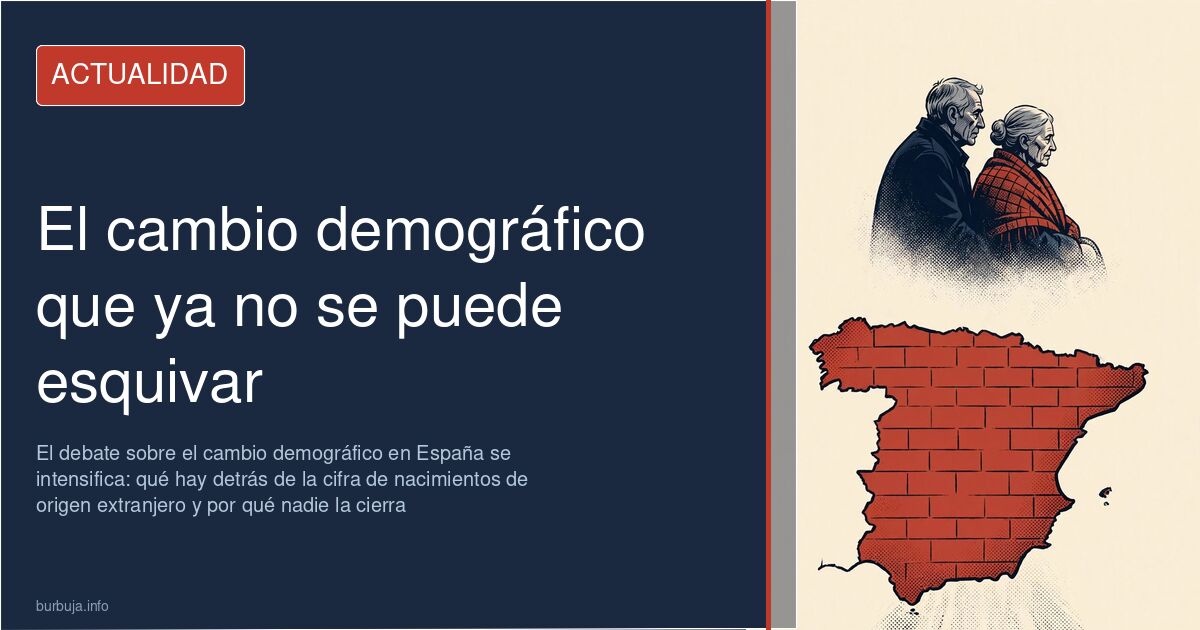
Spain and the Demographic Data: Two out of three born abroad
Spain no longer debates whether demographic change exists; that chapter is closed. What is being debated now—with more noise than statistics—is the pace, the cause, and even the right to name it. The figure that has reignited public conversation, 'two out of three,' points to the weight of foreign origin in new births. An article by ABC served as the trigger, and from there, the issue jumped from academic graph to opinion headline.
The phenomenon is not new or exclusively Spanish. What is unique here is that a matter requiring thirty-year projections is being debated with slogans.
What the Birth Data Says and What It Doesn't
The hard numbers are stubborn. Spain combines historically low birth rates with a sustained arrival of young, working-age population.
The mathematical result is simple: the relative weight of those born abroad grows each year, and it doesn't need dramatization to see it.
Some read this as irreversible cultural substitution, while others argue that this confuses origin with citizenship. The blind spot of the apocalyptic forecast is simple: a newborn in Spain is Spanish, regardless of where their parents were born. Anything else, for now, is speculation.
Benefits, Employment, and the Pull Factor Narrative
The other major axis is economic. The argument is that a significant portion of the recent foreign population relies on social benefits, and without them, many would return. This is a recurring thesis that mixes real effects of the protection system with a gross simplification: foreign employment concentrates in labor-intensive sectors—hospitality, construction, care—where there is salary, not subsidy.
What does withstand scrutiny, however, is the demographic dependency of the pension system. Without a net inflow of young workers, the equation of Social Security breaks down. That is the fact that never fits into the narrative of total decline.
Second Generations and the Promise of Integration
International comparison is everywhere. France and the United Kingdom have already seen three generations coexist with this phenomenon; the United States accepts mixing as part of its identity, albeit on a different scale.
Optimists point out that the second generations become nationalized, vote, and contribute; skeptics counter that this has not prevented ghettos or tensions in those same countries.
No one has a closed answer. The projection twenty or thirty years out depends on variables that no government controls: migratory flows, fertility, labor integration, and housing policy.
Given these circumstances, it is reasonable to predict that the debate will not die down; rather, the opposite. The desirable thing would be for someone to address it with projections in hand and not slogans. Until then, noise will continue to outweigh the data.
Spain no longer debates whether demographic change exists; that chapter is closed. What is being debated now—with more noise than statistics—is the pace, the cause, and even the right to name it. The figure that has reignited public conversation, 'two out of three,' points to the weight of foreign origin in new births. An article by ABC served as the trigger, and from there, the issue jumped from academic graph to opinion headline.
The phenomenon is not new or exclusively Spanish. What is unique here is that a matter requiring thirty-year projections is being debated with slogans.
What the Birth Data Says and What It Doesn't
The hard numbers are stubborn. Spain combines historically low birth rates with a sustained arrival of young, working-age population.
The mathematical result is simple: the relative weight of those born abroad grows each year, and it doesn't need dramatization to see it.
Some read this as irreversible cultural substitution, while others argue that this confuses origin with citizenship. The blind spot of the apocalyptic forecast is simple: a newborn in Spain is Spanish, regardless of where their parents were born. Anything else, for now, is speculation.
Benefits, Employment, and the Pull Factor Narrative
The other major axis is economic. The argument is that a significant portion of the recent foreign population relies on social benefits, and without them, many would return. This is a recurring thesis that mixes real effects of the protection system with a gross simplification: foreign employment concentrates in labor-intensive sectors—hospitality, construction, care—where there is salary, not subsidy.
What does withstand scrutiny, however, is the demographic dependency of the pension system. Without a net inflow of young workers, the equation of Social Security breaks down. That is the fact that never fits into the narrative of total decline.
Second Generations and the Promise of Integration
International comparison is everywhere. France and the United Kingdom have already seen three generations coexist with this phenomenon; the United States accepts mixing as part of its identity, albeit on a different scale.
Optimists point out that the second generations become nationalized, vote, and contribute; skeptics counter that this has not prevented ghettos or tensions in those same countries.
No one has a closed answer. The projection twenty or thirty years out depends on variables that no government controls: migratory flows, fertility, labor integration, and housing policy.
Given these circumstances, it is reasonable to predict that the debate will not die down; rather, the opposite. The desirable thing would be for someone to address it with projections in hand and not slogans. Until then, noise will continue to outweigh the data.
Summary of a discussion on Burbuja.info - Foro de economía, actualidad y política., translated from Spanish and reviewed before publication. Read the full discussion (56 replies).
More summaries
-
RTVE Criticizes Anti-Feminists and Reignites the Culture War
RTVE focuses its criticism on anti-feminists while birth rates fall and immigration rises. A debate that conceals more than it reveals.
-
Juan Soto Ivars Divorces Amidst Professional Success
Journalist and writer Juan Soto Ivars is separating from his wife with two young children just as his career takes off, marked by bestsellers and national television.
-
Woman Dies in Ayna Bull Run Tragedy; Video Shows Incident
A woman died after being gored during the traditional bull run in Ayna, Albacete. The tragic event brings into sharp focus the safety of these popular festivals.
-
Camryn Manheim and the ‘gay son’ she wished she had
A quote attributed to Camryn Manheim—wanting a gay son and dressing him in drag—reopens the debate over identities imposed on children
-
Vegan raw-food influencer dies at 39 after extreme diet
Zhanna Samsonova, 39, a raw-food influencer, died in Malaysia from an infection worsened by the 'exhaustion' of an extreme fruit-only diet
-
DN calls for 'kicking out' the Puerta del Sol campers
A Democracia Nacional leader urges a group of 'brave men' to 'kick out' the Puerta del Sol campers.