
1970s kitchen clock sparks nostalgia for Spain's 'paco-piso' era
A vintage clock from a 1979 Spanish apartment has ignited a debate defending retro decor like terrazzo and textured walls against modern construction.
English · Original discussion in Spanish · Published
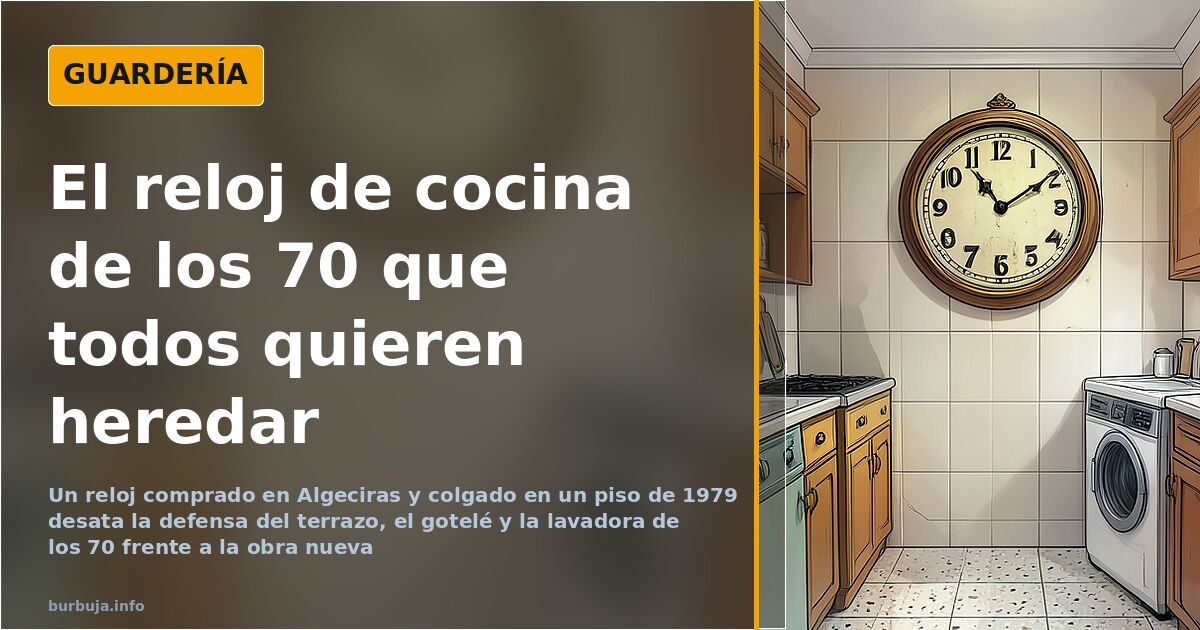
The 1970s kitchen clock everyone wants to inherit
A wall clock purchased in Algeciras in the early 80s, hanging in an apartment acquired in 1979, has sparked a wave of admiration for the domestic furnishings of the Spain that emerged from the era of rapid development. The photo shows *gotelé* (textured wallpaper), terrazzo flooring, dark doors, and a piece of furniture that several describe as indestructible. The object, made by the brand Micro, is noisier than a cage of lovebirds, according to one recurring description, and it still keeps time.
It is not just a clock. It is a complete inventory of what the average Spanish home was like for two decades, and its aesthetic relevance has caught many by surprise.
What a 1979 apartment has that new builds lack
Terrazzo flooring, so often maligned, has unexpected defenders. In the central plateau, it is a nuisance due to the brutal winter cold, but in summer it is a lifesaver, one message summarizes. The idea of radiant terrazzo is jokingly proposed as Spain's best-selling product if someone were to patent it. *Gotelé*, for those with small children, is a marvel compared to smooth walls. Exposed cables, camouflaged with paint, allow for quick access for repairs and changes. And if your child's toy touches something it shouldn't, it will probably only happen once in their life.
The washing machine is another chapter. A new Miele that lasts fifteen years with luck costs 2,500 euros, while a washing machine from the 70s is virtually indestructible, according to one message. You could get a fortune for that washing machine, just as it sits there, another points out. The dining room furniture, with its 90s figurines and Duralex glasses, is described as indestructible. The collection of little animals even came with pieces to assemble a shark, complete with its internal organs and everything.
The ethnic and architectural uniformity of the 1970s has an explanation: the same clock appears in storage rooms across half the country. One of the models was manufactured in Torrejón de Ardoz, and a factory worker was given a very similar one when he left. The Micro brand was Spanish, as noted in the conversation, even though the clock arrived from Algeciras.
The noise of the clock and 'paco-piso' nostalgia
The clock is not silent. The best part is when it starts chiming the quarters and all the bells at 4:00 in the morning, one message notes. Another remembers that his father had one, which was a nuisance making noise every hour, but he loved it because his mother had given it to him. The lamp accompanying the set is described directly as being very *paquísima* (tacky/kitsch).
The phenomenon is not limited to the clock. Some have found their own inherited clock—a tabletop special edition with cherubs—and placed it in the living room to feel like a grandee. A cuckoo clock also appears, which is considered the ultimate level. The stated intention is for the house to be a non-stop stream of hourly signals.
The discussion drifted toward the economic value of old versus new. Given how crews build and the low-quality materials developers use, an apartment from 1970 will be worth more than new builds in a couple of years, one message maintains. The thesis has its logic: a 1979 apartment with the same original appliances, everything just as it was, functions as a time machine to the *paquismo* (kitsch style) of the seventies.
From mockery to a museum of national 'paquismo'
The reaction was not unanimous. Part of the audience dismissed the set as a typical poor person's apartment that smells of failure, and another message ironized that it gives you aluminosis (lung disease from cement dust) just looking at it. The response was immediate: it was their first apartment, and they were in their early 30s. The contrast between the contempt and the defense of the object is the real axis of the conversation.
The turning point came when someone joked that a museum of national *paquismo* has peine and they hadn't heard about it. The label stuck. The *pacómetro* (a scale for measuring tackiness), that imaginary gauge of seventies authenticity, hit record highs with the first photo. The set was described as an unsurpassed vintage.
There is a fact that confuses the younger generations: a good third of the population wouldn't even know how to wind that thing and would look for where the batteries go to make it work, according to one message. The wind-up clock, the *gotelé*, and the terrazzo belong to a country that no longer exists, but which continues to tell the time in thousands of kitchens.
The prediction, with reservations: as long as new builds continue to be constructed with low-quality materials, the 1970 apartment with its noisy clock and indestructible washing machine will continue to gain value. The market will take time to recognize it. Or perhaps not.
A wall clock purchased in Algeciras in the early 80s, hanging in an apartment acquired in 1979, has sparked a wave of admiration for the domestic furnishings of the Spain that emerged from the era of rapid development. The photo shows *gotelé* (textured wallpaper), terrazzo flooring, dark doors, and a piece of furniture that several describe as indestructible. The object, made by the brand Micro, is noisier than a cage of lovebirds, according to one recurring description, and it still keeps time.
It is not just a clock. It is a complete inventory of what the average Spanish home was like for two decades, and its aesthetic relevance has caught many by surprise.
What a 1979 apartment has that new builds lack
Terrazzo flooring, so often maligned, has unexpected defenders. In the central plateau, it is a nuisance due to the brutal winter cold, but in summer it is a lifesaver, one message summarizes. The idea of radiant terrazzo is jokingly proposed as Spain's best-selling product if someone were to patent it. *Gotelé*, for those with small children, is a marvel compared to smooth walls. Exposed cables, camouflaged with paint, allow for quick access for repairs and changes. And if your child's toy touches something it shouldn't, it will probably only happen once in their life.
The washing machine is another chapter. A new Miele that lasts fifteen years with luck costs 2,500 euros, while a washing machine from the 70s is virtually indestructible, according to one message. You could get a fortune for that washing machine, just as it sits there, another points out. The dining room furniture, with its 90s figurines and Duralex glasses, is described as indestructible. The collection of little animals even came with pieces to assemble a shark, complete with its internal organs and everything.
The ethnic and architectural uniformity of the 1970s has an explanation: the same clock appears in storage rooms across half the country. One of the models was manufactured in Torrejón de Ardoz, and a factory worker was given a very similar one when he left. The Micro brand was Spanish, as noted in the conversation, even though the clock arrived from Algeciras.
The noise of the clock and 'paco-piso' nostalgia
The clock is not silent. The best part is when it starts chiming the quarters and all the bells at 4:00 in the morning, one message notes. Another remembers that his father had one, which was a nuisance making noise every hour, but he loved it because his mother had given it to him. The lamp accompanying the set is described directly as being very *paquísima* (tacky/kitsch).
The phenomenon is not limited to the clock. Some have found their own inherited clock—a tabletop special edition with cherubs—and placed it in the living room to feel like a grandee. A cuckoo clock also appears, which is considered the ultimate level. The stated intention is for the house to be a non-stop stream of hourly signals.
The discussion drifted toward the economic value of old versus new. Given how crews build and the low-quality materials developers use, an apartment from 1970 will be worth more than new builds in a couple of years, one message maintains. The thesis has its logic: a 1979 apartment with the same original appliances, everything just as it was, functions as a time machine to the *paquismo* (kitsch style) of the seventies.
From mockery to a museum of national 'paquismo'
The reaction was not unanimous. Part of the audience dismissed the set as a typical poor person's apartment that smells of failure, and another message ironized that it gives you aluminosis (lung disease from cement dust) just looking at it. The response was immediate: it was their first apartment, and they were in their early 30s. The contrast between the contempt and the defense of the object is the real axis of the conversation.
The turning point came when someone joked that a museum of national *paquismo* has peine and they hadn't heard about it. The label stuck. The *pacómetro* (a scale for measuring tackiness), that imaginary gauge of seventies authenticity, hit record highs with the first photo. The set was described as an unsurpassed vintage.
There is a fact that confuses the younger generations: a good third of the population wouldn't even know how to wind that thing and would look for where the batteries go to make it work, according to one message. The wind-up clock, the *gotelé*, and the terrazzo belong to a country that no longer exists, but which continues to tell the time in thousands of kitchens.
The prediction, with reservations: as long as new builds continue to be constructed with low-quality materials, the 1970 apartment with its noisy clock and indestructible washing machine will continue to gain value. The market will take time to recognize it. Or perhaps not.
Also available in: Deutsch
Summary of a discussion on Burbuja.info - Foro de economía, actualidad y política., translated from Spanish and reviewed before publication. Read the full discussion (100 replies).
More summaries
-
The 'Ferran Adrià' of heart attacks: the trendy hyper-caloric cuisine
A collection of 454 high-calorie recipes, from butter-crust pizzas to San Jacobo-topped burgers, offering a radical defense of excess.
-
Spain 'mamazo' video: viral, illegal and a gender debate
The viral 'mamazo' video in Cádiz is a crime for sharing minors' images; it sparks a gender debate and a judicial response.
-
Real Madrid unlikely to pay £50m for Huijsen, reports journalist
A journalist claims Real Madrid has contacted Dean Huijsen's camp but finds a £50m fee for the 19-year-old centre-back unlikely.
-
90% of online drama is self-inflicted, according to real case study
An analysis of online conflict reveals that 90% of digital drama is self-generated through victimhood, nostalgia, and emotional manipulation.
-
Inheriting five properties at 40: the struggle to manage sudden wealth
Inheriting five flats at age 40 brings complex challenges, including inheritance tax, sibling disputes, and the impact of inflation on cash.
-
Belinda Washington's appearance sparks debate over mature women on TV
At 62, former Telemadrid presenter Belinda Washington returns to the screen, reigniting discussions about aging, aesthetics, and female bodies in media.