
1804 dollar: worth $3.8 million if genuine, pocket change if not
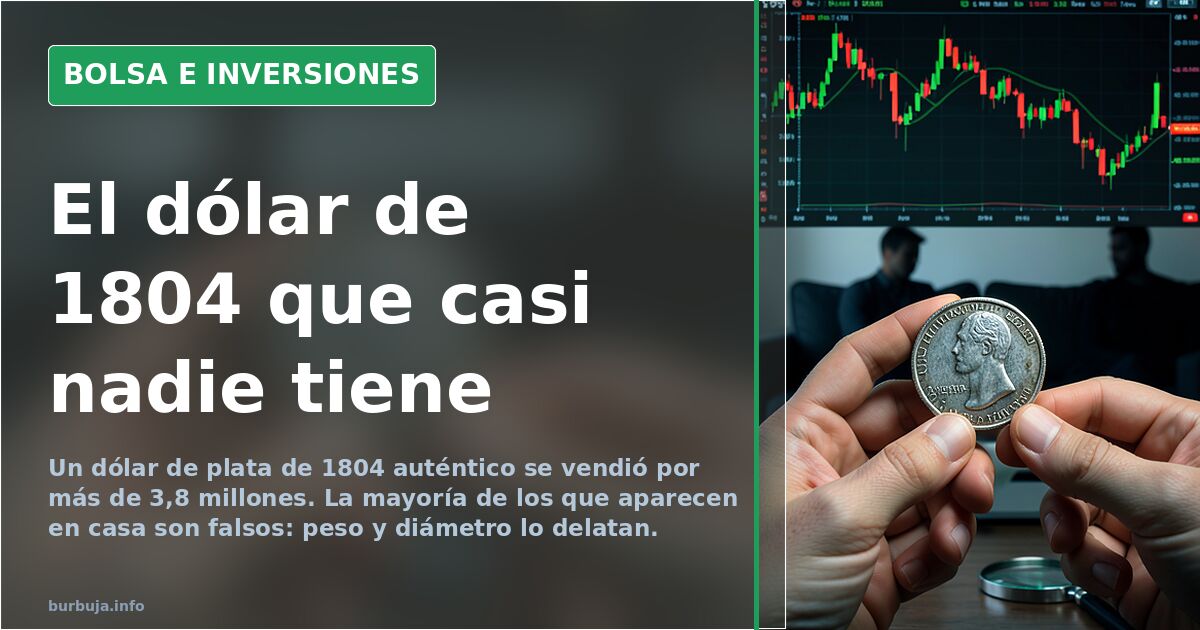
A genuine 1804 silver dollar sold for over $3.8 million. Most of the ones found at home are fakes: weight and diameter give them away.
English · Original discussion in Spanish · Published
1804 dollar: worth $3.8 million if genuine, pocket change if not
A genuine 1804 silver dollar has sold for more than $3.8 million. The figure was put on the table by a collector who answered the initial query with a wry remark: "Nah, pocket change." The problem is that this coin, known as the king of coins, was barely minted, and the odds of one turning up in a drawer are slim. The conversation soon moved on to practical matters: how to tell a genuine piece from a cheap counterfeit.
The 1804 dollar that's worth millions and the one that's worth nothing
The 1804 coin is one of the rarest in American numismatics. Very few units were minted and, as another participant recalled, at that time the official coin in circulation in the United States was the Spanish piece of eight. That historical detail explains why original specimens are so scarce and why they fetch seven-figure prices at auction.
Common sense, however, works against the lucky find. Occam's razor was applied without mercy: the most likely scenario is that a coin with those characteristics found in a domestic setting is a fake. Authentic pieces usually form part of major collections and do not turn up mixed in with common coins.
What to check before getting your hopes up: weight, diameter and purity
Before passing any judgment, it's worth taking measurements. The technical figures discussed in the conversation are specific: the diameter should be between 39 and 40 millimeters, the weight around 26.96 grams, and the silver purity about 0.892. Any significant deviation in these measurements is a red flag.
There was also a warning about a common mistake: do not clean or scratch the coin. The damage caused by a homemade cleaning can ruin its value even if it were genuine. The advice was clear: handle it with care and don't try to restore its shine.
The verdict that comes after the visual inspection
The conversation took a decisive turn when the coin's appearance was described. Rough surface, measurements that don't add up and poorly defined stars. The diagnosis was blunt: fake. It is not die-struck, meaning it was not minted using the process that would produce a genuine coin. The illusion vanished as quickly as it had appeared.
The episode leaves a useful lesson for anyone who finds an old coin and suspects they have a treasure in their hands. The odds of coming across a seven-figure piece are minuscule, and the first step is always the same: check the weight, diameter and purity before letting your imagination run wild.
How many 1804 coins were actually minted? The exact figure doesn't come up in the conversation, but the rarity is such that any genuine specimen is catalogued and tracked by collectors or institutions. The question that remains is how many of those fake pieces are still sitting in drawers without their owners knowing.
Also available in: Deutsch
Summary of a discussion on Burbuja.info - Foro de economía, actualidad y política., translated from Spanish and reviewed before publication. Read the full discussion (11 replies).
More summaries
-
Gold and silver between private buyers: a market that can't take these prices
A forum user calculates that the ounce of silver went from 16 euros in 2016 to 62 today. The metal has never been worth so much, and it is getting harder to sell between private parties.
-
Pablo Gil trader reviews: respect and bearish bias
Two years warning of a stock market crash that hasn't come: opinions on Pablo Gil, the YouTube trader, split between respect and bias.
-
Marathon Fusion claims it made gold from mercury, but the cost kills the idea
Marathon Fusion says it turned mercury into gold, beating a CERN record. The cost of enriched mercury and the radioactivity would make the gold unviable.
-
30-year bond above 5%, gold at 27% of reserves: markets reposition
The 30-year Treasury bond has spent 27 days above 5%, and the 20-year auction yielded 5.469%, the highest since 1986. Gold now makes up 27% of global reserves.
-
Gold Is Bought in Bars, Not Coins: The Advice That Upends the Market
A market analyst recommends bars over coins for investing in gold, but his calculation of the weight of the 50-peso Centenario undermines his own thesis.
-
Venezuelan gold at 900 euros an ounce: doubts and suspicions
A Spanish expatriate in Venezuela finds one-ounce gold coins at 900 euros against the market's 1,280. The price gap exists; the explanation does not.